
|
|
|
Benedict
XVI resigns 2013
|
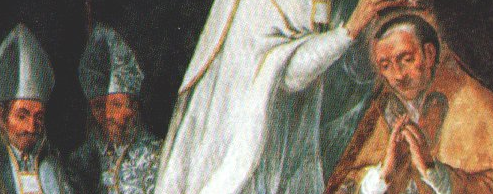
A new Pope for 2013
The Vatican announced on February 11, that Pope Benedict XVI will stand down from his position at 8pm on February 28.
This is a most unusual move with only two prior Popes leaving their post alive in the whole history of the papacy. Prior to Benedict's abdication or retirement the last Pope to leave the post by means other than death was Pope Gregory XII, who was Pope from 1406 to 1415 at the time of the Antipopes. Prior to that Pope Celestine V left office after a short and undesired tenure of just five months in 1294.
The day of the announcement, was also the 84th anniversary of the creation of the independent Vatican City state. This momentous occasion was the day Benito Mussolini signed the Lateran Treaty, a political treaty that recognised the full sovereignty of the Holy See in the State of Vatican City, which was thereby established. For those of you who aren't familiar with planetary cycles, 84 years is the cycle of Uranus, so Uranus was returning to the place it held in the solar system at the time of the creation of the Vatican in its current incarnation. Uranus represents, among other things, revolution, change, independence and surprises. So on its return and the exact birthday of the creation, Pope Benedict XVI announces the unbelievable, he is resigning. Popes don't resign, abdicate, retire, they die. Chart here
The headlines all carry the same words, shock, unexpected, and other uranian terms, aptly describing what is occurring from an astrological perspective. There are a number of connecting points on the day of the announcement back to the day of the signing of the treaty. Not only has Uranus returned to the same place, the Sun has also, as it does each year, creating the opportunity for rebirth. The Moon also traversed the same area of the zodiac as it did on the day of the declaration but it was with Mercury and Mars. The Moon represents the home or roots, Mercury is news and Mars is action. So while the world may have been taken by surprise, there were enough indicators on the day to explain not only why but also why at that time. Uranus, planet of change and shake ups, Sun returning, signalling annual rebirth, Moon representing home, with Mercury the messenger and Mars the planet of action. Chart here
He had been thinking about his decision for some time and it has been reported that it was two years ago when he first toyed with the idea. From March of 2011 until January 2012, the pope was experiencing his own personal Uranus return. Whenever Uranus makes contact with itself in our personal horoscopes it signals a time of change, as we seek to express ourselves more as an individual and separate from the collective. There is more but as this is an article not a book, I will leave this part here for now.
Pope Saint Celestine V, born Pietro Angelerio, had been a humble reclusive monk, living in seclusion on top of a hill. He had gone into seclusion in 1239 in a solitary cavern on the mountain Morrone and from this he was given the name Pietro da Morrone. Five years later he left this retreat, going with two companions, to a similar cave in the Abruzzi region of central Italy. Here he lived as strictly as possible, following in the footsteps of St. John the Baptist. In 1244, he founded the order still known as the Celestines.
In 1292, the Cardinals had considerable trouble electing a new pope, due to a number of reasons. There were only 12 Cardinals during this time and they were split evenly in their allegiance to two powerful families. One of the cardinals died during their lengthy deliberations, leaving 11 and they could not get the required two thirds majority needed to elect a candidate. In the meantime anarchy was breaking out and something needed to be done.
They received a letter from the hermit Morrone, who told them God had revealed to him that the cardinals would be punished if there was any further delay. Orsini, the senior cardinal then nominated the octogenarian hermit, who was known to the cardinals, and they elected him to break the stale mate. He was an unwilling candidate and originally tried to flee but was convinced to take the role by Benedetto Gaetani. So the election, that went from 4 April 1292 until 5 July 1294, was finally over and the third of only six non-cardinals to do so, became pope.
This was the last time a non-conclave election took place. All papal elections from this time on saw the cardinals locked away until they had made a decision, ensuring there was never again a protracted period with the church having no supreme leader. On the day that the humble hermit was elevated to the seat of St Peter, the Sun was in a difficult aspect to the planet Jupiter. This would indicate some conflict between the leader (Sun) and his beliefs (Jupiter), there was also a similar difficult aspect between the Moon (home) and Uranus (change), and a very quiet and humble man was suddenly dragged away from all he knew and felt comfortable with. Chart here .
However Celestine's hermit existence had not prepared him for the role of pontiff and he resigned just 5 months later on December 13, 1294, and in the true sense of the action, becoming the first pope to do so. Unfortunately, his return to solitude was short lived, as his successor was worried that his followers would reinstate him as an antipope and ordered his arrest. Celestine escaped and hid in the woods, trying to return to his monastic life but he was eventually captured and Pope Boniface VIII, who as Cardinal, was the one who convinced Pietro to accept the papacy, had him imprisoned where he languished until his death 10 months later on 19 May 1296. Boniface for his part was placed in the Eighth Circle of Hell by Dante in his Divine Comedy.
On the day Celestine resigned there were, as would be expected, a number of planetary aspects reflecting the event. The Moon was tied to Neptune, indicating his longing to return to his spiritual roots, rather than the politics he now found himself embroiled in. This aspect was made important though by the connection to the original Sun/Jupiter aspect in his ascension chart, while Mercury (news) was at the position of the Moon on the day of his elevation. There was also a Venus/Jupiter conjunction on the day, positively angled back to the Sun of the coronation chart. All combined it indicated his wish to return to a simpler life and the aspects of the day indicated when. Chart here. No Pope since has taken the name Celestine.
Interestingly there are already grumbles about the current pope's announcement that he would continue to reside in the grounds if the Vatican. The following quotes are from the Wall Street Journal February 13, 2013
"I think it was a mistake for him to announce that he will be living inside the Vatican," said Rev. Thomas J. Reese, senior fellow at the Woodstock Theological Center at Georgetown University.
"The Vatican belongs to the new pope, and [Pope Benedict XVI] needs the pope's permission to live there." Father Lombardi said he didn't think the pope consulted the College of Cardinals on his decision to stay inside the Vatican.
Added a senior papal adviser: "It's better to have him here than somewhere else, where he could become another center of power." .
In 1415, Gregory XII resigned in a bid to end the "Western Schism", which began when two rival claimants declared themselves pope in Pisa and Avignon and threatened to tear apart Roman Catholicism. This was one of many 'interesting' times in the history of the Catholic church, when the politics really came to the fore. He was elected originally on the condition that if the schism was somehow healed, he would resign. All of the candidates had to agree to that condition before the voting began. The western schism began after the papacy returned to Rome in 1377.
There is a misconception in modern society that the Pope has always had an independent seat in Rome and that the way things are now is the way it has always been, not so. The Vatican only became a permanent seat in an independent state in 1929, less than a century ago. The first 1500+ years if the papacy was fraught with political manoeuvrings and interference that saw a number of schisms and also the need for the papacy to move from place to place to escape political unrest.
There were also several periods when there was more than one pope, with one or the other being referred to as the 'anti pope' depending on which side of the fence you were on. There were also many periods when the seat of the Pope was not in Rome and the Pope was in fact ensconced elsewhere, again for a number of differing reasons. The early church was not the purely religious based entity it is seen by some to be these days, especially at the upper levels.
Positions were bought and sold and for many families, having high ranking church officials was as politically essential as was being a ruling family. The elder son would inherit the family holdings and the second or subsequent sons would attain a diocese somewhere, Celibacy came in later and even looking at the list of popes there are father and son pairings. The church received an income from the surrounding districts and the wealthier the area the more there was to be gained.
Gregory XII was Pope during one of these schisms, which came about from the return of the papacy to Rome under Gregory XI on January 17, 1377. This ended the Avignon Papacy, a period that saw seven successive French Popes, who refused to move to Rome and resided instead in Avignon, France, and had allegiance to the French King. This papacy was considered corrupt due to the influence of the French nobility and alienated many parts of Europe. Now you would have thought the return of the Popes to Rome under Gregory XI, would have healed the schism but no, it created another.
It is not really that surprising when looking at the aspects for the day of the return. It was a first quarter Moon and the Sun and Moon are not only harshly aspecting each other, also in difficult relationships to both Pluto and Uranus. The same two planets that are currently involved in a stand-off. There was also a challenging aspect between Neptune, the spiritual connection and the warrior, Mars. Not exactly conducive to peace and harmony. Chart here
The Romans felt they had a level of ownership over the Papacy and the Catholic church, because of its early roots, so when Gregory XI died, the Romans took to the streets rioting, to ensure another Roman was elected Pope. Problem was it backfired. The Cardinals couldn't find a suitable Roman but elected Bartolomeo Prignano, from Naples, who became Pope Urban VI, as at least he was Italian. He didn't turn out so well and six months later, the majority of Cardinals had left Rome for Anagni, and even though Urban was still in office, they elected Robert of Geneva, who became the Clement VII, and again there was a Pope in Avignon.
The Cardinals were able to site the rioting Romans as reason to call the election of Urban invalid, as it was done under duress. This split the church, and threw it into turmoil. There had been rivals to the papacy in the past, antipopes, who came about through rival factions. This wasn't the case this time, as both the Pope and the Antipope had been elected by the same group of Cardinals. This action causes a split on more than just papal lines as it also split Europe diplomatically, as countries chose which of the popes they would give their allegiance to. Urban VI was the last pope elected outside the College of Cardinals. And this was the beginning of the Western Schism. So the stalemate continued for almost forty years, with two papal curias and two sets of cardinals, each electing their own new pope for Rome or Avignon whenever death created a vacancy.
There were attempts made to end the schism but none were successful, until Gregory II, who had agreed to resign, at the time of his election, if the opposing pope did as well. This didn't happen immediately, although negotiations continued. In fact matters got much worse before they were to improve. In 1409, a church council was held at Pisa, where the cardinals trying solve the dispute, added to the problem by electing another antipope. Go figure, who else would have thought of that solution?
In 1414, the Council of Constance, was able to finally procure the resignations of two of the popes and then just excommunicated the third, who didn't want to play. The excommunicated was the Avignon Antipope Benedict XIII, the other Antipope (the third pope) John XXIII and Pope Gregory XII agreed to resign and allow a new election to take place. Martin V was the new pope elect but didn't take up his role until after the death of Gregory XII in October 1417. Gregory XII's resignation on July 4, 1415, was the last time a pope left office while still alive. Charts here
What is of most interest in this period, from an astrological perspective, is the interaction of the transpersonal and outer planets. These are the planets that mark significant changes that affect large numbers of people. It goes beyond the realm of the individual into the collective. The abdication of Pope Gregory was different to that of Celestine. Gregory was in effect a caretaker pope, holding the position until such time as the schism could be healed.
So that's the abbreviated history, as interesting and confusing as it is.
What is unfolding now is the making of history. Is this the beginning of something new? Astrologically, I would have to say this is the beginning of a new trend and the resignation of the Pope is likely to become the modern way of the end of each papacy, rather than it being an office until death. With the predominance of Uranus in the current events, even to the striking of the tower on St Peter's basilica on the night of the announcement, not unlike the tower card in the Tarot, which is the card of Uranus, this is ground breaking. The thing with ground breaking events is that they usually set the tone of what is to follow, the breaking down of the current to make way for the new.
The chart for the time Benedict XVI will officially step down has Uranus setting and a large stellium in Pisces, sign of the fish and considered by many to represent Christianity in particular. Rather than just look at this chart on its own, it becomes very interesting when compared to the previous two abdications. The Pisces stellium is making aspects to the Cancer stellium in Gregory's abdication and the Jupiter/ Venus in Celestine's, while the Moon activates the Mars/ Neptune opposition in Celestine's. Pluto is at the degree of the Jupiter/Saturn/Neptune aspect for Gregory. There are connections all over the place and the same occurs when looking at the other charts involved. It is really quite complex but at the same time speaks so clearly. Chart here
Looking at the two prior resignations, even though there are so many years between them, there are common themes. With Celestine, it was the last non-enclave election, and with Gregory, it was the beginning of elections only from within the college of cardinals. Historical events tend to relate to other historical events, and therefore, astrologically, there should be connections between these three resignations.
There are a number of things that have never been faced before and this is likely to lead to the drafting of new 'laws'. How is the retiring pontiff to be addressed in future? What colour will his clothes be? They all have their own colours depending on their rank, so will they come up with a new colour for 'he who was pope'? And what about his papal paraphernalia� what happens to his ring? Will he retain his infallibility, or is that just part of the title? So many questions that are dealing with virgin ground.
What other changes will come about as a result of this resignation? Will celibacy be overturned back to the original state and priests again be allowed to marry?
Whoever is the successor to Benedcit XVI is likely to oversee a changing church. As Cardinals retire upon reaching the age of 80 and are no longer eligible to vote for the papacy, it is unlikely that anyone at, or near this age will be considered. There has been a call to elect a pope from a part of the world where Catholicism is still popular. The strongest catholic populations are on the continents of South America and Africa. Despite other calls for the Italians to retake the territory they have considered theirs, it is likely that new pope will in fact not be European. Again this is in line with the current energies that are suggesting a radical change to all governments, whether religious or corporeal.
Globally, collectively, however you prefer to look at it, things are changing and it isn't just climate change. When Uranus and Pluto are working together but not comfortably it is a challenging time. This affects us on an individual level but it is the broader impact that creates global changes. You would have to have been living in a cave to not be aware of the changes that are already sweeping the globe. Accountability is the new buzz word and this is for both business and politics. The Vatican is unlikely to escape this, especially with so much Uranian energy around them right now. They have been dodging bullets for a decade over sexual abuse and the majority of non-church observers believe this was handled very poorly. That will need to change as will many other dealings of the church that have been kept under a blanket of secrecy. It may well be that even the doctrine of the church will undergo an overhaul.
As for who the next Pope will be, I hope to look further at that over the next few days but initially from what I have looked at, Brazil is looking pretty hot, along with Argentina .
© Sherrynne Dalby Feb 14 2013
Sherrynne Dalby hosts Heaven's Child an astrology web site specialising in children and babies. For more articles on Parenting visit Heaven's Child
Articles are being added regularly so
AstrologyOz - designed and maintained by Sherrynne Dalby

© AstrologyOz 2013
All articles and images on this site are subject to copyright and may not be copied, stored or modified in any way.
The resignation of Pope Benedict XVI in 2013 stands as one of the most remarkable ecclesiastical transitions in modern history, and astrologers worldwide took keen interest in the chart patterns surrounding that moment. Within Australian astrology circles, the event became a case study for examining how rare institutional changes align with unusual planetary configurations. The suddenness of the announcement, combined with the unusual circumstances of a Pope stepping down voluntarily rather than serving for life, made it a fertile subject for transit analysis and interpretive discussion among practitioners who follow world events through the lens of celestial cycles and symbolic timing.
Australian astrologers frequently examine major news stories as reflections of broader planetary movements, treating significant events as public expressions of underlying cosmic patterns. The abdication of a Pope, with all its historical gravity and institutional symbolism, offered an opportunity to reflect on themes of authority, tradition, transformation, and renewal. By studying the planetary placements active during such moments, practitioners aim to connect personal experience with collective history, finding meaning in the timing of events that shape societies and cultures across continents and generations of believers and observers alike.
The practice of mundane astrology, which concerns itself with world affairs rather than individual horoscopes, has long been a respected branch of the tradition in Australia and abroad. Practitioners of this approach study planetary ingresses, retrogrades, stations, and void-of-course periods to interpret the unfolding of political, religious, and social developments. Major transitions in religious leadership, such as a papal resignation, are particularly compelling subjects because they combine personal biography with institutional symbolism, allowing astrologers to explore how the qualities associated with each planet manifest through the actions of individuals who carry significant cultural weight.
For those working with electional astrology, which seeks to choose favourable moments for important undertakings, rare historical events like papal transitions serve as valuable reference points for refining interpretive skills. By comparing the chart of the announcement against later developments, astrologers can test traditional techniques and deepen their understanding of how planetary signatures correspond with specific kinds of change. Australian astrology resources often catalogue such events alongside planetary data tables, offering students and enthusiasts a working library of mundane charts that demonstrate the practical application of astrological timing methods to real-world situations of considerable magnitude and public interest.
The intersection of astrology and current affairs remains a defining feature of Australian astrological publishing, where articles regularly explore how celestial patterns mirror the rhythms of public life. From political upheavals to cultural milestones, astrologers trained in the tradition seek to articulate meaningful connections between the movements of planets and the choices made by those in positions of influence. Coverage of significant events, including historic religious transitions, helps to position astrology not as mere fortune-telling but as a symbolic language for interpreting the deeper patterns that shape human affairs across time and geography.