
Welcome to AstrologyOz
Apologies to all those who rely on this resource.. I have had major server issues which are now hopefully fully resolved.... after 4 months... I will be updating everything over the next week .... so thanks for your patience :)
|
|
|
World
News 2014
|

|
All your planetary data for 2014 is here now Planetary stations , Void of Course Moon , Moon phases and Planet Ingresses for 2014 plus Moon Planting Guide |

|
Jan - April 2014 Planting Guide
,
plus 2014 Moon phases,Planet Ingresses and retrogrades,
|
Astrological aspects and orbs: a beginner's guideAn astrological aspect is an angular relationship between two points in a chart, usually planets, compared with the positions of the Sun, Moon and other bodies. Its purpose is interpretive: it shows where two functions meet, such as emotion meeting reason or drive meeting restraint. Aspect analysis turns isolated birth-chart placements into a pattern you can read. An orb describes the separation from an aspect’s exact angle. Astrologers use agreed ranges to decide whether a contact counts: a conjunction centred on 0° may count within 8°, while a sextile centred on 60° often receives a narrower allowance. These ranges vary between schools and software, so beginners should learn the language before treating any cut-off as fixed. Aspects are angles, not personality labelsAstrologers calculate aspects by comparing ecliptic longitude, the position measured along the zodiac. Two planets may share a house without forming an aspect, and they can form a strong aspect across several houses. The important information is their angular separation, not their physical distance in the sky. Each planet carries a familiar symbolic function. The Sun concerns identity and vitality, the Moon emotional needs and habits, Mercury communication and learning, Venus preferences and relationships, and Mars drive and assertion. Aspects reveal interaction between those functions. They do not act as isolated labels such as “Mars means anger”. A reliable birth time matters because it fixes house cusps and house positions, while an uncertain time makes angular work less dependable. Even when the time is unknown, sign placements, aspects between personal planets and many timing questions can still be explored with appropriate caution. Why orbs set the boundariesThe exact angle is the centre of an aspect. A pair’s orb is its distance from that centre, and the contact is admitted when the separation falls inside the astrologer’s chosen range. If Mars is at 17° Capricorn and Saturn at 22° Capricorn, their 5° separation falls within a common conjunction orb. Their meanings are then read together, while their signs, houses and other relationships keep the interpretation grounded. A tighter orb generally makes an aspect easier to notice, but it does not automatically make its promise stronger. A wide contact may be less obvious yet become especially useful in timing work. Use orb size alongside planetary dignity, sign, house, applying or separating motion, and the rest of the chart.
Different astrologers draw the boundaries differently, and some also work with minor aspects such as the semisextile or quincunx. Beginners gain more from consistent methods than from collecting every possible contact. Record the orb you used so your interpretation remains auditable. Reading the major aspects in contextConjunctions bring two functions into close focus, while oppositions place them across the chart. Squares describe productive tension, trines describe relatively easy flow, and sextiles offer opportunities that still require deliberate use. The same pair of planets can express very differently depending on the signs and houses involved. For example, a Sun at 10° Scorpio and a Moon at 4° Scorpio are 6° apart, placing them within a common conjunction range. The contact may suggest an especially strong overlap between identity and emotional life, but it cannot establish a relationship outcome on its own. For a practical companion on Mars, your Mars sign explains how drive, motivation and assertion can be applied in daily life. Before settling on an interpretation, check whether the planets are applying to exact aspect or separating from it. Applying contacts describe developments approaching completion; separating contacts describe energy moving away from its peak. Look for repeated patterns, such as several planets contacting the same point, and ask what narrative connects them. Astro aspects work best as part of a chart-wide argument rather than isolated predictions. Astrology in an Australian contextAustralian charts need local context. The country lies in the southern hemisphere, so the tropical zodiac’s seasonal markers are reversed: Aries begins around the March equinox as autumn ends, while Cancer falls around the winter solstice. The zodiac is still calculated from the equator, not from the observer’s hemisphere. Birth records can be surprisingly fiddly. Sydney, Melbourne, Brisbane, Adelaide and Perth use different time zones, and daylight-saving changes have shifted over the years. Adelaide’s half-hour offset and historical clock changes can alter the calculated chart, so convert the recorded local time using the date of birth rather than today’s rules. The local market includes specialist astrology books, chart software, online ephemerides and independent consultations. Many people first encounter astrology through newspaper columns, social feeds or a horoscope while having coffee. If you submit birth data to an Australian practitioner, remember that the Privacy Act 1988 and Australian Privacy Principles govern many larger organisations, with state and territory privacy laws also relevant. Ask what information is retained and when it is deleted. Build a grounded daily practiceBegin with the major aspects, the personal planets and a verified birth time. For each contact, note the planets, signs, houses, exact degrees and minutes, separation, orb, and whether the aspect applies or separates. Read each placement in its own right before combining it with others. This prevents a dramatic contact from overwriting quieter but important details. AstrologyOz’s Moon-phase and planetary-station guides can help you place transits in a wider timeline, while an ephemeris confirms retrograde and stationary points. For a complementary spiritual resource, Heavenly Messages by Melissa offers reflective material that can sit alongside symbolic chart analysis without replacing careful study of the birth chart. Keep your notes dated and specific, and revisit them as new developments supply evidence for or against your interpretation. Open one birth chart, choose its clearest aspect, and record what that contact means in one concrete action today. |
|
|
|
Benedict
XVI resigns 2013
|

|
|
|
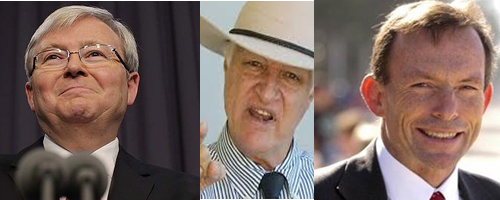
Election
2013- take 2
|
|
|
|
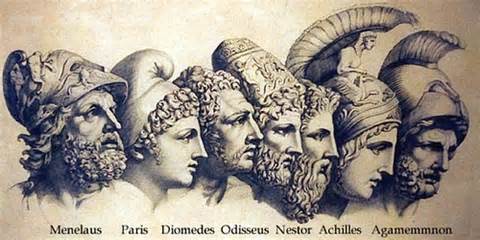
Turkey
Unrest 2013
|
|
|
|
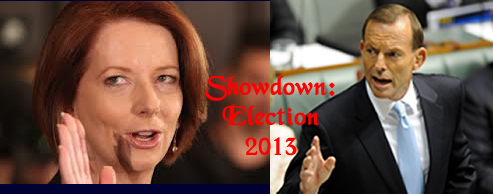
Election
2013
|
|
|
|
World
News 2013
|

|
|
|
Serialised
story of the greates ship of her time and
|

|
|
|
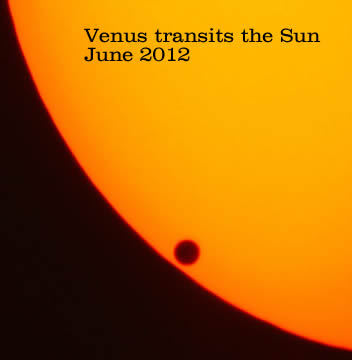
Venus
transits the Sun
|

|
For all your horoscopes, we recommend Ed Tamplin's excellent astrology site.

|
Astrology Oz is best viewed using firefox, screen resolution 1280x1024, macromedia flash enabled.
Firefox - the only browser that gives total control over web browsing, see what you want to see - download firefox

© AstrologyOz 2014
All articles and images on this site are subject to copyright and may not be copied, stored or modified in any way.
AstrologyOz - designed and maintained by Sherrynne Dalby