
Welcome to AstrologyOz
Apologies to all those who rely on this resource.. I have had major server issues which are now hopefully fully resolved.... after 4 months... I will be updating everything over the next week .... so thanks for your patience :)
|
|
|
World
News 2014
|

|
All your planetary data for 2014 is here now Planetary stations , Void of Course Moon , Moon phases and Planet Ingresses for 2014 plus Moon Planting Guide |

|
Jan - April 2014 Planting Guide
,
plus 2014 Moon phases,Planet Ingresses and retrogrades,
|
Understanding planetary stations and their influenceThe night sky above the Sydney Harbour Bridge has long inspired contemplation, and Australian astrologers have watched planetary patterns from this vantage point for generations. Planetary stations are among the most powerful moments in this ancient practice, marking the brief windows when a planet appears to halt before shifting direction. These pauses carry concentrated astrological weight, often felt before they are consciously noticed. For those new to chart reading, the concept of a station can seem abstract at first glance. Unlike a full moon or a solstice, there is no visual spectacle to mark the event, only a subtle shift in the planet's apparent motion against the backdrop of the zodiac. Many Australian beginners first encounter the term while reading horoscope columns in publications like The Sydney Morning Herald or while listening to astrologers on local ABC radio segments. A station is simply the point at which a planet transitions between direct and retrograde motion, or vice versa. Because the change happens gradually, the energy builds over days rather than arriving in a sudden flash. This slow build is part of why stations often coincide with a sense of gathering tension, missed messages, or sudden clarity about long-standing situations. Tracking these moments helps beginners understand why certain days feel heavier or more electric than others. Whether you live in Brisbane, Adelaide, or a small town in regional Tasmania, the sky offers the same timing for everyone, even if your local experience of that energy differs. What happens during a planetary stationWhen astronomers describe a planet as appearing to stop in the sky, they are referring to an optical effect caused by the relative orbital speeds of Earth and the other planet. From our vantage point in the Southern Hemisphere, the planet seems to hover near a specific degree of the zodiac before moving in the opposite direction. Astrologers interpret this pause as a moment of intensified planetary energy. The themes associated with the planet, and the zodiac sign it occupies, become more pressing and personal. Communication issues linked to Mercury, for instance, often surface around Mercury's stations, while relationship themes rise near Venus stations. The exact moment of the station is calculated using complex astronomical data, but its influence is generally felt for several days before and after. Australian astrologers typically consult world-renowned ephemerides or local almanacs that list these dates in Australian Eastern Standard Time or Australian Eastern Daylight Time, depending on the season. Direct to retrograde: the slowdownThe shift from direct motion to retrograde motion is often described as an inward turn. When a planet stations retrograde, its usual forward momentum halts, and the energy associated with that planet begins to operate in a more reflective, internalised way. Mercury retrograde stations are the most familiar to Australian audiences, frequently appearing in café conversations from Perth to Cairns. People commonly report confusion around travel bookings, lost keys, or communication breakdowns during these windows. Less well-known are the Mars retrograde stations, which occur roughly every two years and tend to bring a noticeable dip in physical energy and motivation. The pre-station shadow period is often where the first signs appear. Projects may stall, arguments may flare without clear cause, and intuition tends to sharpen. Recognising this build-up allows beginners to pace themselves rather than pushing forward into resistance. Retrograde to direct: the awakeningWhen a planet stations direct, the retrograde period ends and forward motion resumes. This shift is often associated with breakthroughs, reconciliations, and the resolution of issues that emerged during the retrograde cycle. The direct station can feel jarring. The planet appears to stand still once more, and the energy can be just as charged as the retrograde entry. Many Australian astrologers note that decisions made on the exact day of a direct station are sometimes reversed again within weeks, suggesting that patience remains useful even after the retrograde phase technically ends. The post-shadow period, which mirrors the pre-shadow, gradually releases the lessons learned during the retrograde. Reflecting on what shifted between the retrograde entry and the direct station can reveal personal patterns and growth. How stations shape personal experiencePersonal birth charts interact with planetary stations in meaningful ways. When a station occurs near a sensitive point in your chart, such as your Ascendant, Moon, or a key planet, the influence tends to be more personal and immediate. For Australian readers born under the southern signs of the zodiac, the late Capricorn and Aquarius degrees often coincide with stations of the slower planets, Saturn and Pluto. These transits can coincide with career shifts, structural life changes, or a sense of collective urgency. Stations occurring in fire signs may stir restlessness and a desire for adventure, while water sign stations tend to heighten emotional sensitivity. Tracking which sign a planet is stationing in helps beginners interpret the flavour of the energy at play. Working with station energy in daily lifeBeginners can engage with station energy without needing expert chart-reading skills by making a few simple adjustments to their routines. The following habits help smooth out the more turbulent days and turn station windows into moments of useful reflection.
Practical preparation also makes a real difference. A short checklist tailored to the stationing planet can ease much of the friction these periods bring.
Many Australians incorporate station awareness into existing routines, noting station dates alongside moon phases in a personal diary or shared family calendar. Tracking stations across AustraliaAustralian astrologers are fortunate to have access to detailed resources tailored to local time zones and seasonal rhythms. The southern winter sky offers different viewing opportunities than the summer sky, and station calculations are often adjusted for Australian Eastern Standard Time, Australian Central Standard Time, or Australian Western Standard Time depending on location. Readers who want to deepen their understanding can explore how related transits shape everyday experience. The piece on how planetary ingresses affect your daily energy levels offers a useful companion read, expanding on how planetary movements shape personal rhythm and how to track them from Australian latitudes.
Local astrology communities in Melbourne, Sydney, and Brisbane often host station-themed workshops, and online forums frequently share observations about how each station played out. With time and attention, even a complete beginner can learn to recognise the signature of each planetary station and use that awareness to navigate daily life with greater clarity and intention. |
|
|
|
Benedict
XVI resigns 2013
|

|
|
|
Election
2013- take 2
|

|
|
|
Turkey
Unrest 2013
|
|
|
|
Election
2013
|

|
|
|
World
News 2013
|

|
|
|
Serialised
story of the greates ship of her time and
|

|
|
|
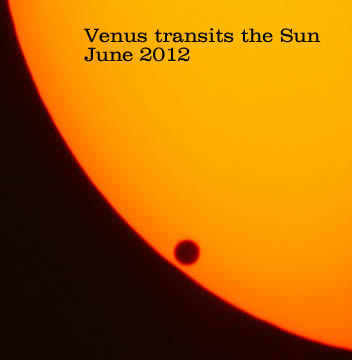
Venus
transits the Sun
|

|
For all your horoscopes, we recommend Ed Tamplin's excellent astrology site.

|
Astrology Oz is best viewed using firefox, screen resolution 1280x1024, macromedia flash enabled.
Firefox - the only browser that gives total control over web browsing, see what you want to see - download firefox

© AstrologyOz 2014
All articles and images on this site are subject to copyright and may not be copied, stored or modified in any way.
AstrologyOz - designed and maintained by Sherrynne Dalby