
Welcome to AstrologyOz
Apologies to all those who rely on this resource.. I have had major server issues which are now hopefully fully resolved.... after 4 months... I will be updating everything over the next week .... so thanks for your patience :)
|
|
|
World
News 2014
|

|
All your planetary data for 2014 is here now Planetary stations , Void of Course Moon , Moon phases and Planet Ingresses for 2014 plus Moon Planting Guide |

|
Jan - April 2014 Planting Guide
,
plus 2014 Moon phases,Planet Ingresses and retrogrades,
|
A Guide To Fixed Stars Visible From AustraliaAustralia’s southern latitude gives skywatchers access to a remarkable collection of bright stars. Some are familiar points in every Australian night sky, while others appear only during particular seasons or remain low above the horizon from northern parts of the country. In astronomy, “fixed stars” is an old term for stars that appear to hold their positions relative to one another. They are not actually motionless: every star has its own movement through space, and Earth’s precession slowly changes the coordinates used on star charts. The name simply distinguishes them from the wandering planets. Astrology gives these stars another layer of meaning. Traditional systems associate selected stars with qualities such as courage, intensity, brilliance, protection or ambition. Their symbolism works best when combined with the whole birth chart rather than treated as a standalone prediction. For practical skywatching, begin with the AstrologyOz resource, where planetary movements, lunar cycles and related reference material can help place a star observation within a wider celestial calendar. A clear night, a red-light torch and a basic star map are enough to begin. What Makes A Star “Fixed”?The planets shift noticeably against the background stars from week to week, while stars keep the same patterns over a human lifetime. This is why Orion, the Southern Cross and Scorpius remain recognisable even though Earth is travelling through space. The distinction is observational, not a claim that stars are immobile. In a natal chart, a fixed star is usually considered significant when it lies close to a planet, angle or other important point. Astrologers often use a small orb, especially for the brightest stars. Exact practice varies between traditions, and tropical positions change gradually because of precession, so a modern chart may show a different zodiac degree from a medieval source. Australia’s location makes the southern sky particularly rewarding. Canopus, Alpha Centauri, Achernar and Acrux are prominent examples, while northern stars such as Polaris are below the horizon for most or all Australian observers. Southern Stars To KnowCanopus is the second-brightest star in the night sky and a magnificent southern marker. It can be seen from every part of Australia, although its height above the horizon varies. From Hobart it climbs much higher than from Darwin, where it remains a more southerly sight. Alpha Centauri is the closest star system to the Sun and appears as a bright point near the Southern Cross. Acrux, the brightest star in Crux, helps define the cross shape, while Achernar shines near the long, winding constellation of Eridanus. Sirius, the brightest star overall, is also easy to find and appears in the summer evening sky. Useful starting points include:
The Magellanic Clouds are another southern highlight, especially from dark locations in Western Australia, the Northern Territory and inland Queensland. They are dwarf galaxies rather than fixed stars, but their presence helps illustrate how much more of the southern celestial landscape is available from Australia. Seasonal Viewing Across AustraliaDuring the warmer months, Orion, Sirius, Betelgeuse and Rigel dominate the evening sky. Aldebaran and the Pleiades are also visible, with the Pleiades appearing as a compact cluster that many people can recognise without optical aid. In astrology, these stars and clusters have long histories of interpretation, though their meanings differ between authors. Autumn brings Scorpius and Antares into a stronger evening position. Antares has a noticeable orange-red colour and sits near the heart of the scorpion. Spica, in Virgo, is another useful seasonal reference, while Canopus and the Southern Cross remain important guides in the southern half of the sky. Winter is especially rich for southern observers. The Milky Way becomes more impressive from rural areas, and the Southern Cross stands prominently in the evening. From Sydney or Melbourne, light pollution can wash out faint stars, so a trip beyond the metropolitan fringe may reveal far more than a backyard session. By spring, Fomalhaut and the constellations around Pegasus become useful targets, while familiar southern stars continue to circle the pole. The exact timing changes with latitude, so a star that rises comfortably after dinner in Perth may appear later from Brisbane or Darwin. Finding Stars From City And CountryStart by allowing your eyes to adapt for at least 15 minutes. Turn off outdoor lights, avoid looking at phone screens and use a dim red light when checking a chart. Australian suburban skies often have strong illumination from roads, sports grounds and shopping areas, making bright stars the best first targets. A pair of 7x50 or 10x50 binoculars is often more useful than an inexpensive telescope. They are widely available through Australian optics and camera retailers, and the local second-hand market can provide affordable options in Australian dollars. Choose stable, comfortable equipment rather than chasing very high magnification. A simple observing routine works well:
Indigenous Australian sky traditions add important cultural depth to local stargazing. The Emu in the Sky, formed by dark Milky Way markings rather than bright stars, is a well-known example, but traditions differ between First Nations communities. Learn from reliable cultural sources and avoid treating these knowledge systems as decorative versions of European constellations. Fixed Stars In AstrologyA fixed star’s astrological influence is generally strongest when it is closely aligned with a natal planet or chart angle. Regulus is associated in traditional texts with leadership and visibility; Antares with intensity and conviction; Spica with talent or protection; and Fomalhaut with vision and ideals. These keywords are starting points, not fixed outcomes. Interpretation should include the condition of the planet involved, the house placement and the rest of the chart. A bright star near the Ascendant may be read differently from the same star connected with Saturn or the Midheaven. Checking the chart’s zodiac framework is essential because tropical and sidereal astrology assign different longitudes. The word “fixed” should never be confused with “fated.” Stars can provide symbolic emphasis, but personal choices, social conditions and lived experience shape how any chart is expressed. Readers interested in the wider relationship between spirituality, symbolism and popular culture may also encounter the site’s Pai Gow review among its broader subject matter. Take a notebook outside and record the date, location, weather, visible constellations and the stars that catch your attention. Begin with one or two bright targets, then return on different evenings to notice seasonal movement. Explore the southern sky with patience, use reputable charts, and connect celestial observation with the Australian landscape around you. |
|
|
|
Benedict
XVI resigns 2013
|

|
|
|
Election
2013- take 2
|

|
|
|
Turkey
Unrest 2013
|
|
|
|
Election
2013
|

|
|
|
World
News 2013
|

|
|
|
Serialised
story of the greates ship of her time and
|

|
|
|
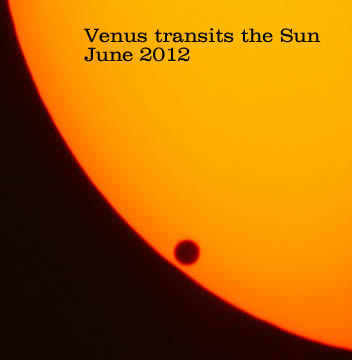
Venus
transits the Sun
|

|
For all your horoscopes, we recommend Ed Tamplin's excellent astrology site.

|
Astrology Oz is best viewed using firefox, screen resolution 1280x1024, macromedia flash enabled.
Firefox - the only browser that gives total control over web browsing, see what you want to see - download firefox

© AstrologyOz 2014
All articles and images on this site are subject to copyright and may not be copied, stored or modified in any way.
AstrologyOz - designed and maintained by Sherrynne Dalby