
Welcome to AstrologyOz
Apologies to all those who rely on this resource.. I have had major server issues which are now hopefully fully resolved.... after 4 months... I will be updating everything over the next week .... so thanks for your patience :)
|
|
|
World
News 2014
|

|
All your planetary data for 2014 is here now Planetary stations , Void of Course Moon , Moon phases and Planet Ingresses for 2014 plus Moon Planting Guide |

|
Jan - April 2014 Planting Guide
,
plus 2014 Moon phases,Planet Ingresses and retrogrades,
|
Tracking Planetary Retrogrades Across the Australian SkyFor Australians who keep an eye on the sky, planetary retrogrades have become part of the rhythm of the year. From bustling queues for flat whites in Brunswick to quiet evenings under wide skies near Broken Hill, many people check whether Mercury is about to station before signing a lease, booking a holiday, or starting a new job. The practice has woven itself into everyday conversations, with "Mercury is retrograde" appearing on morning talk shows and in Bondi surf club group chats alike. Tracking these cycles does not require fancy gear or a degree in astronomy. A clear routine, a reliable ephemeris, and a steady understanding of the local clock can help anyone follow the planets as they appear to slow and backtrack. Whether you live in Perth, Hobart, or somewhere in between, the same cosmic movements apply, though the timestamps will shift depending on your state. Understanding what a retrograde actually isA planet does not genuinely travel backwards in its orbit. From our vantage point on Earth, when an outer planet overtakes us, or we catch up to an inner planet, the relative motion creates an optical illusion. The planet appears to slow, stop, and then move in the opposite direction against the backdrop of the zodiac. This apparent reversal is what astrologers call a retrograde, and it has been tracked for thousands of years. The illusion carries real symbolic weight. During a retrograde, the usual forward momentum of a planet's themes tends to feel interrupted, slowed, or turned inward. Communication gets tangled during Mercury retrograde, relationships revisit old ground during Venus retrograde, and motivation wanes when Mars stations backwards. Recognising the optical nature of the phenomenon helps separate the science from the symbolism, which is fair dinkum useful when mates ask why your phone keeps dropping out. Setting up your tracking calendarThe first practical step is choosing how you will record the movements. Many Australians use a combination of digital calendars and a dedicated notebook tucked beside the bed. The key is consistency: write down the date, the planet, and the degree and sign it occupies. If you are in Sydney or Melbourne, remember to note whether you are on AEDT or AEST, because station times are given in Universal Time and will shift by ten or eleven hours depending on daylight saving. Paper planners still have a strong following here, and stationery shops in Adelaide and Fremantle often stock astrology-specific journals. Whether you choose a printable template or a leather-bound book, make sure the format allows you to track at least a year ahead. A simple spreadsheet with columns for date, planet, sign, degree, and station type will serve just as well as any bound book. Mapping the personal and social planetsThe planets closest to the Sun, Mercury and Venus, retrograde more frequently and for shorter periods. Mercury retrogrades three or four times a year for roughly three weeks each, while Venus follows a longer pattern of about eighteen months between retrogrades lasting roughly forty days. These faster cycles touch everyday matters such as conversations, travel, contracts, and partnerships. Mars occupies a middle ground. It reverses direction roughly every two years for about two and a half months, affecting drive, energy, and how we handle conflict. Tracking Mars retrograde is particularly useful in Australia during the warmer months, when many people take long service leave and find their usual pace disrupted by travel snags or workplace tensions. Comparing the planets side by sideKeeping a side-by-side comparison of the planets helps when you are reviewing patterns across years. Before you start logging dates, it helps to know roughly what to expect from each cycle. The summary below outlines the approximate frequency, average duration, and core themes for each planet's retrograde motion.
Once you have a sense of the typical length and tempo of each cycle, you can pace your expectations accordingly. A Venus retrograde will not derail an entire decade, while a Pluto retrograde can colour several years of collective experience. Keeping this scale in mind prevents the small cycles from feeling overwhelming and the slow ones from being overlooked. Working with Australian time zones and daylight savingTime zones across Australia are not uniform, and they shift twice a year in some states. New South Wales, Victoria, Tasmania, the ACT, and South Australia move between AEST and AEDT, while Queensland, the Northern Territory, and Western Australia stay fixed on their respective zones all year. This matters because planetary stations are published in Universal Time, so a station at 14:00 UT becomes midnight AEST or 1:00 am AEDT, and in Perth it lands at 10:00 pm the same evening. During the months when daylight saving is active, southerners gain an extra hour of evening light but lose an hour of sleep, while northerners carry on unaffected. Whatever your location, converting the published time to your local clock is the only way to know exactly when a planet will station, so it pays to keep a conversion chart handy. Noting shadow phases and station pointsThe retrograde itself is only one part of the cycle. Before a planet stations retrograde, it crosses a stretch of zodiac degrees known as the shadow zone, and it will return to that zone after it goes direct. Noting when a planet enters and exits its shadow gives you the complete picture rather than just the middle act. Station points, when the planet appears to stop, are often the most intense moments. Mark these dates in your calendar and pay attention to what themes surface over the following days. Many Australian astrologers find that events around station times carry echoes of the retrograde's central message, often surfacing in the news cycle within a week. A quick scan of the morning papers over your first cuppa will often reveal the themes playing out. Developing a daily observation habitA working practice is one that survives the ordinary demands of life. Set aside a few minutes each morning with your first cup of tea, glance at where the Moon is, and note any planets that are within a day of stationing. Over time, patterns will emerge that feel as familiar as a favourite walking track in the Blue Mountains, and your notes will become a personal record of how the sky has moved through your life. For a deeper dive into planetary stations and ingresses suited to Australian skies, the resources at astrologyoz.com offer locally relevant ephemeris data and ongoing commentary. If you are looking for reflective reading to support your observations, a piece on morning reflections on quiet calm provides a thoughtful companion to the practice. |
|
|
|
Benedict
XVI resigns 2013
|

|
|
|
Election
2013- take 2
|

|
|
|
Turkey
Unrest 2013
|

|
|
|
Election
2013
|

|
|
|
World
News 2013
|

|
|
|
Serialised
story of the greates ship of her time and
|

|
|
|
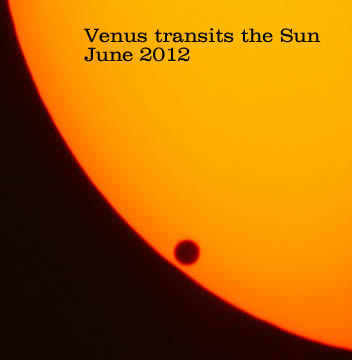
Venus
transits the Sun
|

|
For all your horoscopes, we recommend Ed Tamplin's excellent astrology site.

|
Astrology Oz is best viewed using firefox, screen resolution 1280x1024, macromedia flash enabled.
Firefox - the only browser that gives total control over web browsing, see what you want to see - download firefox

© AstrologyOz 2014
All articles and images on this site are subject to copyright and may not be copied, stored or modified in any way.
AstrologyOz - designed and maintained by Sherrynne Dalby