
Welcome to AstrologyOz
Apologies to all those who rely on this resource.. I have had major server issues which are now hopefully fully resolved.... after 4 months... I will be updating everything over the next week .... so thanks for your patience :)
|
|
|
World
News 2014
|

|
All your planetary data for 2014 is here now Planetary stations , Void of Course Moon , Moon phases and Planet Ingresses for 2014 plus Moon Planting Guide |

|
Jan - April 2014 Planting Guide
,
plus 2014 Moon phases,Planet Ingresses and retrogrades,
|
When Mercury goes direct: planning journeys across AustraliaMercury direct stations mark one of the most useful turning points in the travel calendar. While most people have heard about Mercury retrograde and the caution it brings, fewer understand the specific value of the moment Mercury stations direct. This is when the planet of transport, communication, and logistics resumes forward motion after weeks of apparent backward drift. For Australians, who routinely cross vast distances for work, family, and holidays, aligning journeys with these stations is more than symbolism. It is a practical tool that can smooth the usual friction points: missed connections, lost luggage, misunderstood bookings, and documentation hiccups. When Mercury stations direct, the cosmic weather shifts from review to forward thrust. Astrologers working with local charts pay close attention to which zodiac degree and sign Mercury occupies at the station, as this colours the flavour of the cycle ahead. The time of day the station occurs in Australian time zones also matters, since planetary alignments work with the sky overhead. Tracking these dates is straightforward for anyone who keeps a planetary stations calendar at hand, where moon phase tables and ingress details for the southern hemisphere are updated regularly.
Understanding the shift from retrograde to directMercury retrograde gets plenty of attention, but the direct station is its quieter counterpart. Three times a year, Mercury slows to a standstill before resuming prograde motion. The day of the station, and the two or three days either side, form a kind of celestial pause button. During the retrograde phase, plans tend to get revisited, rerouted, or postponed. When Mercury stations direct, the signal is that the revising phase is wrapping up and forward momentum is supported again. Astrologers generally advise waiting until Mercury has cleared the degree of the station before launching anything important. This is not about fear of the planet. It is about working with the rhythm. Mercury rules transport, messaging, contracts, gadgets, and small logistics. When Mercury is direct and settled, these areas flow with fewer snags. The first days after a direct stationThe hours immediately following a direct station are often described as wobbly or disorienting. Mercury has just changed direction, and the energy can feel uncertain. Travellers who book flights, sign leases on short-term rentals, or finalise visa applications during this window may find themselves correcting details later. Most astrologers recommend a buffer of three to five days after the station before committing to major travel decisions. Once Mercury has moved a couple of degrees past the station degree, the direct motion settles into a steady forward current. For Australian travellers, this might mean waiting a few days after the station before booking that flight from Adelaide to Cairns, or before signing a rental agreement for a holiday house in Byron Bay. Patience at the station pays off in the weeks that follow. Travel scenarios that benefit from direct motionCertain travel activities are particularly well supported when Mercury is direct and clear of the station shadow. Booking these during direct periods tends to produce fewer hiccups and smoother outcomes.
Conversely, Mercury direct is also a good time to revisit trips that were postponed during the previous retrograde. Rescheduling, rebooking, and launching the second attempt often works better once Mercury is firmly direct. Working with Australian distances and biosecurity realitiesAustralia's geography makes travel planning uniquely demanding. A flight from Perth to Sydney takes more than four hours and crosses two time zones, while a trip from Hobart to Darwin involves multiple connections and a two-hour time difference. When Mercury is direct and settled, these complex itineraries tend to run more smoothly. Local realities also matter. Biosecurity regulations at Australian borders are strict, and travellers returning with food, plant material, or outdoor gear must declare items correctly. Direct Mercury periods favour the careful reading of biosecurity declarations, reducing the risk of fines or delays at the border. Domestic travellers should also remember that state borders carry their own rules around fruit fly restrictions and fire bans, which affect road trips and camping holidays. Mercury direct supports the careful attention required for these varying entry conditions across the country.
Mapping the year ahead with Mercury stationsMost years bring three Mercury direct stations, occasionally four. These moments divide the year into natural windows for different kinds of travel. The early-year station often coincides with summer holidays in the southern hemisphere, while the mid-year station falls near the winter break. Travellers planning a significant trip can map their dates against these stations. Launching a journey after a direct station and returning before the next retrograde tends to produce the cleanest results. For Australians dreaming of a European itinerary, a New Zealand road trip, or a return to family in Southeast Asia, the direct stations offer reliable green lights. Detailed date lists, exact station times in Australian time zones, and the zodiac degree of each station are available through AstrologyOz, where the planetary stations calendar is kept current alongside moon phase tables and other southern hemisphere resources. Plan your next journey around a Mercury direct station and watch the logistics fall into place with far less effort. |
|
|
|
Benedict
XVI resigns 2013
|

|
|
|
Election
2013- take 2
|

|
|
|
Turkey
Unrest 2013
|

|
|
|
Election
2013
|

|
|
|
World
News 2013
|

|
|
|
Serialised
story of the greates ship of her time and
|

|
|
|
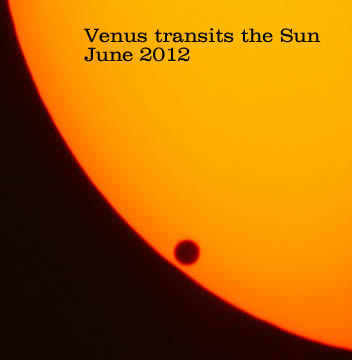
Venus
transits the Sun
|

|
For all your horoscopes, we recommend Ed Tamplin's excellent astrology site.

|
Astrology Oz is best viewed using firefox, screen resolution 1280x1024, macromedia flash enabled.
Firefox - the only browser that gives total control over web browsing, see what you want to see - download firefox

© AstrologyOz 2014
All articles and images on this site are subject to copyright and may not be copied, stored or modified in any way.
AstrologyOz - designed and maintained by Sherrynne Dalby