
Welcome to AstrologyOz
Apologies to all those who rely on this resource.. I have had major server issues which are now hopefully fully resolved.... after 4 months... I will be updating everything over the next week .... so thanks for your patience :)
|
|
|
World
News 2014
|

|
All your planetary data for 2014 is here now Planetary stations , Void of Course Moon , Moon phases and Planet Ingresses for 2014 plus Moon Planting Guide |

|
Jan - April 2014 Planting Guide
,
plus 2014 Moon phases,Planet Ingresses and retrogrades,
|
Reading the Planetary Ingress Table on AstrologyOzTracking when a planet moves from one zodiac sign to the next is a foundational practice for any astrologer, and the ingresses page on this site condenses that information into a single reference. For Australian readers especially, knowing the exact moment the Sun leaves Pisces for Aries (which marks our autumn equinox, not the spring one northern hemisphere charts describe) or when Mercury dips into Sagittarius for the holiday season helps align personal decisions with celestial rhythms. The table itself is laid out chronologically across the year, with each row showing a planet, the sign it is entering, and the precise date and time of the change. Rather than scrolling through long horoscope paragraphs, visitors can scan the grid to find out what is moving, where, and when. This article walks through every column and explains how to interpret the data for practical Australian use. What a Planetary Ingress MeansAn ingress occurs the moment a planet crosses the boundary from one zodiac sign into the next. Because zodiacal signs occupy exactly thirty degrees of the ecliptic, an ingress happens when the planet reaches zero degrees of the incoming sign, having just left twenty-nine degrees of the previous one. Each planet moves at its own pace, so the Sun changes signs roughly every month, the Moon every two and a half days, Mercury and Venus every few weeks, and the slow outer planets only every couple of years. In Australian astrology, sign changes carry a slightly different flavour than they do in northern hemisphere traditions. Aries, ruled by Mars, falls across September and October here, opening the bushfire season and the spring growth cycle. Capricorn, by contrast, arrives in the height of summer, which softens its usual reputation for sober, cold austerity. Reading the table with this hemispheric flip in mind gives a more grounded picture of how each ingress might play out locally. Reading Each Column Step by StepThe left-most column lists the planet, named plainly (Sun, Moon, Mercury, Venus, Mars, Jupiter, Saturn, Uranus, Neptune, Pluto) so there is no ambiguity. Beside it sits the incoming sign, written with its standard symbol or full name depending on the view you have selected. The middle column records the date in day-month-year format using Australian conventions, so a January entry will read as 14/01/2026 rather than the American 01/14/2026. The right-hand column gives the exact time. By default, this is set to Australian Eastern Standard Time, which suits readers in Sydney, Melbourne, Hobart, Canberra, and Brisbane. The timestamp adjusts automatically once daylight saving is in effect, switching to AEDT between the first Sunday of October and the first Sunday of April. If you live further west, you can adjust the display to match your local zone, whether that is ACST for Adelaide or AWST for Perth. Working With Australian Time ZonesAustralia spans three primary time zones, which is why the table settings matter so much. Queensland stays on AEST year-round with no daylight shift, while New South Wales, Victoria, Tasmania, the ACT, and South Australia move forward an hour for the warmer half of the year. Western Australia is on AWST, two hours behind AEDT during summer and three hours behind during winter. Getting the timezone right ensures you do not accidentally plan a ritual hour too early or too late. Daylight saving creates the most common point of confusion. A planet entering Libra at 2:15am on 23 September might be labelled 1:15am if you forget that clocks jumped forward the previous weekend in the southern states. The table mirrors official Australian time, so double-check whether the date falls inside or outside the daylight window before you write the event into your diary. The site's related moon phase and void-of-course pages use the same time standard, so once you lock it in here you can read across confidently. Practical Uses for Australian ReadersOnce you can read the entries, the table becomes a planning tool for a range of activities. Many visitors use it to time moon planting, choosing root crops when the Moon is in an earth sign and leafy greens when it sits in a water sign. Others consult it before elections, job interviews, or property purchases, looking for supportive alignments or unwanted heavy transits. Mundane astrologers watch the slower planet ingresses for cues about weather patterns, political shifts, and major world news cycles that touch Australian shores. A short worked example shows the process. Suppose you want to know when Jupiter next moves into Gemini. Scan the Jupiter rows, follow the sign column until you see Gemini, then note the date and the local time. From there, you can cross-check with the planetary stations table to see whether Jupiter will be retrograde in that sign, and with the moon phases table to understand what lunar conditions surround the change. The three resources slot together like pages in the same book, each feeding the next line of inquiry. Quick Reference for the Planetary Cadence
These figures vary slightly because some signs take longer to traverse than others. The Moon, for instance, moves fastest through Scorpio and slowest through Taurus due to the elliptical nature of its orbit. The outer planets speed up and slow down with their retrogrades, sometimes spending extra months in the final degrees of a sign before finally crossing over. If you would like a guided tour of the rest of the site and how the various tables connect to one another, the welcome page is the best place to start your visit. |
|
|
|
Benedict
XVI resigns 2013
|

|
|
|
Election
2013- take 2
|

|
|
|
Turkey
Unrest 2013
|
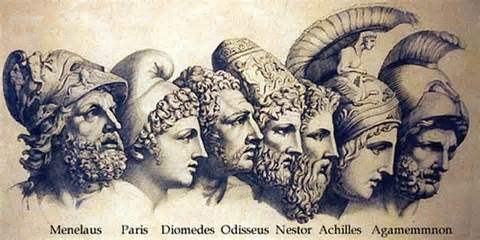
|
|
|
Election
2013
|

|
|
|
World
News 2013
|

|
|
|
Serialised
story of the greates ship of her time and
|

|
|
|
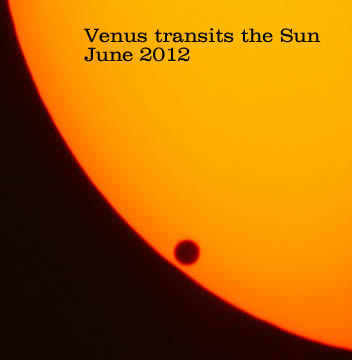
Venus
transits the Sun
|

|
For all your horoscopes, we recommend Ed Tamplin's excellent astrology site.

|
Astrology Oz is best viewed using firefox, screen resolution 1280x1024, macromedia flash enabled.
Firefox - the only browser that gives total control over web browsing, see what you want to see - download firefox

© AstrologyOz 2014
All articles and images on this site are subject to copyright and may not be copied, stored or modified in any way.
AstrologyOz - designed and maintained by Sherrynne Dalby