
Welcome to AstrologyOz
Apologies to all those who rely on this resource.. I have had major server issues which are now hopefully fully resolved.... after 4 months... I will be updating everything over the next week .... so thanks for your patience :)
|
|
|
World
News 2014
|

|
All your planetary data for 2014 is here now Planetary stations , Void of Course Moon , Moon phases and Planet Ingresses for 2014 plus Moon Planting Guide |

|
Jan - April 2014 Planting Guide
,
plus 2014 Moon phases,Planet Ingresses and retrogrades,
|
How to Read the Void of Course Moon for important conversationsTiming a consequential talk is more than putting it in a calendar. The Moon’s movement can add a layer of symbolism, and readers often ask how the Void of Course Moon affects conversations involving money, relationships, employment or public decisions. Treat it as an astrological condition to consider, not a switch that makes outcomes inevitable. A void Moon occurs when the Moon completes its final meaningful contact with a planet and then enters a sign without making another aspect before that sign change. Definitions vary near a cusp, and degree-based and sign-based methods can give different boundaries, so the chart source and calculation method matter. For Australian readers, local clock details can alter the apparent window. Sydney and Melbourne move between AEDT and AEST, Brisbane remains on AEST, Perth stays on AWST, and Adelaide switches between ACST and ACDT. Always convert the ephemeris time rather than assuming the listed time matches your phone. The practical aim is not to avoid every lunar void, but to recognise its symbolism and use stronger windows for exchanges that need clarity. Routine admin can still proceed, while sensitive negotiations benefit from preparation, a settled transit and an accurate Australian time. What the Void of Course Moon is actually signallingIn astrological terms, the void begins after the last separating square, trine, conjunction, opposition or sextile has completed, while the Moon continues through the remaining degrees of its sign. It ends at the lunar ingress, when the Moon enters the next sign and can begin applying to a planet again. Traditional astrology sometimes called this a Moon that “goes to nothing,” because no further aspect seems to develop. Modern interpretations treat it less as failure and more as closure: a subject can lose momentum, reach a provisional ending or move between phases. The symbol acquires meaning from the whole chart and the real-world stakes of the discussion. Why the Moon changes conversational momentumThe Moon changes sign roughly every two and a half days, so a void can arrive sooner than many people expect. During the final degrees, plans may feel complete, language may become final, or one party may assume agreement that has not actually been secured. That makes it a useful checkpoint when reading how a conversation is likely to unfold. This does not mean every meeting during a lunar void will fail. Routine requests, friendly catch-ups and internal preparation can proceed normally. It becomes more relevant when a discussion carries legal, financial, relational or electoral consequences, or when both sides need a clear decision rather than a temporary exchange. Check the chart before choosing the timeUse an ephemeris or dated Void of Course Moon listing that shows exact aspect times, Moon speed, sign ingress, retrograde motion and planetary stations. Record the event in Australian Eastern Standard Time, convert to daylight time where relevant, and check the time zone shown for Brisbane, Perth, Adelaide and other locations. Different programs may use slightly different aspect orbs. Public timing illustrates the method: compare a federal election’s polling-day schedule with lunar events, as the site’s guide to Australian election alignments does. This is especially useful for commentators tracking Canberra campaign deadlines, where a precise timestamp can matter as much as the symbolic reading. Prepare sensitive talks before the void beginsBegin before the void, not during it. Write the purpose of the talk, separate facts from feelings, identify the decision you need and prepare evidence. Share an agenda, name the person authorised to decide, and rehearse the opening. If possible, send key material early so participants arrive ready rather than using the meeting to discover the issue. If the appointment cannot move, keep the exchange simple and provisional. Avoid surprising disclosures, broad claims and irreversible commitments. Summarise what was said in writing, mark any unresolved point, and schedule the substantive follow-up for a clearer lunar window. This approach preserves momentum without treating symbolic timing as a substitute for sound negotiation. Find a stronger window without chasing perfectionA stronger window often follows the ingress, especially once the Moon applies to a planet associated with the topic: Mercury for wording, Venus for relationships, Jupiter for agreement or Saturn for structure. The first contact is not automatically harmonious, so choose a calm hour and allow enough time for the discussion to settle. A separating contact can suit review and closure. When the date is fixed, treat the chart as a modifier rather than a veto. An arvo meeting in Sydney can work when everyone arrives with the decision ready, while a lengthy dispute benefits from a later follow-up. A Saturday at a Melbourne growers’ market suits casual groundwork, but contractual details deserve a clearer window. For a second astrological viewpoint, Abby McDonald’s astrological perspective offers another interpretation to compare. Compare the available conversation windowsA side-by-side view clarifies which activities suit each lunar phase and where extra care is needed:
If timing cannot be changed, lower the stakes of the exchange rather than pretending the lunar condition is irrelevant. Invite clarification, avoid negotiating against the clock and make any decision subject to written confirmation. The aim is to prevent ambiguity from hardening into a dispute. Turn lunar timing into a conversation planBuild a simple plan: check the lunar condition, convert every relevant time to your local zone, choose the purpose of the conversation and decide which outcome needs a clear answer. Keep the agenda visible, allow a pause after difficult points and reserve time for written follow-up. The extra steps are small, but they make the symbolism useful rather than vague. For the next step, open AstrologyOz’s Australian astrology resources to check the current lunar condition, confirm your local time and locate practical guidance for moon phases, stations and ingresses. Make the plan, open the relevant chart and enter the conversation with a clear outcome in view. |
|
|
|
Benedict
XVI resigns 2013
|

|
|
|
Election
2013- take 2
|

|
|
|
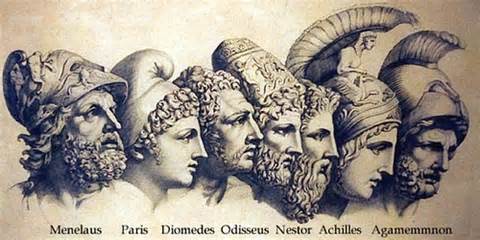
Turkey
Unrest 2013
|
|
|
|
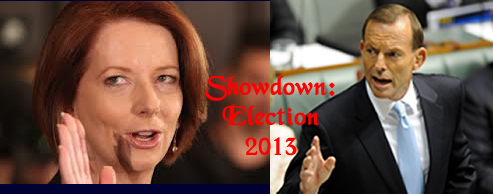
Election
2013
|
|
|
|
World
News 2013
|

|
|
|
Serialised
story of the greates ship of her time and
|

|
|
|
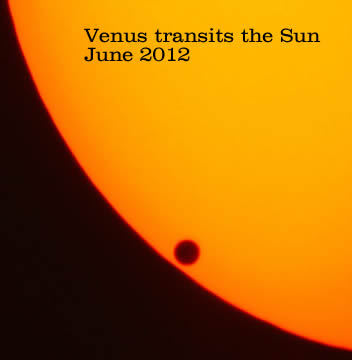
Venus
transits the Sun
|

|
For all your horoscopes, we recommend Ed Tamplin's excellent astrology site.

|
Astrology Oz is best viewed using firefox, screen resolution 1280x1024, macromedia flash enabled.
Firefox - the only browser that gives total control over web browsing, see what you want to see - download firefox

© AstrologyOz 2014
All articles and images on this site are subject to copyright and may not be copied, stored or modified in any way.
AstrologyOz - designed and maintained by Sherrynne Dalby