
Welcome to AstrologyOz
Apologies to all those who rely on this resource.. I have had major server issues which are now hopefully fully resolved.... after 4 months... I will be updating everything over the next week .... so thanks for your patience :)
|
|
|
World
News 2014
|

|
All your planetary data for 2014 is here now Planetary stations , Void of Course Moon , Moon phases and Planet Ingresses for 2014 plus Moon Planting Guide |

|
Jan - April 2014 Planting Guide
,
plus 2014 Moon phases,Planet Ingresses and retrogrades,
|
How to Read Your Birth Chart Using Australian Time ZonesA birth chart is calculated for a precise moment and place, so Australian time zones matter from the first step. The chart records where the planets appeared in the sky when you were born, while the local clock determines the correct relationship between those planets, the Ascendant and the houses. Australia makes this process slightly more involved than it may appear. Time zones differ between states, daylight saving changes the clock in several regions, and historical rules have shifted over the decades. A chart for a baby born in Sydney in January cannot be calculated using the same settings as one for a person born in Brisbane on the same date. Start with the correct birth detailsCollect your birth certificate or hospital record if possible. You need the calendar date, exact local time and birthplace, including the town or suburb. “Melbourne” and “regional Victoria” may use the same clock, while a place near a state border can require closer checking.
These are the modern patterns, not a complete historical record. Older births may involve different daylight-saving dates, wartime adjustments or local time conventions. Australian astrology resources can help you compare planetary information and timing references alongside a properly calculated chart. Convert local clock time carefullyAstrology software usually needs a time zone expressed as an offset from UTC, formerly called GMT. If someone was born in Sydney at 8:00 am during daylight saving, the relevant setting is generally UTC+11, not UTC+10. A birth in Brisbane at the same clock time remains UTC+10 because Queensland does not use daylight saving. The date can change when local time is converted to UTC. A birth at 12:30 am in Perth may fall on the previous UTC date, while a late-night birth on the east coast can also shift when entered into a universal-time system. Let the software perform the conversion after you select the correct local zone and daylight-saving rule. Check daylight saving for the birth yearDo not assume that daylight saving began on the same date every year. In New South Wales, Victoria, Tasmania and the ACT, the start and finish dates have changed over time. South Australia has its own historical details, and several states have held daylight-saving trials or referendums. A person born in Adelaide in summer may therefore need UTC+10:30, while a person born there in winter uses UTC+9:30. The same month can produce different results in different years. Search a reliable government time-zone archive or a reputable astronomical database when the birth date is older, close to a clock change, or connected with a move between states. Select the birthplace, not just the stateThe birthplace supplies geographic coordinates, which affect the Ascendant and house cusps. Choose the actual town or suburb from the calculator’s location list rather than selecting a capital city automatically. A birth in Cairns, for example, should not be entered as Brisbane merely because both are in Queensland. Latitude also affects the chart. Darwin, Hobart and Sydney occupy very different positions on the continent, and their horizons produce different rising signs at the same universal moment. If the exact suburb is unavailable, use the nearest recognised locality and note the approximation in your records. Read the angles before the housesThe Ascendant, or rising sign, is the zodiac sign coming over the eastern horizon at birth. The Midheaven marks the upper meridian and is often associated with public life, direction and vocation. Both are highly sensitive to time-zone errors and inaccurate birth times. Begin by locating the Ascendant, Descendant, Midheaven and Imum Coeli. Then inspect which planets are close to those angles. A difference of fifteen or thirty minutes can move a planet nearer to a house cusp or alter the degree of the Ascendant, especially when the recorded time is approximate. Interpret planets, signs and houses togetherThe planets describe functions such as thinking, attachment, drive and responsibility. Signs show how those functions operate, while houses indicate the life area where they become visible. For example, Mars in a water sign may describe a different style of action from Mars in a fire sign, but its house placement shows whether that energy is focused on work, home, relationships or community matters. Start with the Sun, Moon and Ascendant, then consider Mercury, Venus and Mars. After that, examine Jupiter and Saturn, followed by the slower planets and the chart’s major aspects. Avoid treating one placement as a fixed personality verdict; the full pattern matters more than an isolated symbol. Use Australian timing references wiselyBirth-chart interpretation becomes more useful when paired with transits, retrogrades, ingresses and lunar phases. Timing tables must also be adjusted for the location where you are living now, which may differ from your birthplace. A chart calculated for Perth remains a Perth birth chart, even if you now live in Newcastle or on the Gold Coast. Resources such as planetary timing pages can provide Australian-focused reference material for stations, Moon phases and other celestial events. Check whether a listed time is local Australian time, UTC, or another city’s time before applying it to your schedule. Handle uncertain birth times honestlyIf the record says “about 6 am”, do not enter 6:00 am and treat every house placement as certain. Create a range around the estimated time and see which features remain stable. The Moon may change degree, and the Ascendant can move considerably during the morning. Rectification is sometimes used to test possible birth times against major life events, but it is interpretive rather than a replacement for official documentation. Keep the original recorded time visible, mark any adjustment clearly and avoid presenting a refined chart as proven fact. Use a reputable chart calculator, confirm the Australian time-zone setting and save the source details with the chart. Then read the chart in layers: angles first, personal planets next, houses and aspects after that, and current planetary movements last. This approach gives your birth data the precision it deserves while keeping interpretation grounded in the realities of Australian timekeeping. |
|
|
|
Benedict
XVI resigns 2013
|

|
|
|
Election
2013- take 2
|

|
|
|
Turkey
Unrest 2013
|

|
|
|
Election
2013
|

|
|
|
World
News 2013
|

|
|
|
Serialised
story of the greates ship of her time and
|

|
|
|
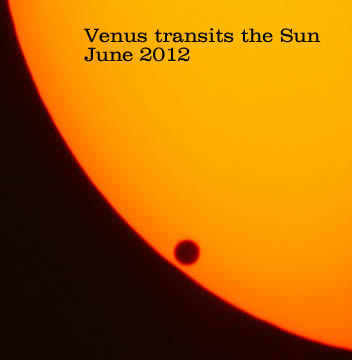
Venus
transits the Sun
|

|
For all your horoscopes, we recommend Ed Tamplin's excellent astrology site.

|
Astrology Oz is best viewed using firefox, screen resolution 1280x1024, macromedia flash enabled.
Firefox - the only browser that gives total control over web browsing, see what you want to see - download firefox

© AstrologyOz 2014
All articles and images on this site are subject to copyright and may not be copied, stored or modified in any way.
AstrologyOz - designed and maintained by Sherrynne Dalby