
Welcome to AstrologyOz
Apologies to all those who rely on this resource.. I have had major server issues which are now hopefully fully resolved.... after 4 months... I will be updating everything over the next week .... so thanks for your patience :)
|
|
|
World
News 2014
|

|
All your planetary data for 2014 is here now Planetary stations , Void of Course Moon , Moon phases and Planet Ingresses for 2014 plus Moon Planting Guide |

|
Jan - April 2014 Planting Guide
,
plus 2014 Moon phases,Planet Ingresses and retrogrades,
|
Tracking the 2025 Saturn Retrograde in Pisces for Financial PlanningSaturn’s apparent backward motion can be a prompt for review, not a prediction of financial loss. In Pisces, the focus is uncertainty, belief, and the blurred line between a sound plan and a hopeful guess. Its practical value is a disciplined moment to examine income, spending, debt, and investments before emotion decides. For anyone asking how to track the 2025 Saturn retrograde in Pisces for financial planning, begin with the station calendar, not dramatic predictions. Saturn stations retrograde on 6 April, returns to Aquarius on 17 June, re-enters Pisces on 25 July, and stations direct on 1 September. The April and September stations are the main checkpoints. Convert station times to Australian Eastern Standard Time: Sydney and Melbourne change clocks, while Brisbane stays on AEST. Anchor the diary to household cash flow, Australian savings accounts, superannuation, the AUD, and the ASX 200, turning a celestial timetable into a usable decision journal. Use astrology as a reflective framework, not financial advice or a market forecast. A licensed financial planner, tax agent, or qualified adviser should assess individual investments, debt, and tax. The retrograde is most useful when it prompts slower decisions, documented assumptions, and clear risk limits. Set the key dates in Australian timeFour markers in Saturn’s path provide useful prompts for the financial journal. Treat them as review points, not automatic buy or sell signals.
Record the exact time as well as the date, since station times are often published in UTC. Convert them to AEST, and to AEDT when relevant. On 6 April, note your bank balance, commitments, debt, superannuation balance, and risk exposure. On 25 July, check whether those figures still support the original plan. Build a review before the stationsBefore the first station, build a one-page baseline: income after tax, essential outgoings, flexible spending, debt rates, emergency cash, and near-term goals. Separate protected assets from money needed within two years. This stops unease from turning into an unsupported market decision. The site’s 2025 planetary stations overview helps with wider astrological context and timing. Cross-reference each date with an independent calendar, then attach a practical question: “Can I afford this?” or “Does this investment match my time horizon?” Specific questions produce more useful reviews than requests for prediction. Use the retrograde as a financial auditDuring the retrograde, compare your budget with actual bank transactions, list recurring subscriptions, and test whether flexible spending rose with confidence. Check mortgage or personal-debt interest, then calculate how many months of essential expenses your cash reserve covers. Substance matters more than a dramatic label. List every material exposure: Australian bank deposits, superannuation, ASX holdings, property, and speculative assets. For each, record its purpose, time horizon, and the condition that would justify changing it. This reveals whether a feeling is a long-term allocation decision or a reaction to headlines and social media. Reframe risk and intuitionPisces does not make intuition worthless; it makes boundaries easier to lose. Give each investment thesis a written basis, acceptable loss, and review date. Be cautious with leveraged trades, crypto speculation, or products whose appeal depends mainly on fear of missing out. Saturn’s symbolism favours consolidation over complexity. A values check can interrupt that impulse. The practice of finding your spiritual centre connects choices with purpose, useful when money represents security, family, or freedom. Before acting, ask which value the decision serves, what evidence supports it, and how it affects your cash buffer. Treat a hunch as a hypothesis until it survives those checks. Translate insight into Australian cash-flow decisionsAustralian households have several levers to review: savings and term-deposit rates, the RBA cash target, home-loan offset balances, insurance, and superannuation. Compare options without chasing yesterday’s rate. Record current figures, fees, and access conditions, then identify changes that would materially improve cash flow. Review superannuation separately because fees, investment options, and contribution timing affect long-term outcomes. Check allocations against the strategy you want, and assess whether a spare contribution could reduce tax or improve diversification. Self-employed Australians should also compare business income, BAS obligations, estimated tax, and tax reserves. If the plan depends on one person making every call, compare that habit with leadership by sun sign. Pisces-themed planning may benefit from collaboration, while Saturn rewards explicit ownership: assign one person to reconcile accounts, another to challenge assumptions, and a date for the decision. Monitor the direct station and the months afterThe direct station on 1 September should be a governance point, not a loud restart. Compare spending, cash, debt, and market values with the baseline. Decide what was completed, what evidence is missing, and which ideas came from anxiety rather than the plan. Keep aligned decisions and retire the rest. Australia’s financial year ends on 30 June, so the September review can capture tax and superannuation decisions before the next Australian tax deadline. Record assumptions behind each trade, saving move, or debt repayment, then schedule quarterly reviews. Update the plan when circumstances change, without blaming a planetary station. Turn the review into a 90-day money planConvert the review into a 90-day plan: verify the figures in week one, implement one cash-flow or debt action in month one, and measure the result in month three. Keep the list small, perhaps consolidating subscriptions, directing a defined amount to savings, or reviewing a costly holding. Open your banking app today, choose one measurable money goal, and schedule the next review before making a large financial decision. Write “What changed, what worked, and what evidence comes next?” beside the 2025 retrograde dates. This turns symbolic timing into a repeatable planning practice rather than a one-off forecast. |
|
|
|
Benedict
XVI resigns 2013
|

|
|
|
Election
2013- take 2
|

|
|
|
Turkey
Unrest 2013
|

|
|
|
Election
2013
|

|
|
|
World
News 2013
|

|
|
|
Serialised
story of the greates ship of her time and
|

|
|
|
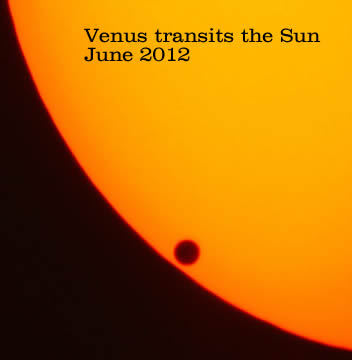
Venus
transits the Sun
|

|
For all your horoscopes, we recommend Ed Tamplin's excellent astrology site.

|
Astrology Oz is best viewed using firefox, screen resolution 1280x1024, macromedia flash enabled.
Firefox - the only browser that gives total control over web browsing, see what you want to see - download firefox

© AstrologyOz 2014
All articles and images on this site are subject to copyright and may not be copied, stored or modified in any way.
AstrologyOz - designed and maintained by Sherrynne Dalby