
Welcome to AstrologyOz
Apologies to all those who rely on this resource.. I have had major server issues which are now hopefully fully resolved.... after 4 months... I will be updating everything over the next week .... so thanks for your patience :)
|
|
|
World
News 2014
|

|
All your planetary data for 2014 is here now Planetary stations , Void of Course Moon , Moon phases and Planet Ingresses for 2014 plus Moon Planting Guide |

|
Jan - April 2014 Planting Guide
,
plus 2014 Moon phases,Planet Ingresses and retrogrades,
|
Tracking the Moon without an appKeeping pace with the Moon does not require a phone in your hand. A printed almanac supplies the dates, while observation adds the experience of watching a familiar shape change. The basic setup can fit in a drawer. You do not need to recreate every function of a full astrology app. The useful task is to record phases, Moon signs, stations, ingresses and occasional patterns such as void periods. Keep the everyday method simple, adding precision only when a chart or planting plan needs it. Start with a local-time reference and one notebook. A diary, a pen and an unobstructed patch of sky are enough for regular tracking. A monthly ephemeris provides exact positions for detailed chart work. Choose a simple paper setupAstrologyOz’s welcome guide is a useful place to find material on phases, planetary stations, ingresses and void-of-course periods. Print the relevant pages for the current year, or copy the dates into a purpose-made lunar diary. Choose an almanac from an Australian newsagent or supermarket, and check its year, time zone and calculation source. The Australian Consumer Law still applies to misleading claims about a calendar’s accuracy, so an impressive cover is not a substitute for checking its conventions.
Read the sky from AustraliaPhase names are global, but the view is not. Across Sydney, Perth, Brisbane and Darwin, the Moon’s path across the sky differs from the northern-hemisphere experience. Latitude affects the order in which it rises and sets relative to landmarks. Use the clock as a broad guide: a first-quarter Moon is usually highest around sunset, while a last-quarter Moon is highest around noon. A new crescent appears after sunset in the west, and a waning crescent appears before sunrise in the east. Close to new Moon, solar glare makes observation difficult. A full Moon is easier to spot, although it may rise or set in bright sunlight. Turn dates into a Moon diaryGive each Moon a short entry: date, phase, illuminated percentage, sign and degree if available. Add moonrise and moonset when supplied, and flag any overlap with a station or ingress. This creates a clean record you can compare with your own observations. Mark public holidays using your state or territory’s rules rather than assuming one national list. In New South Wales, the Public Holidays Act 1909 is a useful reference; Western Australia operates under its own Public Holidays Act 1972. The distinction matters when a weekend includes a Monday public holiday. For a regular session, choose a time and direction you can repeat. A view before the morning commute, from beside the kettle or during an evening walk, is more useful than an occasional attempt to identify every phase at once. Watch the cycle directlyA waxing crescent gradually becomes a half-lit Moon, and the waning phases reverse that pattern after full Moon. Record the time, illuminated fraction, weather and whether trees or buildings blocked your view. “Not visible” is a valid observation, especially near new Moon. Use the diary for reflection as well as data. If prayer or meditation is part of your practice, a related reflection on inner steadiness can complement the ritual of noticing the sky. The Moon remains a symbolic prompt for contemplation, not a guaranteed forecast. Track stations, ingresses and direction changesA Moon ingress is the moment it enters the next zodiac sign; an almanac can show that transition as a simple date-and-time entry. For finer work, the Moon’s degree against the zodiac boundary matters, especially when a sign change falls close to midnight. A planetary station is the moment a planet turns, changing between direct and apparent retrograde motion. Mark station times separately from Moon sign changes because they answer different chart questions. Printed reference charts can also show whether a planet is about to station. Convert every entry to the clock you actually use. Most eastern states use AEST or AEDT, South Australia uses ACST or ACDT, and Western Australia stays on AWST without daylight saving. Check daylight-saving dates instead of assuming all Australian cities run one hour ahead. Work with void periods and moon plantingMost void-of-course tables define the period after the Moon’s final exact aspect before it changes sign. Print the monthly list, highlight long gaps and compare them with your diary. The period can be short or lengthy, so its times matter more than a rough impression. Consider void periods alongside a birth chart or individual chart, rather than treating them as a blanket warning. The same discipline applies to moon-planting advice: it is one timing consideration rather than a substitute for regional climate, frost risk, soil moisture and plant health. Australian nurseries sell seed packets and gardening guides, some of which include moon-phase guidance. Compare that advice with the planting window for your area, then record both the chart-derived timing and the practical growing conditions. Make the routine fit ordinary lifeSet aside ten minutes each Sunday to check the coming week’s phase dates, any listed ingresses and the next station. Write the dates in your own diary rather than relying on recognition when the Moon catches your eye. This review makes other observations easier to interpret. Keep the system resilient. Use a printed monthly chart when an internet connection is inconvenient, and treat crossed-out dates as corrections rather than failures. If you travel from Darwin to Perth, or further overseas, add UTC beside home time so source entries remain comparable. Choose one almanac, print the current month and place it beside your diary tonight. Mark the next new Moon, first quarter, full Moon and last quarter, then add any station, ingress or void period that matters to your practice. With the dates in front of you and the sky available for a regular check, lunar awareness can continue without notifications or another subscription. |
|
|
|
Benedict
XVI resigns 2013
|

|
|
|
Election
2013- take 2
|

|
|
|
Turkey
Unrest 2013
|
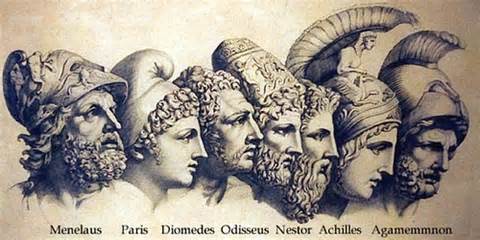
|
|
|
Election
2013
|

|
|
|
World
News 2013
|

|
|
|
Serialised
story of the greates ship of her time and
|

|
|
|
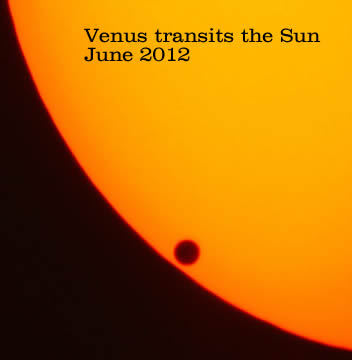
Venus
transits the Sun
|

|
For all your horoscopes, we recommend Ed Tamplin's excellent astrology site.

|
Astrology Oz is best viewed using firefox, screen resolution 1280x1024, macromedia flash enabled.
Firefox - the only browser that gives total control over web browsing, see what you want to see - download firefox

© AstrologyOz 2014
All articles and images on this site are subject to copyright and may not be copied, stored or modified in any way.
AstrologyOz - designed and maintained by Sherrynne Dalby