
Welcome to AstrologyOz
Apologies to all those who rely on this resource.. I have had major server issues which are now hopefully fully resolved.... after 4 months... I will be updating everything over the next week .... so thanks for your patience :)
|
|
|
World
News 2014
|

|
All your planetary data for 2014 is here now Planetary stations , Void of Course Moon , Moon phases and Planet Ingresses for 2014 plus Moon Planting Guide |

|
Jan - April 2014 Planting Guide
,
plus 2014 Moon phases,Planet Ingresses and retrogrades,
|
Tracking planetary returns through Australian astrology tablesA planetary return happens when a transiting planet returns to the exact degree it held at your birth. For astrologers and self-tracking enthusiasts, these moments are treated as significant milestones, often linked with new chapters in personal growth, career direction, and inner development. Each return marks a cycle you can chart, anticipate, and learn from over time. Working with planetary returns in Australia requires more than copying northern hemisphere tables. Because the country sits south of the equator, the seasons reverse, daylight saving shifts the clock in several states, and time zones stretch from Perth to Cairns. A table calibrated for Sydney will read differently from one built for Melbourne, Brisbane, or Adelaide. Using tables that reflect these local realities gives your return calculations a far more accurate footing. The team behind astrologyoz.com has long focused on planetary data tailored to Australian conditions, including moon phases, planetary stations, retrogrades, and Void of Course Moon tables. The site also offers moon planting guidance suited to southern gardens and book recommendations by Sherrynne Dalby. It is a localised hub for anyone wanting to work with the sky from down under. This walk-through explains how to identify, calculate, and track your own planetary returns using Australian reference tables, with a side-by-side look at the major cycles. Understanding planetary returns in a Southern Hemisphere contextA return is a precise astronomical event. The Sun returns to its natal degree every year, the Moon every 27.3 days, and Saturn close to every twenty-nine years. Australian-focused tables give the exact date, time, and degree of each event in your local zone. Australia spans three main time zones: AWST, ACST, and AEST. During daylight saving months, several states shift forward by an hour, which can move a planetary station by up to sixty minutes. Tables that ignore these shifts routinely miss the precise moment a planet stations retrograde or crosses your natal degree. The southern sky also means zodiac signs align differently with the calendar, with Aries season starting in late September rather than late March. Building your birth chart with Australian locality dataBefore tracking any return, you need an accurate natal chart built on a verified birth time, date, and city. Sydney, Melbourne, Brisbane, Perth, Adelaide, Hobart, and Darwin all sit at different latitudes, and latitude affects house calculation, particularly the size of the angular houses. Many free online calculators default to Greenwich Mean Time, so cross-checking the time zone offset is essential for any Australian-born person. A clear chart also lets you watch how planetary stations interact with your angles. A Jupiter return across your Midheaven will feel very different from one falling in your twelfth house. Tracking these patterns over years builds a personal archive of how each return has previously manifested, and where in your life the next one is likely to land. Comparing major planetary return cyclesOnce you know your chart, the next step is understanding the different return cycles and what each tends to bring.
Each planet brings its own quality to a return, and the houses and aspects it touches refine the meaning further. Tracking several cycles side by side over a decade reveals how they overlap. A Venus return during a Jupiter return, for example, can mark a year of significant relationship or financial growth. Reading lunar phases and Void of Course Moon tablesThe Moon moves faster than any other planet and returns to its natal position every 27 to 29 days. Australian Void of Course Moon tables list the periods when the Moon makes no further aspects before changing sign. These windows are often treated as unsuitable for launching ventures or making significant decisions. Combining lunar phase tables with Void of Course periods gives you a layered view of each lunation. A new Moon falling in your natal tenth house may be a powerful prompt for career moves, especially if it separates from a hard aspect before going void. Moon planting tables, popular with Australian gardeners who follow lunar rhythms, add another practical layer. What lunar tables reveal
Working with planetary stations and retrogradesPlanetary stations mark the moments a planet appears to slow, stop, and change direction. In Australia, the timing of stations often coincides with cultural moments, such as the lead-up to the AFL and NRL finals, or the quieter weeks around ANZAC Day, that resonate with readers who track collective moods. Retrograde periods in the Australian calendar can clash with major events such as the Melbourne Cup, school holidays, or end-of-financial-year paperwork. Watching how a retrograde interacts with your natal chart helps you plan around these dates. Mercury retrograde falling over the Easter long weekend is a pattern many Australian readers have noted for travel and communication hiccups. A few stations stand out for return-tracking purposes. Mars retrograde happens roughly every two years and disrupts plans that rely on momentum, while Saturn station direct often feels like a release of pressure after a long retrograde phase. Jupiter station retrograde is frequently tied to internal reviews of long-term goals. Tracking and recording your returns year by yearKeeping a return journal is the simplest way to build a personal archive. A basic notebook works, but a spreadsheet lets you log exact degrees, signs, houses, and aspects. Over time, this becomes a pattern library you can revisit before, during, and after each return. Practical tips for accurate tracking
For readers who want a wider perspective on how cycles intersect with broader social and spiritual questions, the sacred text repository offers a thoughtful companion angle. Staying connected with the starsTracking your own planetary returns becomes richer with the right reference tools and a steady practice. Localised tables tuned to Australian time zones, southern seasons, and city-level latitudes give your calculations a precision generic global charts cannot match. Pair them with Void of Course Moon tables, planetary station dates, and a personal journal, and a clear pattern emerges across the years. The site's broader coverage, including mobile jackpot slot reviews, sits alongside the planetary tables for readers exploring other Australian-focused topics during quieter return periods. |
|
|
|
Benedict
XVI resigns 2013
|

|
|
|
Election
2013- take 2
|

|
|
|
Turkey
Unrest 2013
|
|
|
|
Election
2013
|

|
|
|
World
News 2013
|

|
|
|
Serialised
story of the greates ship of her time and
|

|
|
|
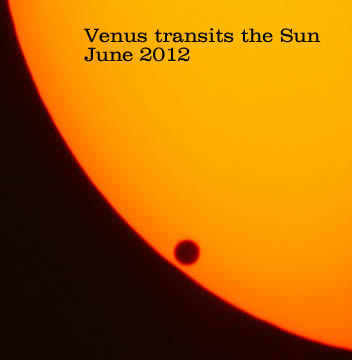
Venus
transits the Sun
|

|
For all your horoscopes, we recommend Ed Tamplin's excellent astrology site.

|
Astrology Oz is best viewed using firefox, screen resolution 1280x1024, macromedia flash enabled.
Firefox - the only browser that gives total control over web browsing, see what you want to see - download firefox

© AstrologyOz 2014
All articles and images on this site are subject to copyright and may not be copied, stored or modified in any way.
AstrologyOz - designed and maintained by Sherrynne Dalby