
Welcome to AstrologyOz
Apologies to all those who rely on this resource.. I have had major server issues which are now hopefully fully resolved.... after 4 months... I will be updating everything over the next week .... so thanks for your patience :)
|
|
|
World
News 2014
|
|
All your planetary data for 2014 is here now Planetary stations , Void of Course Moon , Moon phases and Planet Ingresses for 2014 plus Moon Planting Guide |

|
Jan - April 2014 Planting Guide
,
plus 2014 Moon phases,Planet Ingresses and retrogrades,
|
The 2025 Mars Saturn square and Australian infrastructureThe 2025 Mars Saturn square reached its closest point in Australian autumn, around 24 May, as Mars reached 10° Taurus and Saturn held 10° Aries in tropical astrology. For a country delivering transport, utility and public-building projects, this hard aspect offers a symbolic lens on the friction between speed and durability: the urge to act meets demands for testing, safety and institutional patience. Astrology does not determine tender outcomes, flood damage or construction defects, and no planetary transit is a causal forecast. It can, however, sharpen attention to recurring patterns in project delivery. When Mars and Saturn form a square, narratives about urgency, budgets and authority collide. Reading that pattern alongside actual milestones, weather and procurement records gives it practical value without pretending the planets approve or cancel works. Timing the hard aspectMars represents machinery, effort and forceful action; Saturn represents structures, law, delay and maintenance. Their 90-degree tension is not a promise of accidents or cost blowouts. It describes two speeds meeting: a client wants visible progress, while designers, regulators, contractors and asset owners test whether that progress will last. The wider sequence adds context. Mars conjunct Saturn in February concentrated the year’s push-and-restrict motif, the May square tightened it, and June’s opposition brought another form of pushback. Saturn’s 2025 retrograde period adds revision to the symbolism. Rather than hunt for one dramatic incident, ask which decisions were rushed and which estimates survived scrutiny. The site’s AstrologyOz articles provide background on these longer cycles. Where the aspect meets the siteOn a construction site, Mars can symbolise late equipment, hurried excavation, disputed variations or impatient site meetings. Saturn represents method statements, safety checks, design tolerances and long-term maintenance. Neither symbol identifies a culprit; each identifies a pressure worth examining against the project’s actual risk log. Melbourne’s Metro Tunnel and Sydney’s Metro West bring that mixture into everyday Australian routines. Peak-hour commutes, bus and tram changes, school runs and freight deliveries show the tension between public ambition and careful sequencing. A city can support a project while resenting how its disruption is distributed, so communication matters as much as construction speed. Projects across the Australian mapInland Rail shows that outcomes extend beyond a metropolitan opening date. Freight efficiency depends on bridges, intermodal links, local contractors and regional participation. A hard aspect can frame the tension between a national network’s timetable and the slower work of making each link dependable for communities along the route. The Bruce Highway upgrade in Queensland adds a different pressure: flood resilience, pavement work and regional traffic depend on asphalt, aggregate, fuel, machinery and crews able to work through difficult conditions. In Melbourne, Sydney and regional Australia, similar choices appear in water networks, transmission lines, local roads and school projects, where councils balance renewal backlogs with new housing growth. Contracts, costs and local supply chainsBudgets turn planetary symbolism into commercial language. Mars can mean pressure to award contracts, release packages or commit capital; Saturn can mean checks that expose exclusions, cash-flow gaps and unrealistic assumptions. Neither predicts commodity prices. The symbolism highlights where a tender’s apparent speed may transfer risk to contractors or suppliers. Australian firms negotiate with changing steel, concrete, fuel and labour costs, while the Australian dollar and interest rates shape what governments and investors can afford. Fixed-price packages and smaller suppliers can be more exposed to delays. A reflection on contentment from the wilderness offers a useful parallel: accepting real limits can produce steadier decisions, whereas untested optimism can magnify haste. Approvals, law and public patiencePublic infrastructure has more stakeholders than a private building. Federal pathways may engage the Environment Protection and Biodiversity Conservation Act 1999 and the Infrastructure and Jobs Act 2013, while NSW’s Major Transport Infrastructure Act 2019 and Victoria’s Transport Integration Act 2010 govern transport decisions within their respective systems. Mars and Saturn do not replace those statutes, but they can metaphorically express the demands on major works: decisiveness and defensible process. Consultation, environmental assessment, procurement review and maintenance take time. Public patience depends on clear answers about changed routes, reopening dates, local employment and supplier opportunities, not only milestone photographs. Reading timing cycles responsiblyA transit is most useful as a prompt for review. Saturn’s retrograde phase can symbolise revision, while Mars’s progress through Taurus and Gemini can shift emphasis from physical delivery to negotiation and communication. These are interpretive patterns, not instructions to stop work or accelerate excavation. They can help organise questions for planning meetings. Moon phases offer another timing layer. A lunar phase guide can support a journal of decisions and site events, especially for a team wondering why some weeks felt rushed and others stagnant. A void-of-course Moon is an astrological timing device, not a stop-work instruction; recorded facts should remain the basis of project control. A side-by-side reading keeps the two planetary functions distinct:
No claim that every delay would peak in May 2025 would be credible. The stronger claim is that the square provides a memorable vocabulary for a recurring management problem: moving quickly without transferring hidden costs downstream. Use the transit for a project reviewCompare a baseline programme with actual delivery dates, review variation claims and supplier payment terms, and check whether maintenance or community commitments were compressed. These steps turn a symbolic pattern into questions that finance, engineering, legal and operations teams can test. For Australian readers, the cycle can also be approached through the site’s horoscope and planetary timing resources. Astrology should not replace engineering judgement or regulatory evidence, but it can create a regular pause for checking whether urgency is producing avoidable rework. At the next project meeting, put the baseline schedule, risk log and unresolved approval beside the upcoming review dates. Choose one item that needs Saturn-like patience, record who can act on it, and set the follow-up before leaving the room. Use the square as a cue for accountability, not a reason to delay. |
|
|
|
Benedict
XVI resigns 2013
|

|
|
|
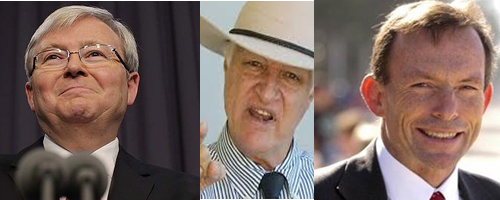
Election
2013- take 2
|
|
|
|
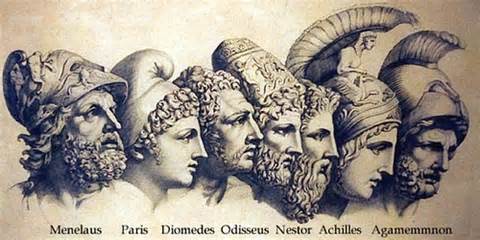
Turkey
Unrest 2013
|
|
|
|
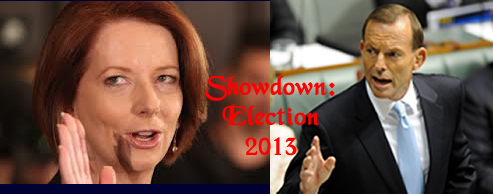
Election
2013
|
|
|
|
World
News 2013
|

|
|
|
Serialised
story of the greates ship of her time and
|

|
|
|
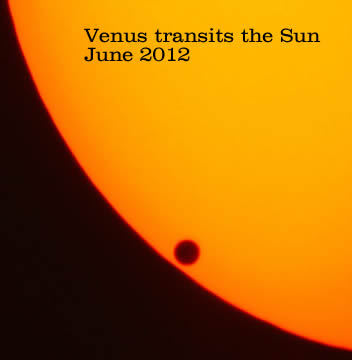
Venus
transits the Sun
|

|
For all your horoscopes, we recommend Ed Tamplin's excellent astrology site.

|
Astrology Oz is best viewed using firefox, screen resolution 1280x1024, macromedia flash enabled.
Firefox - the only browser that gives total control over web browsing, see what you want to see - download firefox

© AstrologyOz 2014
All articles and images on this site are subject to copyright and may not be copied, stored or modified in any way.
AstrologyOz - designed and maintained by Sherrynne Dalby