
Welcome to AstrologyOz
Apologies to all those who rely on this resource.. I have had major server issues which are now hopefully fully resolved.... after 4 months... I will be updating everything over the next week .... so thanks for your patience :)
|
|
|
World
News 2014
|

|
All your planetary data for 2014 is here now Planetary stations , Void of Course Moon , Moon phases and Planet Ingresses for 2014 plus Moon Planting Guide |

|
Jan - April 2014 Planting Guide
,
plus 2014 Moon phases,Planet Ingresses and retrogrades,
|
Creative collaboration under the 2025 Venus Mars squareThe spring aspect brought a charged test to creative partnerships. Around 2 April, Venus in Pisces formed a demanding 90-degree aspect to Mars in Gemini. Both planets were in mutable signs, linking imaginative, emotionally sensitive work with restless reasoning and quick, sometimes sharp, conversation. Read symbolically, the aspect does not doom a project or identify a troublesome collaborator. It describes a pattern: one person offers a vision, another pushes for action; both mean well, yet timing and tone collide. Square energy becomes useful when teams slow disagreement, separate ideas from ownership, and turn instant reactions into agreed decisions. Friction can sharpen the workVenus in Pisces seeks a shared emotional picture. Mars in Gemini wants speed, questions, options and forward motion. The square can turn “we’re on the same page” into “we’re solving different problems.” The tension is creative when a moody concept meets a sharp editorial challenge, and poor when either side treats sensitivity as weakness or urgency as authority. Common flashpoints include writers wanting a precise emotional register while producers want a headline, or designers holding a broad visual direction while a client asks for three competing options. Feedback can arrive as interpretation rather than instruction. A joking remark may be taken personally, a fast reply may sound dismissive, and two people may claim the original idea. Venus-Mars chemistry can feel both energising and provocative. Where collaboration comes under strainThe friction often appears in three moments: kickoff, when a loose brief must become a shared vision; feedback, when revisions multiply; and the deadline, when unfinished details test loyalty. In many Australian project settings, a “quick call” becomes a multi-party meeting, while a handwritten list passes between people who never agreed on one plan. The useful question is not “who is difficult?” but “which process is amplifying the difference?” A Pisces-driven collaborator may need a listening interval, while a Gemini-driven collaborator may need the next question answered. Both styles are useful. Trouble starts when urgency bypasses consent, or when harmony avoids an uncomfortable decision. A simple comparison can keep disagreement specific without turning personality judgment into project management.
The aim is not to remove every disagreement. It is to give disagreement a known route through the work. The Australian context for shared projectsIn Sydney, Melbourne and Brisbane, freelance designers, producers and writers move between agency pods, kitchen tables, co-working rooms and busy cafés. A Melbourne pitch day may run from a laneway studio to a train platform and then a client video call. This rhythm can make instant messaging feel like normal project infrastructure, even when a quick “yes” is a binding decision. The local market includes advertising, publishing, music, film, television and interactive production, often supported by Screen Australia or Creative Australia funding. Those markets reward bold concepts and clear delivery. They also expose teams to changing briefs, unpaid pitching and regional production schedules. A contract gives both sides something stable to refer back to when the square’s emotional weather turns. Australian law adds useful guardrails. The Copyright Act 1968 and moral rights rules make attribution and integrity especially important; the Privacy Act 1988 matters when collaborator records contain personal information. Clear drafting can reduce the urge to win an argument about who contributed what. For projects involving books or long-form editorial work, independent reader review notes can sharpen a shared editorial eye before collaboration becomes personal. Timing decisions under a difficult aspectThe square tightened as Venus retrograded through Pisces while Mars continued its Gemini passage. Venus’s backward turn is often described as a return for revision, not a literal backward journey. Here, it encourages second looks at tone, expectation and motive. Mars adds urgency and a desire to keep talking, testing, revising and reaching the next idea. The result is a simultaneous pull toward emotional agreement and immediate verbal action. For Australian teams, the remedy can fit ordinary routines: put the brief in one shared document, assign one decision owner, and allow a cooling-off period before reversing another person’s work. A 24-hour resolution window is useful when collaborators are moving between Sydney, Perth and remote locations, but it also suits studio and office days. Clear timestamps can prevent a deleted message from becoming tomorrow’s evidence. Some teams also use lunar cycles to mark planning and review moments. For a symbolic practice rather than a decision rule, AstrologyOz’s moon-phase crystal guide offers a way to pair intentions with the lunar cycle. The ritual can create a shared pause; the written brief and named owner still do the practical work. Turning planetary tension into a workable planA workable agreement should name the deliverable, acceptance criteria, credit, usage rights, revision limits and what happens if either side withdraws. For paid commissions, the Australian Consumer Law also matters, particularly how terms are presented and whether the parties have a fair understanding of price, scope and risk. The Copyright Act 1968 should support the contract rather than be treated as a substitute for it. During the square, make meetings have an agenda, rotate who facilitates, and end with a short record of decisions and open questions. Give ideas and authority separate labels, acknowledge contributions openly, and use humour carefully when stakes are high. These habits serve the project beyond the transit: Venus rewards co-creation, while Mars respects a team that can move without argument. Choose one live collaboration and schedule a 30-minute alignment session today. Put the brief, credits and decision rights on the table, name the decision owner, and agree how feedback will be handled before the next deadline. |
|
|
|
Benedict
XVI resigns 2013
|

|
|
|
Election
2013- take 2
|

|
|
|
Turkey
Unrest 2013
|
|
|
|
Election
2013
|

|
|
|
World
News 2013
|

|
|
|
Serialised
story of the greates ship of her time and
|

|
|
|
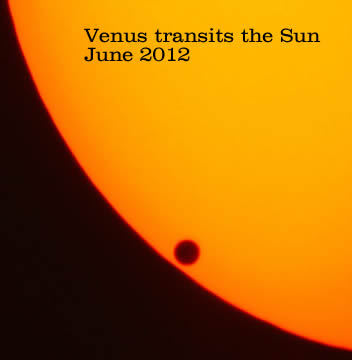
Venus
transits the Sun
|

|
For all your horoscopes, we recommend Ed Tamplin's excellent astrology site.

|
Astrology Oz is best viewed using firefox, screen resolution 1280x1024, macromedia flash enabled.
Firefox - the only browser that gives total control over web browsing, see what you want to see - download firefox

© AstrologyOz 2014
All articles and images on this site are subject to copyright and may not be copied, stored or modified in any way.
AstrologyOz - designed and maintained by Sherrynne Dalby