
Welcome to AstrologyOz
Apologies to all those who rely on this resource.. I have had major server issues which are now hopefully fully resolved.... after 4 months... I will be updating everything over the next week .... so thanks for your patience :)
|
|
|
World
News 2014
|
|
All your planetary data for 2014 is here now Planetary stations , Void of Course Moon , Moon phases and Planet Ingresses for 2014 plus Moon Planting Guide |

|
Jan - April 2014 Planting Guide
,
plus 2014 Moon phases,Planet Ingresses and retrogrades,
|
The astrology behind the 2024 US presidential debatesThe three televised US presidential debates of 2024—held on 27 June, 10 September and 15 October—offered three astrological snapshots of a turbulent election year. Their symbolism became especially rich because Joe Biden withdrew in July, leaving Kamala Harris to face Donald Trump. Campaign rhetoric repeatedly turned toward national strength, economic pressure, institutional trust and personal fitness for leadership. Chart symbolism here means reading birth charts and transits as a narrative language, not treating astrology as a proven mechanism or a prediction of results. The planets do not decide an election; they provide recurring images through which timing, behaviour and public mood can be interpreted. Debate charts and their symbolic languageA debate chart is cast from the published date, start time and venue: Washington, New York and Los Angeles respectively. Its angles and houses can then be compared with each candidate’s natal pattern. The wider transits add context that does not depend on either campaign’s preferred story.
Uranus, moving through Taurus during all three events, supplies the clearest background signature. Its fixed-earth emphasis magnifies disputes over prices, land, food and borders. To Australian readers, where household budgets remain a familiar political concern, that theme can feel immediately recognisable even when the candidates frame it differently. The candidates’ natal styles add colour rather than verdicts. Harris’s Taurus Sun is associated with steadiness and value, while Trump’s Leo Sun is traditionally read as expressive, performative and resistant to restraint. An eclipse-near debate can reveal where those temperaments are activated; it cannot make either personality a fixed prediction. Election season transitsThe North Node had only just entered Taurus around the first debate, turning the election’s stated direction toward security, ownership and durable resources. By September and October, Uranus was a few degrees from opposing Harris’s natal Taurus Sun, an apt image of disruption to identity and public expectation. Fixed signs favour endurance, but they can also harden a standoff. Neptune’s final move into Aries placed confusion around leadership and national image beside the Uranus theme. Chiron in Aries added a more difficult note: wounded pride, masculine authority and the discomfort of appearing vulnerable. These are interpretive motifs, not claims that either candidate acted from a planet. For dated context, readers can consult AstrologyOz’s election and transit articles to follow planetary stations, ingresses and event timing without relying on campaign spin alone. The Australian viewing contextTime zones made these American events unusually Australian breakfast or lunchtime viewing. A 9 p.m. Eastern Time start became 11 a.m. on 28 June and 11 a.m. on 11 September in Sydney and Melbourne. By 16 October, daylight saving put Sydney and Melbourne at noon, while Brisbane remained on AEST at 11 a.m. Australian coverage often moved between ABC News, SBS, commercial channels such as Seven or Nine, YouTube clips and Facebook discussion. Terms including “swing state” and “battleground state” came from a US electoral map unfamiliar to many local viewers. Australia’s compulsory voting also frames the issue differently: low US turnout is not quite the same political experience. Talk around kitchen benches, office kitchens and pubs tended to borrow Australian expressions such as “tear-down”, “dog-whistle” and “barnstorming”. Social feeds then detached individual exchanges from their full chart and context. Watching the clock conversion and the candidate’s wording side by side is more revealing than the instant verdict on a late-night clip. A reader's symbolic checklistA useful reading keeps symbolic themes separate from claimed events or causes. The following short checklists offer prompts for studying the debates rather than scoring who was “winning” on an astrological rule.
Used together, these prompts favour context over prediction. They also suit archived debate viewing: the same chart factor can look different when the question has moved from nomination to governing power. Keep following the planetary storyEach debate can serve as a case study in how a campaign responds to pressure. Harris’s charts may be read through public adaptability and material values; Trump’s through display, authority and disruption, while transits provide the shared backdrop. Personal interpretation can be deepened alongside Melissa’s planetary reflections, rather than forced onto public figures. Return to AstrologyOz for dated Moon phases, planetary stations, ingresses and election commentary, then revisit the charts when a new event adds another layer to the story. |
|
|
|
Benedict
XVI resigns 2013
|
|
|
|
Election
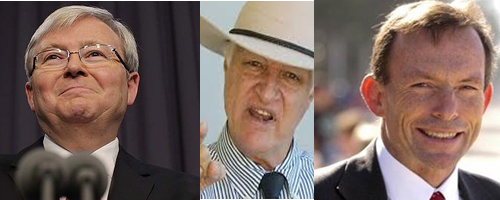
2013- take 2
|
|
|
|
Turkey
Unrest 2013
|
|
|
|
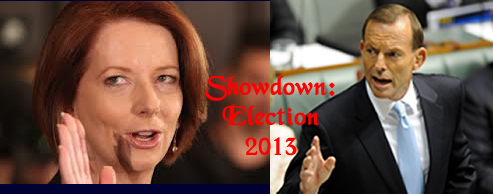
Election
2013
|
|
|
|
World
News 2013
|

|
|
|
Serialised
story of the greates ship of her time and
|

|
|
|
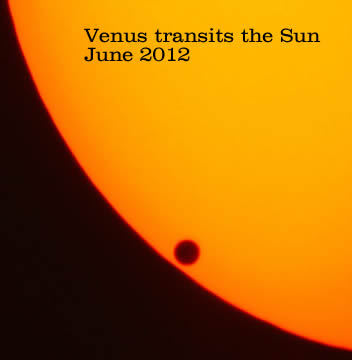
Venus
transits the Sun
|

|
For all your horoscopes, we recommend Ed Tamplin's excellent astrology site.

|
Astrology Oz is best viewed using firefox, screen resolution 1280x1024, macromedia flash enabled.
Firefox - the only browser that gives total control over web browsing, see what you want to see - download firefox

© AstrologyOz 2014
All articles and images on this site are subject to copyright and may not be copied, stored or modified in any way.
AstrologyOz - designed and maintained by Sherrynne Dalby