
Welcome to AstrologyOz
Apologies to all those who rely on this resource.. I have had major server issues which are now hopefully fully resolved.... after 4 months... I will be updating everything over the next week .... so thanks for your patience :)
|
|
|
World
News 2014
|
|
All your planetary data for 2014 is here now Planetary stations , Void of Course Moon , Moon phases and Planet Ingresses for 2014 plus Moon Planting Guide |

|
Jan - April 2014 Planting Guide
,
plus 2014 Moon phases,Planet Ingresses and retrogrades,
|
How fixed star Sirius influences your chartThe influence of the fixed star Sirius on your chart is a subtle astrology layer, not a single event. Sirius, the Dog Star and alpha Canis Majoris, is Earth’s brightest night-sky star, yet it is not a planet. Astrologers read it through zodiacal degree, house and close aspects. Traditional astrology treats Sirius as a beacon of loyalty, watchfulness, devotion, creativity and public voice. These qualities may appear as disciplined care, moral responsibility, ambition or pressure to prove worth, varying with the whole chart. Accuracy matters: birth time determines the rising sign and houses, while the birth date fixes the Moon, Sun and planetary positions. Use the exact local time, birthplace and correct time-zone history; Australian daylight-saving changes and South Australia’s half-hour offset can alter the result. Note whether the chart uses tropical or sidereal zodiac. Read Sirius with the Ascendant, Midheaven, Sun, Moon and planets. A close aspect makes its symbolism stronger, while a wide orb is subtler. The aim is symbolic insight, not certainty about events, and every interpretation should remain consistent with the person’s circumstances. The meaning of a fixed starIn astronomical terms, “fixed” means Sirius belongs to the stellar background rather than travelling quickly through the zodiac like a planet. Precession slowly changes its apparent position. In common tropical charts it sits near 14 degrees of Cancer; many sidereal charts show late Gemini. Its declination of roughly minus 16 degrees makes it prominent in Australia’s southern winter sky. Traditional symbolism adds heat, brilliance, vigilance and canine guardianship. Sirius can signify protection plus a desire to excel or be seen clearly. That brilliance may support public work and loyal service, or create pressure to prove worth. Ancient Egyptian, Greek and Roman traditions linked its seasonal prominence with calendars and community life. The sacrosanct symbolism archive offers a cultural counterpoint, not an ephemeris. Reading the zodiac placementSign placement describes the style of expression. Cancer frames brilliance through emotional memory, care and protectiveness; Leo through creative confidence, loyalty and drama; Gemini through quick intelligence, curiosity and communication. Treat these as tendencies to test against the chart, not personality labels. House placement is often more concrete. On the Ascendant, Sirius colours presence and instinctive leadership; in the tenth house or near the Midheaven, it raises the stakes around duty, reputation and public voice. The second house links worth with resources, the fourth with protective home or family care, and the seventh or eleventh with partnership and group futures. Aspects set the tone. A conjunction can intensify expression, an opposition creates a pull between life areas, and a trine or sextile may let the qualities flow. A square can make loyalty, authority or ambition demanding. Use a sensible orb and judge the aspect by sign, house and planetary condition rather than treating one symbol as an instruction. Timing the star with transitsBecause Sirius barely changes position, timing comes from moving bodies and the lunar cycle. When a transiting planet reaches its degree, its themes may become easier to notice in a natal chart or current horoscope. The current Moon phase guide helps show how a New Moon, Full Moon or quarter Moon colours emotional timing, while the wider planetary pattern suggests whether a period is exploratory, expansive or corrective. A conjunction window can bring visibility, responsibility or an invitation to act. A retrograde may revisit a touched degree, making the symbolism internal; at a station, a theme can pause for decision. A Void of Course Moon can make timing more sensitive to other factors. None guarantees an event. Compare several transits, note their aspects to the Ascendant, Sun and Moon, and check them against Australian local time. The Moon’s phase and planetary backdrop should support one reading, while another aspect may point elsewhere. Chart examples from Australian lifeAustralian birth times require more care than a clock reading. Perth uses UTC+8, Brisbane UTC+10, Sydney and Melbourne normally UTC+10 but shift to UTC+11 during daylight saving, and Adelaide uses UTC+9:30, changing to UTC+10:30 with daylight saving. Historical rules differ. Convert the recorded local time carefully before calculating charts for Sydney, Canberra, Hobart, Adelaide, Brisbane, Darwin or Perth. Everyday routines can make the symbolism concrete without turning it into stereotype. A Melbourne birth might involve tram travel and a flat white before work; a Sydney birth, ferries, harbour light and Bondi walks; an Adelaide birth, hot afternoons; a Canberra birth, frost on the car roof; or a Perth birth, strong sun and dry summers. The canine image might describe loyalty to family, a football club or a workplace team. Local purchasing deserves similar precision. Astrology books, including Sherrynne Dalby’s work, appear in Australian bookshops, specialist retailers and online marketplaces, with GST treatment varying by seller. If a service requests birth details, covered Australian businesses may fall under the Privacy Act 1988, while misleading advertising is constrained by the Australian Consumer Law. The AstrologyOz article library adds context on lunar cycles, stations, ingresses and retrogrades. Putting Sirius into a grounded readingStart with the technical details: record the birth date, exact local time and place, then note the time-zone conversion, zodiac system and house method. Locate Sirius by degree and house, separating placement from meaning. “Sirius in the tenth house” is a statement; “a public role involving care or authority” is an interpretation that still needs support from the house ruler, aspects and lived circumstances. Then compare the traditional image with the chart’s strongest features. Near the Sun, Sirius may join recognition with loyalty and duty; near the Moon, emotional security and protective instinct become central. With the Ascendant, its effect appears in manner; with the Midheaven, it points toward vocation. A weak aspect may show through the house ruler, but the claim should remain modest.
Make the reading actionable now: calculate the chart with verified Australian time data, identify Sirius’s house and closest aspects, then check the current lunar phase before choosing what deserves attention. Keep symbolic claims beside evidence from work, relationships and daily life. This turns a stellar influence into a grounded conversation about direction, service and earned visibility. |
|
|
|
Benedict
XVI resigns 2013
|

|
|
|
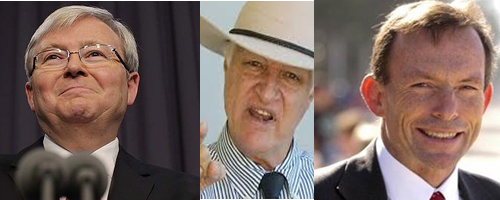
Election
2013- take 2
|
|
|
|
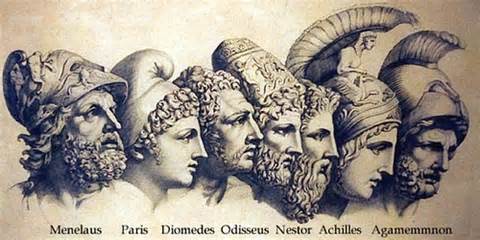
Turkey
Unrest 2013
|
|
|
|
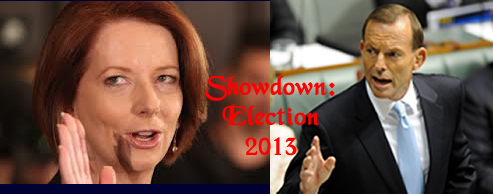
Election
2013
|
|
|
|
World
News 2013
|

|
|
|
Serialised
story of the greates ship of her time and
|

|
|
|
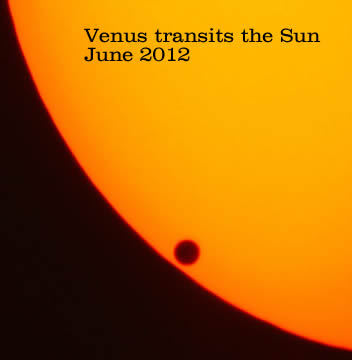
Venus
transits the Sun
|

|
For all your horoscopes, we recommend Ed Tamplin's excellent astrology site.

|
Astrology Oz is best viewed using firefox, screen resolution 1280x1024, macromedia flash enabled.
Firefox - the only browser that gives total control over web browsing, see what you want to see - download firefox

© AstrologyOz 2014
All articles and images on this site are subject to copyright and may not be copied, stored or modified in any way.
AstrologyOz - designed and maintained by Sherrynne Dalby