
Welcome to AstrologyOz
Apologies to all those who rely on this resource.. I have had major server issues which are now hopefully fully resolved.... after 4 months... I will be updating everything over the next week .... so thanks for your patience :)
|
|
|
World
News 2014
|

|
All your planetary data for 2014 is here now Planetary stations , Void of Course Moon , Moon phases and Planet Ingresses for 2014 plus Moon Planting Guide |

|
Jan - April 2014 Planting Guide
,
plus 2014 Moon phases,Planet Ingresses and retrogrades,
|
The 2025 Summer Solstice In Australian Aboriginal Star LoreThe 2025 summer solstice offers a useful opportunity to look south rather than simply applying Northern Hemisphere astrology to Australian skies. In Australia, the longest day arrives in late December, when many people are preparing for Christmas, travelling to the coast, or settling into the long school holiday period. Astronomically, the solstice occurs on 21 December in Universal Time, falling in the early hours of 22 December across much of eastern Australia. Australian Aboriginal star lore gives this seasonal turning point a richer cultural setting. It is important, however, to speak of many Aboriginal and Torres Strait Islander knowledge traditions rather than one national system. Sky stories, seasonal calendars, navigation practices and ecological observations differ between language groups and Country. A Southern Hemisphere Turning PointThe solstice marks the Sun’s most southerly position in the sky and the longest daylight period of the year for Australia. In Sydney and Melbourne, the event occurs during daylight-saving time, while Brisbane, Adelaide, Darwin and Perth observe different clock times because of their time zones and daylight-saving arrangements. The astronomical moment is the same planetary event, but its lived experience varies from place to place. For an Australian astrology audience, this distinction matters. A chart calculated for the solstice uses a precise time and location, while cultural interpretations of seasonal change may arise from dawn observations, animal behaviour, weather patterns and the appearance of particular stars. Neither approach should be treated as a replacement for the other. Stars As Seasonal IndicatorsMany Aboriginal seasonal calendars are guided by changes in the environment rather than by fixed dates alone. The rising or setting of a star group can indicate when particular plants flower, animals breed, fish become plentiful or weather patterns shift. The night sky is therefore connected to practical knowledge of Country, not separated from land, water and community. The appearance of the Pleiades, Orion and the dark shape of the Emu in the Sky features in different traditions, with meanings that vary between communities. In parts of southeastern Australia, the Boorong people’s sky knowledge is widely discussed because of its detailed links between celestial objects and seasonal life. These traditions should be approached through reliable Indigenous sources, with attention to the specific people and Country involved. The Emu In The Sky And Summer KnowledgeThe Emu in the Sky is formed by dark clouds in the Milky Way rather than bright stars. Its changing position has been used in several Aboriginal traditions as a seasonal marker, including observations connected with emu behaviour and egg gathering. The precise interpretation differs across regions, so a generalised account cannot represent every community. Around the summer solstice, the Milky Way remains a striking feature of the Australian night, although light pollution can make it difficult to see from central Sydney or Melbourne. Visitors to regional areas, the Northern Territory or Western Australia may encounter a far clearer sky. Observing it should be paired with respect for local cultural protocols, especially when visiting a sacred site or Country with its own custodial authorities. Solstice, Country And Contemporary AustraliaThe December solstice arrives during a season shaped by heat, storms, bushfire risk and water shortages in some regions. Families may be swimming at beaches near Perth, attending evening gatherings in Adelaide, or watching the sun stay late over Melbourne parks. These everyday experiences can encourage a more grounded understanding of the solar cycle than a purely abstract horoscope. The timing also sits beside familiar Australian customs: Christmas celebrations, summer holidays, cricket, outdoor concerts and busy produce markets. Farmers’ markets in regional towns may reflect seasonal abundance, while growers and gardeners often watch rainfall and heat more closely than a calendar date. Moon planting guides can be useful as a traditional gardening reference, but they should not be presented as equivalent to Aboriginal seasonal knowledge without clear attribution. Using Astrology With Cultural CareIn tropical astrology, the December solstice begins the Sun’s passage into Capricorn. This symbolic framework is often associated with structure, responsibility and the practical use of energy. It can sit alongside an Australian reading of summer as a time of long light, active landscapes and heightened awareness of fire, water and shelter. Care is needed when connecting planetary symbolism with Aboriginal star lore. Indigenous astronomy is not simply an ancient version of Western astrology, and sacred stories should not be repackaged as generic horoscope content. A respectful article can acknowledge the depth of Aboriginal knowledge, identify the relevant cultural group, and distinguish sourced tradition from personal astrological interpretation. AstrologyOz readers can mark the 2025 solstice by checking the exact solar ingress, comparing sunrise and sunset times for their location, and observing the night sky away from artificial light. On Country, follow local guidance and seek information from Aboriginal cultural organisations, educators and knowledge holders. The most meaningful practice is attentive observation: notice the light, weather, landscape and seasonal life around you. Use the 2025 solstice as a point for careful skywatching and responsible learning. Explore the site’s Australian planetary data, solstice timing, Moon phases and seasonal resources, while giving Aboriginal and Torres Strait Islander knowledge the specificity and respect it deserves. |
|
|
|
Benedict
XVI resigns 2013
|

|
|
|
Election
2013- take 2
|

|
|
|
Turkey
Unrest 2013
|
|
|
|
Election
2013
|

|
|
|
World
News 2013
|

|
|
|
Serialised
story of the greates ship of her time and
|

|
|
|
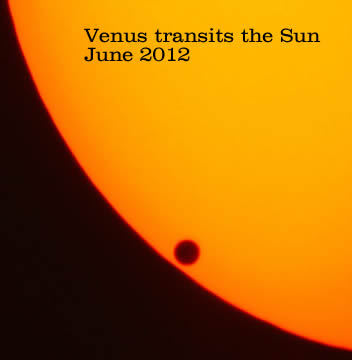
Venus
transits the Sun
|

|
For all your horoscopes, we recommend Ed Tamplin's excellent astrology site.

|
Astrology Oz is best viewed using firefox, screen resolution 1280x1024, macromedia flash enabled.
Firefox - the only browser that gives total control over web browsing, see what you want to see - download firefox

© AstrologyOz 2014
All articles and images on this site are subject to copyright and may not be copied, stored or modified in any way.
AstrologyOz - designed and maintained by Sherrynne Dalby