
Welcome to AstrologyOz
Apologies to all those who rely on this resource.. I have had major server issues which are now hopefully fully resolved.... after 4 months... I will be updating everything over the next week .... so thanks for your patience :)
|
|
|
World
News 2014
|

|
All your planetary data for 2014 is here now Planetary stations , Void of Course Moon , Moon phases and Planet Ingresses for 2014 plus Moon Planting Guide |

|
Jan - April 2014 Planting Guide
,
plus 2014 Moon phases,Planet Ingresses and retrogrades,
|
Fixed stars in Australian election chartsAustralian election astrology is most useful when it joins familiar timing methods with the long cultural memory carried by named stars. Fixed stars give a chart a stable backdrop, helping an analyst describe the institutions, pressures and recurring themes surrounding an election rather than treating every result as a temporary planetary event. The stars are not motionless. Precession shifts their tropical longitudes gradually, while daily apparent motion still matters for angular work. Their value lies in traditional symbolism—authority, harvest, conflict, reputation and renewal—layered carefully with planets, houses and the Australian electoral calendar. A sound reading asks where a star sits, whether it genuinely aspects a chart point, and whether the symbolism fits the place and people involved. It does not ask a star to replace polling data, party numbers or historical comparison. The aim is interpretation with transparent assumptions, not certainty dressed as astronomy. Why fixed stars matter in election astrologyFixed stars suit questions about endurance: Parliament, established parties, public institutions or a dispute likely to dominate the agenda. In mundane astrology, they form a background condition, while faster-moving planets describe the news, negotiations or crisis that activates it. That makes them useful in Australian election charts, where parliamentary systems, regional representation and media campaigns can outlast one news cycle. A fixed star may frame what is at stake without deciding a ballot. Readers wanting a parallel source for symbolic-cycle research can compare material from Rito Frances with primary election records and their own calculations. The comparison should remain evidential, not decorative. The southern sky and national symbolismAmong southern sky traditions, Fomalhaut carries particular weight in Australia. The bright star is linked in classical lore with the mouth of the fish, authority and fortune. Acrux, the most prominent Southern Cross star used astrologically, can suggest direction and identity, although meanings differ between traditions. Regulus shows why old diagrams need updating. Its royal reputation comes from an earlier zodiac placement; today it lies late in Virgo because precession has shifted its tropical longitude. Aldebaran, Antares and Spica likewise preserve older harvest, military and gain themes. Use catalogue coordinates and declination rather than copying a sign from a popular horoscope. Latitude changes house placement and angle work: Canberra should not borrow Sydney’s horizon, and Perth and Adelaide bring their own geographic and clock-time context. Casting charts for Australian electionsAt a federal election, record the Saturday poll day, opening and closing times, and the location convention used. A national House of Representatives chart may be anchored in Canberra at the close of polling, while Senate charts can be cast for each state’s capital because each half-ballot is counted separately. Pre-poll and postal voting complicate any single moment. In Sydney and Melbourne, dense polling queues and diverse electorates can differ sharply from regional community halls and remote polling stations. The Australian Electoral Commission, based in Canberra, coordinates the process, but it does not make turnout geographically uniform. Keep the election event separate from government formation. A hung Parliament, minor-party negotiation or double dissolution creates another timing problem. Planets and angles can mark immediate developments; fixed stars are better used to describe the durable setting across these stages. Australian signals within the chartSome factors belong to the chart itself:
Those symbols need an electoral check:
The resulting reading should distinguish symbolic emphasis from voting arithmetic. Above-the-line and below-the-line preferences in the Senate also show why a convincing astrological theme cannot substitute for understanding the ballot. Comparing the main election chart layersDifferent Australian electoral events reward different chart choices. Fixed stars work best when the question concerns persistence or authority; fast transits suit questions of timing and change.
A fixed star can therefore appear strong in the national chart yet be less relevant to a state count. If an angle activates it in Canberra but not Perth, the two claims describe different scales. Compare each symbolic claim with published margins, turnout and seat results before drawing an electoral conclusion. Turn fixed-star analysis into an electoral recordCreate a dated case file for one federal election. Begin with AstrologyOz election commentary, then add the official AEC voting schedule, state results and a correctly calculated chart for each layer you choose to analyse. Record every timing assumption, house system, orb and symbolic rationale beside the observed outcome. Compare the reading with what occurred, preserve the original wording, and let later elections test the method. Publishing that trail turns fixed-star astrology into a disciplined electoral record rather than a retrospective story. |
|
|
|
Benedict
XVI resigns 2013
|

|
|
|
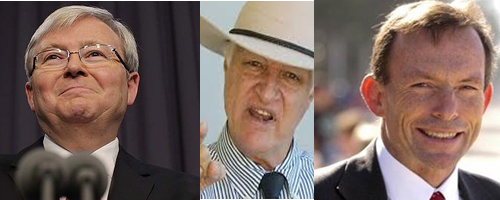
Election
2013- take 2
|
|
|
|
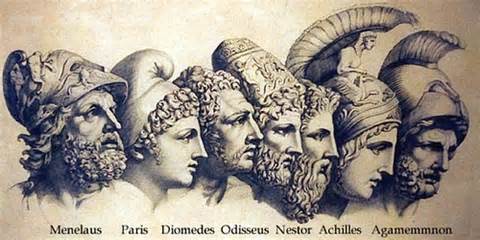
Turkey
Unrest 2013
|
|
|
|
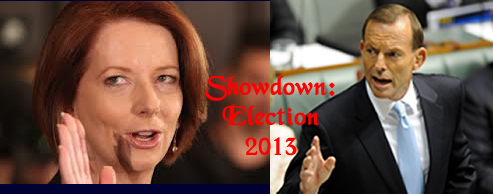
Election
2013
|
|
|
|
World
News 2013
|

|
|
|
Serialised
story of the greates ship of her time and
|

|
|
|
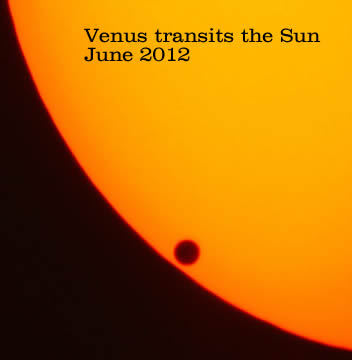
Venus
transits the Sun
|

|
For all your horoscopes, we recommend Ed Tamplin's excellent astrology site.

|
Astrology Oz is best viewed using firefox, screen resolution 1280x1024, macromedia flash enabled.
Firefox - the only browser that gives total control over web browsing, see what you want to see - download firefox

© AstrologyOz 2014
All articles and images on this site are subject to copyright and may not be copied, stored or modified in any way.
AstrologyOz - designed and maintained by Sherrynne Dalby