
Welcome to AstrologyOz
Apologies to all those who rely on this resource.. I have had major server issues which are now hopefully fully resolved.... after 4 months... I will be updating everything over the next week .... so thanks for your patience :)
|
|
|
World
News 2014
|
|
All your planetary data for 2014 is here now Planetary stations , Void of Course Moon , Moon phases and Planet Ingresses for 2014 plus Moon Planting Guide |

|
Jan - April 2014 Planting Guide
,
plus 2014 Moon phases,Planet Ingresses and retrogrades,
|
The Science Behind Your Moon Sign And Emotional CyclesYour Moon sign is the zodiac sign the Moon occupied at the time of your birth. In astrology, it is associated with instinctive reactions, emotional needs, memory and the private side of personality. Unlike your Sun sign, which is based on the Sun’s apparent position, the Moon sign changes roughly every two to three days. The science behind your Moon sign and emotional cycles involves two different areas of knowledge. Astronomy can measure the Moon’s orbit, phases, gravity and changing position in the sky. Psychology and biology can investigate sleep, mood, hormones and behaviour. Astrology gives these observations a symbolic language, but its personality claims have not been established by controlled scientific research. There are still genuine lunar effects to explore. The Moon influences ocean tides, changes the amount of light available at night and may affect sleep in some circumstances. Those influences are physical and measurable, while the idea that a particular zodiac sign determines emotional behaviour remains an interpretive belief. For Australians, lunar timing can feel especially visible when camping near the coast, checking the sky from a suburban backyard or planning a dawn walk in the Blue Mountains. Local time also matters: a chart calculated for Perth differs from one calculated for Melbourne because Australian time zones and daylight saving alter the clock reading used for astrology.
What A Moon Sign Actually MeasuresAstronomically, a Moon sign identifies the section of the zodiac through which the Moon appeared to be travelling at a particular moment. Because the Moon moves quickly, an accurate birth time and location can matter, especially when it changes signs on the same day. Astrology treats this position as a metaphor for emotional processing. A water sign Moon may be described as receptive and impressionable, while an earth sign Moon is often linked with practicality and steadiness. These descriptions can help someone reflect on habits, but they should not be mistaken for a clinical assessment or a biological measurement. The Moon, Light And SleepThe strongest plausible connection between lunar cycles and human emotion may come through light and sleep. Before electric lighting, a bright full Moon could make nights less dark, potentially changing activity and rest. Modern studies have produced mixed results, with some finding small changes in sleep timing or duration and others finding little meaningful effect. Artificial light is now a major factor. A brightly lit room in Brisbane, screen use late at night in Canberra or a night shift in Darwin can overwhelm the Moon’s natural light signal. If your mood feels different around a full Moon, sleep disruption, workload and expectation may all be contributing. Tides, Bodies And Popular BeliefThe Moon’s gravity moves vast bodies of water, creating tides that are crucial to Australian beaches, estuaries and fishing communities. The same gravitational force acts on human bodies, but the effect is extremely small because people are far less massive than oceans and are surrounded by many stronger local gravitational influences. The common claim that the full Moon causes widespread violence or dramatic emotional instability has not received consistent scientific support. Busy emergency departments and unusual incidents can seem more memorable during a full Moon because attention is already focused on it. This is an example of confirmation bias: noticing events that fit an existing belief while overlooking ordinary nights. Monthly Rhythms And The BodyHuman biology contains several types of rhythm. Circadian rhythms follow approximately 24 hours and are regulated by light, sleep and the brain’s internal clock. Ultradian rhythms occur within a day, while longer cycles can be shaped by hormones, seasons, social routines and individual health. Menstrual cycles are sometimes described as lunar because both average around 29 days, but they do not reliably synchronise. Cycle length varies considerably, and research has not shown a universal full-Moon or new-Moon pattern. Astrology can provide a reflective framework for tracking feelings, yet a diary, medical history and professional advice are more dependable for understanding physical symptoms. Why Birth Charts Can Feel PersonalA birth chart may feel accurate because its language is flexible enough to connect with many experiences. People also tend to remember statements that resonate and forget those that do not. This does not mean an astrology reading is worthless; it means its value may come from reflection, storytelling and meaning-making rather than demonstrated planetary causation. The setting matters too. An astrologer working with a chart for Sydney, Hobart or a remote Queensland town may discuss family expectations, climate, work patterns and cultural context alongside planetary symbolism. Personal relevance often grows from that conversation, rather than from the Moon sign operating as a fixed emotional mechanism. Tracking Feelings With Lunar AwarenessA practical way to test your own experience is to keep a simple journal for several months. Record sleep, stress, caffeine, workload, exercise, major events and mood alongside the Moon’s phase and sign. Use consistent local time, particularly when comparing observations across Australian daylight-saving periods. Astrology calendars can help organise this process. Resources covering planetary movements may list lunar phases, stations and ingresses in a format that is easy to compare with daily observations. Treat the record as a personal experiment, not proof that the Moon is causing each emotional change. A Balanced View Of Lunar AstrologyA balanced approach can respect astrology as a symbolic tradition while keeping scientific claims proportionate to the evidence. Your Moon sign may prompt useful questions about comfort, attachment and emotional habits, but it cannot diagnose anxiety, predict a crisis or replace qualified health care. For Australians reading a horoscope before the morning commute, an arvo at the markets or a weekend trip along the Great Ocean Road, lunar symbolism can be a gentle tool for mindfulness. The most reliable insight comes from combining reflection with sleep awareness, honest self-observation and evidence-based support. Use your Moon sign as a starting point for journalling rather than a verdict about who you are. Track the sky, track your wellbeing and explore the broader astrology resources available through AstrologyOz while keeping astronomy and personal interpretation clearly distinguished. |
|
|
|
Benedict
XVI resigns 2013
|

|
|
|
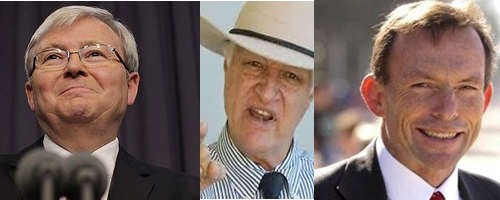
Election
2013- take 2
|
|
|
|
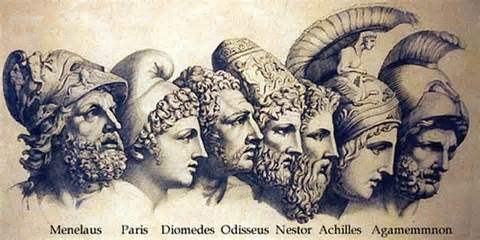
Turkey
Unrest 2013
|
|
|
|
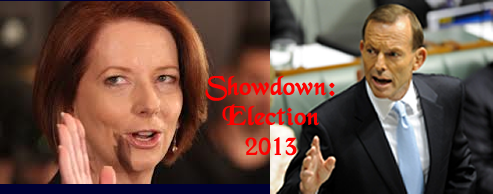
Election
2013
|
|
|
|
World
News 2013
|

|
|
|
Serialised
story of the greates ship of her time and
|

|
|
|
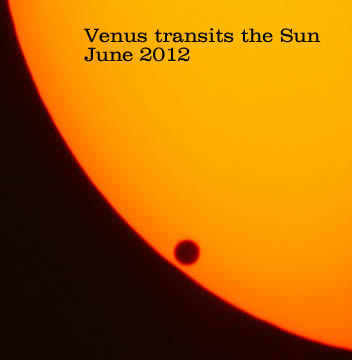
Venus
transits the Sun
|

|
For all your horoscopes, we recommend Ed Tamplin's excellent astrology site.

|
Astrology Oz is best viewed using firefox, screen resolution 1280x1024, macromedia flash enabled.
Firefox - the only browser that gives total control over web browsing, see what you want to see - download firefox

© AstrologyOz 2014
All articles and images on this site are subject to copyright and may not be copied, stored or modified in any way.
AstrologyOz - designed and maintained by Sherrynne Dalby