
Welcome to AstrologyOz
Apologies to all those who rely on this resource.. I have had major server issues which are now hopefully fully resolved.... after 4 months... I will be updating everything over the next week .... so thanks for your patience :)
|
|
|
World
News 2014
|

|
All your planetary data for 2014 is here now Planetary stations , Void of Course Moon , Moon phases and Planet Ingresses for 2014 plus Moon Planting Guide |

|
Jan - April 2014 Planting Guide
,
plus 2014 Moon phases,Planet Ingresses and retrogrades,
|
Understanding the 2025 Sun Mercury conjunctionThe 2025 Sun Mercury conjunction unfolds through several brief alignments. Astronomically, each is an inferior conjunction when Mercury passes across the Sun’s apparent position; symbolically, it joins identity and authority with messages, logic and daily exchanges. Mercury’s quick movement explains the recurring dates. For Australian readers, its value is practical: it marks periods when a carefully phrased email, clear briefing or honest answer can carry extra weight. Use the symbolism as a prompt for attention, not a guarantee that every conversation will go well. Clear timing, plain language and reliable follow-up still matter more than the label. Why the conjunction changes the messageDuring a conjunction, communication can feel unusually personal. A spokesperson may deliver a message with greater conviction, while a decision-maker may respond well to a concise rationale. The risk is overconfidence: jargon sounds authoritative, a quick reply feels final, or emotion enters the official wording. Treat prominence as increased exposure, not proof of accuracy. Comparing the conjunction with other major Mercury aspects reveals different rhythms and sources of friction, which shapes the most suitable response.
Read the sign, degree and surrounding aspects together. A fire-sign contact may push for speed, while a water-sign contact can deepen emotional colour. For planning, the lesson stays consistent: use the window to simplify, confirm and send, rather than expecting a message to explain itself. Key dates across Australian time zonesThe commonly listed 2025 contacts fall on 26 February and 8 March in Aquarius, 21 April in Aries, 10 May in Taurus, 14 June in Gemini, 22 July in Cancer, 5 August in Leo and 8 September in Virgo. Later meetings occur around 15–16 November in Scorpio and 22–23 December at the start of Capricorn. Exact event times determine the chart, while the listed dates use the tropical zodiac. Australian timing can split one event across adjacent calendar dates. Sydney and Melbourne observe AEDT in February, while Brisbane remains on AEST and Perth on AWST; Adelaide uses ACDT. When daylight saving ends in April, the eastern states return to AEST. Set the chart location or time zone before reading an exact time, and avoid assuming a date shown overseas matches the local morning. Prepare the day before and allow room for the day after. A conjunction can favour putting a decision into words, but it can also magnify haste or sensitivity. Reviews of Australian political announcements, workplace briefs and customer replies often work best when the final wording is agreed before the exact contact. Reading the zodiac emphasisAquarius highlights systems, collective ideas and organisational tone; Aries adds urgency; Taurus slows the exchange towards values, costs and practical detail. Gemini puts language centre stage, making this a useful contact for interviews, copywriting and explaining complex ideas. The challenge is saying much while saying little that matters. Cancer can make communication more emotionally responsive. Leo favours a distinctive public voice but can magnify the need for recognition. Virgo rewards close editing and useful detail, though anxiety can prompt endless revision. Scorpio asks for candour beneath the surface, with care around confidentiality, motives and hard questions. Capricorn shifts the emphasis towards responsibility, authority and measurable outcomes. The site’s related discussion of higher education and Jupiter provides broader context for readers thinking about study, without replacing the Sun-Mercury focus. Bigger ideas still need plain wording and realistic steps; the natal chart and real circumstances shape how the symbolism appears. Where clear communication matters in AustraliaBegin with exchanges that are easy to mishandle. A Canberra policy team may need a precise written brief before a public announcement. Melbourne tram replacement notices must give passengers usable locations and times. A Perth fly-in, fly-out crew handover cannot rely on colleagues being awake for clarification, while an independent Adelaide retailer may have no communications team to rewrite an ambiguous supplier message. In each setting, clarity should be observable. State who owns the decision, what changes, when it takes effect and where to go next. That structure suits Australian workplaces, small businesses, schools and community groups because it reduces costly misunderstandings without adding unnecessary formality. Use the same discipline for family messages, school notices and public posts. A short reply saying “I have received this and will confirm by Thursday” often prevents more friction than a lengthy defence. The conjunction may sharpen visibility, but good communication still depends on the audience, timing and the absence of unnecessary shorthand. Put the insight into a communication ritualA simple ritual works better than trying to predict every exchange. Before the next contact, choose the one message that truly needs attention. Remove jargon, name the decision and add a clear time or next step. Ask a colleague in another Australian time zone to read it once without supplying context. During the window, keep rapid messages brief and important decisions deliberate. “Sending” is not the same as “received,” especially on busy transport networks or shift-based teams. Leave a written record, allow time for questions, then compare what was intended with what the other person understood. Use the next conjunction window to send one plain-language briefing with a named owner, a deadline in the recipient’s local time and a request for acknowledgement. That repeatable ritual reduces ambiguity and makes the message easier to act on. |
|
|
|
Benedict
XVI resigns 2013
|

|
|
|
Election
2013- take 2
|

|
|
|
Turkey
Unrest 2013
|
|
|
|
Election
2013
|

|
|
|
World
News 2013
|

|
|
|
Serialised
story of the greates ship of her time and
|

|
|
|
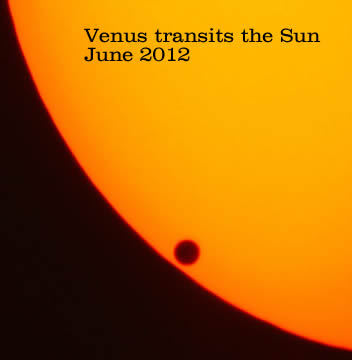
Venus
transits the Sun
|

|
For all your horoscopes, we recommend Ed Tamplin's excellent astrology site.

|
Astrology Oz is best viewed using firefox, screen resolution 1280x1024, macromedia flash enabled.
Firefox - the only browser that gives total control over web browsing, see what you want to see - download firefox

© AstrologyOz 2014
All articles and images on this site are subject to copyright and may not be copied, stored or modified in any way.
AstrologyOz - designed and maintained by Sherrynne Dalby