
Welcome to AstrologyOz
Apologies to all those who rely on this resource.. I have had major server issues which are now hopefully fully resolved.... after 4 months... I will be updating everything over the next week .... so thanks for your patience :)
|
|
|
World
News 2014
|

|
All your planetary data for 2014 is here now Planetary stations , Void of Course Moon , Moon phases and Planet Ingresses for 2014 plus Moon Planting Guide |

|
Jan - April 2014 Planting Guide
,
plus 2014 Moon phases,Planet Ingresses and retrogrades,
|
Sustainable communities through the 2025 Saturn–Neptune sextileThe 2025 Saturn–Neptune sextile links Saturn’s demand for durable form with Neptune’s impulse toward cooperation and shared imagination. Read symbolically, its 60-degree angle suggests that a community vision can find a practical outlet: clearer roles, better resourcing and institutions that make care repeatable rather than dependent on goodwill alone. For Australian groups, this symbolism meets familiar realities. A neighbourhood mutual-aid network in Melbourne, a coastal council in Sydney or a land-stewardship project in Central Australia must reconcile ecological ideals with permits, budgets and daily routines. The sextile becomes useful as a planning prompt: what should be built together, who carries responsibility, and how will the work survive beyond its founders? Vision needs a frameworkSaturn asks what can be maintained; Neptune asks what a better future might feel like. A council that adopts a sustainability pledge without a maintenance budget keeps Neptune’s promise at arm’s length. A practical vision names the shared resource, the people who use it and the time horizon. Neptune can soften rigid hierarchies, while Saturn gives relationships a backbone. The opportunity is not to dissolve every rule, but to write rules people can understand and share. Shared governance, transparent criteria and a process for revising decisions can translate compassion into social infrastructure without pretending consultation alone produces change. From personal insight to shared practiceThe configuration is especially relevant to groups that have confused goodwill with capacity. Volunteers, artists, organisers and environmental advocates may share a compelling vision, yet lack the time, money or authority to deliver it. A supportive sextile encourages coalition-building in which each partner contributes a clearly defined capability. This is where timing becomes a practical astrological concern rather than a decorative flourish. For organisations ready to test an idea, practical planetary guidance can support a deliberate choice of meeting and launch dates. Astrologically, the emphasis is on cooperation that creates a visible first step, not on waiting for perfect conditions. Australian communities in practical focusAcross Melbourne’s laneway gardens, Sydney’s bushfire-affected coastal suburbs, Brisbane’s flood-prone neighbourhoods and Perth’s water-stressed suburbs, sustainability is already part of everyday habits: repairing shared tools, storing rainwater, reducing food waste and checking heat or storm warnings before outings. These routines show what communities sustain when convenience and resilience reinforce each other. A shared project also enters a regulated market. The Australian Consumer Law applies when a member-run market, fundraiser or cooperative sells goods or subscriptions; council approvals and state building codes govern sheds, stalls and shade structures; and volunteer organisations may have work health and safety duties. Larger business partners can also bring modern slavery due-diligence obligations into procurement decisions.
Partnerships grounded in respectOn Aboriginal lands, collaboration with the relevant Traditional Custodians should begin with cultural authority, not simply consultation. Co-design, consent, appropriate naming and fair payment for cultural knowledge prevent a sustainability plan from appropriating the relationships it claims to protect. Native vegetation, water management and culturally grounded fire planning are stronger when local responsibilities are respected. A related reading on Venus retrograde relationships offers a useful parallel: meaningful change often begins when people revisit the expectations hidden inside a partnership. The same principle applies to local governance, where stated values should be reflected in how decisions are made and resources are shared. Local action with a long horizonCommunity sustainability depends less on a single grand gesture than on repeatable systems. A neighbourhood tool library needs an inventory process and a volunteer roster; a street-tree scheme needs watering access and replacement funding; a community kitchen needs food-safety procedures and affordable supply arrangements. Saturn rewards these unglamorous details because they make care durable. For groups tracking seasonal patterns, AstrologyOz provides Australian astrology resources, including lunar calendars and planetary references. Those cycles can help structure reflection and meeting rhythms, while practical targets remain grounded in council priorities, budgets and measurable environmental and social outcomes. Commitments that communities can keepThe sextile works best when optimism is paired with a manageable promise. Define the people affected, the people responsible, the resources required and the evidence that the work is having an effect. Build a review rhythm around the lunar calendar or the council’s reporting cycle, adjusting the method without losing the purpose. A useful set of commitments might look like this:
Choose one Australian neighbourhood issue, schedule a working session before the next new Moon, and publish the decision, owner and first deadline. For larger projects, place the next review date in the same calendar as the commitments it is meant to protect. Turn the symbolism into one observable act of collective care: a shared meal, a repaired tool, a tree planted, a plan funded or a local rule rewritten. The aim is a community that can keep its own promises. |
|
|
|
Benedict
XVI resigns 2013
|

|
|
|
Election
2013- take 2
|

|
|
|
Turkey
Unrest 2013
|
|
|
|
Election
2013
|

|
|
|
World
News 2013
|

|
|
|
Serialised
story of the greates ship of her time and
|

|
|
|
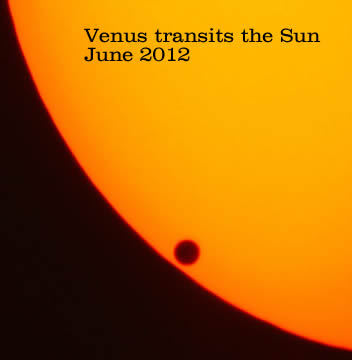
Venus
transits the Sun
|

|
For all your horoscopes, we recommend Ed Tamplin's excellent astrology site.

|
Astrology Oz is best viewed using firefox, screen resolution 1280x1024, macromedia flash enabled.
Firefox - the only browser that gives total control over web browsing, see what you want to see - download firefox

© AstrologyOz 2014
All articles and images on this site are subject to copyright and may not be copied, stored or modified in any way.
AstrologyOz - designed and maintained by Sherrynne Dalby