
Welcome to AstrologyOz
Apologies to all those who rely on this resource.. I have had major server issues which are now hopefully fully resolved.... after 4 months... I will be updating everything over the next week .... so thanks for your patience :)
|
|
|
World
News 2014
|
|
All your planetary data for 2014 is here now Planetary stations , Void of Course Moon , Moon phases and Planet Ingresses for 2014 plus Moon Planting Guide |

|
Jan - April 2014 Planting Guide
,
plus 2014 Moon phases,Planet Ingresses and retrogrades,
|
What the Saturn–Pluto conjunction means for Australian politicsAstrologically, a Saturn–Pluto conjunction describes a period when institutions, authority and long-standing power structures face intense pressure. Saturn represents rules, government, responsibility and limits; Pluto points to deep transformation, concentrated power, fear and the exposure of hidden systems. Their meeting in Capricorn placed those themes close to the machinery of the state. For Australia, the conjunction was exact on 12 January 2020, shortly before the COVID-19 crisis reshaped public life. The timing makes it especially relevant to discussions of Canberra, federal authority, economic management and public trust, although astrology should be treated as a symbolic framework rather than a substitute for political analysis. The wider planetary patterns can be followed through AstrologyOz resources, including Australian-focused planetary data. Capricorn and the machinery of governmentCapricorn is associated with hierarchy, administration, laws and the practical demands of keeping a system operating. Saturn rules Capricorn, so this conjunction intensified questions about who carries responsibility, how power is exercised and whether institutions are strong enough for a crisis. In Australian politics, that symbolism fits the relationship between Canberra and the states. During emergencies, premiers, chief ministers and the federal government can pull in different directions while voters expect a clear national response. The familiar phrase “the Canberra bubble” captures a Saturn–Pluto concern: a powerful central structure may become absorbed in its own procedures and lose touch with everyday life. A reckoning with authorityPluto tends to expose what has been buried. Under this conjunction, political leaders may be forced to deal with questions they had postponed, including institutional secrecy, lobbying, ministerial responsibility and the influence of major industries. The process can feel severe because Pluto rarely favours cosmetic repairs. For Australian voters, trust is often shaped by practical matters rather than grand theory. People notice whether a government can manage bushfire recovery, hospital pressure, energy prices or flood assistance. “Fair dinkum” leadership means visible accountability. Saturn asks for evidence, while Pluto asks who benefits when decisions are made behind closed doors. Economic power and the national storyCapricorn also connects with economic structures, large corporations and the status systems that determine who gets security. In Australia, mining and energy policy sit close to the heart of this symbolism. The resources sector supports regional communities and national revenue, yet it also raises arguments about climate policy, land use and the distribution of wealth. The conjunction can therefore describe a political struggle over the country’s economic identity. Is Australia primarily a resources exporter, a services economy, a technology participant or a society protecting its natural environment? These debates are felt differently in Perth, the Hunter, regional Queensland and inner Melbourne, where employment, housing and energy concerns do not always align. Pressure on parties and institutionsSaturn–Pluto periods often reveal whether an organisation has genuine resilience or has simply relied on habit. Political parties may tighten discipline, centralise decision-making or remove leaders who no longer command confidence. Such actions can restore order, yet they can also create resentment among members and voters. The conjunction does not belong to one side of politics. Coalition governments may face disputes over economic power and social order, while Labor governments may confront tensions between unions, industry, environmental priorities and fiscal restraint. Independents and minor parties can gain attention when major parties appear too controlled by their internal machines.
The 2020 imprintThe 2020 conjunction coincided with the Black Summer bushfires, followed by the pandemic and a dramatic expansion of emergency powers. Australia saw border closures, quarantine rules, changing health advice and intense debate over the balance between individual freedom and collective safety. Astrology does not claim that a planetary alignment mechanically caused those events. It offers a language for recognising their shared themes: fear, authority, survival, restrictions and the rapid restructuring of daily life. The experience also differed across the country, from locked-down Melbourne to border communities where a road checkpoint could suddenly become a major political issue. Democracy under concentrated pressureA difficult expression of Saturn–Pluto is the belief that stability requires excessive control. Governments may justify stronger surveillance, tighter regulation or reduced transparency as necessary responses to danger. Citizens may accept these measures temporarily, then demand proof that extraordinary powers will not become permanent. A constructive expression is institutional reform. Australia’s parliamentary system, courts, public service, media and electoral bodies can be strengthened when weaknesses are acknowledged. The conjunction supports serious work: clearer standards, enforceable oversight and long-term policy rather than announcements designed only for the next news cycle. The longer political cycleSaturn–Pluto conjunctions occur only occasionally, so astrologers often study them as markers of generational change. The 1982 conjunction in Libra was associated with a different global and Australian environment, while the Capricorn conjunction focused attention on government, hierarchy and material systems. Its effects are likely to be understood gradually rather than through one event. The years after 2020 have continued to test Australia’s political assumptions. Housing affordability, population growth, climate adaptation, migration, Indigenous recognition and the cost of living all raise questions about who is protected by existing structures. Astrology can help frame those questions, but Australian history, policy evidence and lived experience remain essential. For readers tracking planetary stations, ingresses, retrogrades and Australian political cycles, the Australian astrology articles provide a useful place to explore the symbolism in a local context. The Saturn–Pluto conjunction is best read as a call to examine power honestly: where it sits, how it is limited and whether institutions still serve the people they govern. Follow the relevant planetary dates and political developments with a critical eye, using astrology as a reflective tool alongside reliable Australian reporting and civic information. That combination makes it easier to recognise both the pressure points and the opportunities for responsible reform. |
|
|
|
Benedict
XVI resigns 2013
|

|
|
|
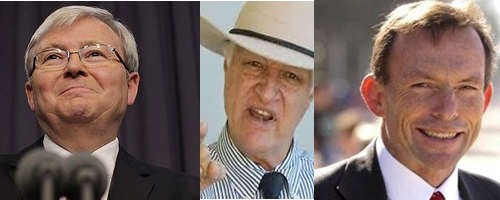
Election
2013- take 2
|
|
|
|
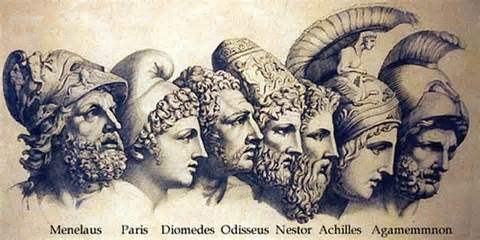
Turkey
Unrest 2013
|
|
|
|
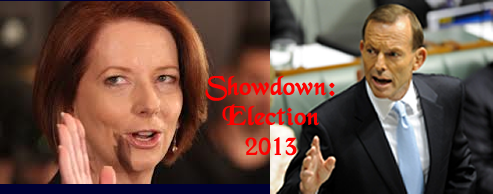
Election
2013
|
|
|
|
World
News 2013
|

|
|
|
Serialised
story of the greates ship of her time and
|

|
|
|
Venus
transits the Sun
|


|
For all your horoscopes, we recommend Ed Tamplin's excellent astrology site.

|
Astrology Oz is best viewed using firefox, screen resolution 1280x1024, macromedia flash enabled.
Firefox - the only browser that gives total control over web browsing, see what you want to see - download firefox

© AstrologyOz 2014
All articles and images on this site are subject to copyright and may not be copied, stored or modified in any way.
AstrologyOz - designed and maintained by Sherrynne Dalby