
Welcome to AstrologyOz
Apologies to all those who rely on this resource.. I have had major server issues which are now hopefully fully resolved.... after 4 months... I will be updating everything over the next week .... so thanks for your patience :)
|
|
|
World
News 2014
|

|
All your planetary data for 2014 is here now Planetary stations , Void of Course Moon , Moon phases and Planet Ingresses for 2014 plus Moon Planting Guide |

|
Jan - April 2014 Planting Guide
,
plus 2014 Moon phases,Planet Ingresses and retrogrades,
|
Why Mercury Retrograde Feels Different in the Southern HemisphereMercury retrograde is an optical effect caused by the changing positions of Earth and Mercury as they orbit the Sun. Mercury does not literally reverse direction, yet from Earth it can appear to slow, stop and travel backwards against the zodiac. The astronomical event happens worldwide at the same moment, including in Australia. The experience can still feel different below the equator. Astrology gives meaning to planetary cycles through signs, houses, seasons and everyday timing. Australian daylight patterns, reversed seasonal symbolism and the huge distances between cities can all shape how people notice a Mercury retrograde period. The sky is shared, but the setting changesMercury’s apparent reversal is not stronger in Sydney, Perth or Hobart than in London or New York. The planet occupies the same zodiac sign for everyone at a given time, and the stations marking the beginning and end of the retrograde are global events. An ephemeris or planetary table will therefore show the same core dates wherever you live. Location becomes important when a chart is calculated for a particular place. The Ascendant, Midheaven and house cusps change with latitude and longitude, so Mercury may activate different areas of life for someone in Adelaide than for someone in Cairns. The shared planetary weather receives a different local emphasis. Opposite seasons alter the symbolismIn the Northern Hemisphere, Mercury retrograde occurring during June may be associated with summer travel, long evenings and the end of an academic year. In Australia, June brings winter, shorter afternoons and a different pace. A retrograde in December arrives during summer holidays, end-of-year work deadlines and the lead-up to Christmas rather than the middle of a Northern summer. This seasonal reversal does not change Mercury’s orbit, but it can influence the metaphors people use. A communication slowdown in January may show up through holiday bookings, airport plans and family gatherings. In July, the same kind of cycle may be felt through heating problems, wet-weather travel or the pressure of returning to work after a quieter period. Daylight and distance shape daily lifeAustralia’s time zones make exact planetary timing especially noticeable. A Mercury station listed in Universal Time may fall in the early morning in Melbourne, during the night in Perth or at another hour in Darwin. People checking a retrograde calendar should convert the time rather than relying on an overseas website’s date alone. Daylight saving adds another layer. New South Wales, Victoria, Tasmania, South Australia and the Australian Capital Territory move their clocks forward during part of the year, while Queensland, Western Australia and the Northern Territory do not. Someone arranging a video call between Brisbane and Melbourne can encounter a practical timing mix-up before any astrological interpretation begins. The country’s geography also makes travel stories distinctive. A delayed connection between Sydney and Perth is a much bigger disruption than a short local trip, while a road journey through regional New South Wales can involve long stretches without reliable reception. Mercury themes such as messages, vehicles and schedules naturally become more visible in these circumstances. Houses matter more than hemisphere labelsAstrologers often begin with the sign Mercury is transiting, then examine the house it occupies in a birth chart. In the Southern Hemisphere, the houses are still calculated using the person’s actual birth time and location; they are not simply flipped upside down because the seasons are reversed. For an Australian chart, Mercury retrograde might pass through the third house of local travel and communication, the sixth house of routines and work, or the ninth house of long-distance journeys and study. A person in Hobart and someone in Darwin may therefore experience the same retrograde through different practical concerns, even if they share the same Sun sign. Useful timing resources can help readers compare stations, ingresses and lunar movements with their own schedules. AstrologyOz provides moon phases and stations, which can be read alongside Mercury dates without treating any single transit as a guaranteed event. Australian routines give the cycle a local accentThe phrase “I’ll sort it this arvo” can become optimistic during a Mercury retrograde period when a payment fails, a parcel is redirected or a meeting link refuses to open. Australians may notice the symbolism through school-term calendars, tradespeople rescheduling jobs, public transport disruptions or the familiar rush to organise everything before a long weekend. Sport and seasonal events add further context. A retrograde near the start of the AFL or NRL season may coincide with ticketing confusion, broadcast changes and travel arrangements for interstate matches. In regional areas, weather, road conditions and limited services can matter more than abstract ideas about technology or office communication. This is why the cycle can feel personal without being uniquely Australian in an astronomical sense. The planet supplies a broad symbolic pattern, while local habits and responsibilities provide the setting in which that pattern is recognised. A grounded way to work with the transitMercury retrograde is often associated with reviewing, revising, repeating and retrieving. In practical terms, that may mean checking a booking twice, saving important documents, allowing extra time for domestic flights and confirming whether a date is in daylight-saving time. These habits are useful whether or not someone follows astrology. The cycle can also be used for reflection rather than alarm. Re-reading a contract, repairing an old device, reconnecting with someone or returning to unfinished study may fit the symbolism better than assuming every inconvenience is caused by Mercury. Australian readers looking for planetary information and astrology articles can explore the wider AstrologyOz resources while keeping personal judgement at the centre. Track the exact station times in your local Australian time zone, note which chart house Mercury activates, and record the practical themes that arise. A simple diary of delays, revisions and renewed conversations can reveal how the retrograde operates in your own life and turn a vague reputation into a more useful personal observation. |
|
|
|
Benedict
XVI resigns 2013
|

|
|
|
Election
2013- take 2
|

|
|
|
Turkey
Unrest 2013
|
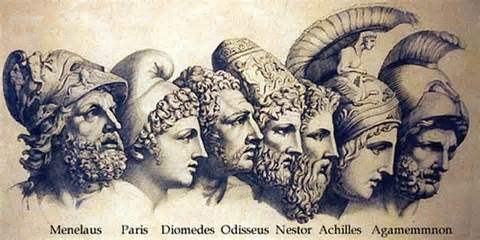
|
|
|
Election
2013
|

|
|
|
World
News 2013
|

|
|
|
Serialised
story of the greates ship of her time and
|

|
|
|
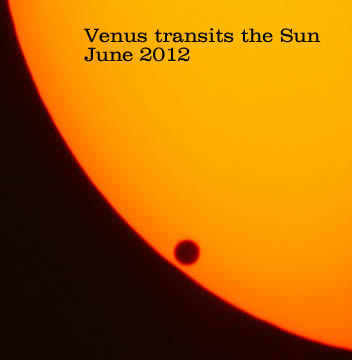
Venus
transits the Sun
|

|
For all your horoscopes, we recommend Ed Tamplin's excellent astrology site.

|
Astrology Oz is best viewed using firefox, screen resolution 1280x1024, macromedia flash enabled.
Firefox - the only browser that gives total control over web browsing, see what you want to see - download firefox

© AstrologyOz 2014
All articles and images on this site are subject to copyright and may not be copied, stored or modified in any way.
AstrologyOz - designed and maintained by Sherrynne Dalby