
Welcome to AstrologyOz
Apologies to all those who rely on this resource.. I have had major server issues which are now hopefully fully resolved.... after 4 months... I will be updating everything over the next week .... so thanks for your patience :)
|
|
|
World
News 2014
|

|
All your planetary data for 2014 is here now Planetary stations , Void of Course Moon , Moon phases and Planet Ingresses for 2014 plus Moon Planting Guide |

|
Jan - April 2014 Planting Guide
,
plus 2014 Moon phases,Planet Ingresses and retrogrades,
|
A guide to the lunar nodes and their evolutionary meaningEvolutionary astrology uses the lunar nodes as a symbolic map of direction. The North Node points toward unfamiliar growth, while the South Node describes familiar strengths that can become default habits. Read together, they trace an axis of development rather than dividing a chart into lucky and difficult placements. The lunar nodes are the two points where the Moon’s tilted orbit meets the ecliptic, the Sun’s apparent annual path. They move backwards through the zodiac, changing position about every 18 months and returning to their birth positions in roughly 19 years. In evolutionary astrology, their meaning is understood through cycles, soul purpose and conscious choice. North and south nodes comparedEvery birth chart places one node in the South Node’s sign and house and its opposite pole in the North Node’s sign and house. The emphasis is developmental: the South Node may describe what is already natural, while the North Node names a less travelled direction.
Neither pole is inherently good or bad. A strong South Node can supply confidence, but it may encourage a “she’ll be right” reaction that resists change. A demanding North Node can feel awkward, yet it supplies the growth edge. The nodes become most useful when both are integrated into one conscious plan. How the lunar nodes formThe orbital geometry explains why the nodes are always linked. The Moon crosses the ecliptic twice during its monthly circuit, producing an ascending node and a descending node. Astrologers also call them the North and South Nodes; the names indicate direction of motion, not moral rank. Because the nodes travel backwards, they spend about 18 months in each sign before moving on. The roughly 18.6-year draconic cycle links a node’s birth position with later returns. The nodal opposition is a conversation between two functions: expressing the self and meeting the wider world, confidence and vulnerability, inherited skill and deliberate reinvention. Mean node, true node and the eclipticA mean node is a smoothed average of the Moon’s changing orbit and is convenient for long-range study. A true node is calculated from the Moon’s position at a specific moment and can differ slightly for the same chart. Different software may therefore display different degrees unless the node type and source are specified. Zodiac signs and houses are separate layers. The node’s zodiac sign describes the style of development, while its house shows the environments where that development occurs. For an Australian reader, house calculation depends on accurate birthplace coordinates, local clock time and daylight-saving history, not merely the date entered into an app. Working with Australian birth timesAccurate birth data matters because the nodes also carry houses. Use the clock time recorded in Australia, including daylight saving, rather than casually replacing it with present-day time. Sydney and Melbourne commonly use AEST or AEDT; Perth uses AWST without daylight saving; Adelaide and Alice Springs use ACST or ACDT. For older records, local mean time and changing historical time-zone rules may need checking. An hour out can place the nodes near a different house cusp, especially in closely cusped charts. Australian language offers a neat shorthand: “give it a go” can describe the North Node’s invitation to try an unfamiliar strength. Local customs and media habits shape how the symbolism lands. Backyard vegetable beds and moon-planting advice remain familiar in Australian gardening culture. Australian astrology publishing also includes newspaper horoscope columns alongside independent online guides, so precise nodal charts and a lunar phase calendar can complement the familiar daily forecasts. Timing nodal change and returnTiming the nodes needs two viewpoints: transiting nodes, which show where development is pressing, and natal nodes, which form a fixed personal axis. When a transit crosses the birth nodes, familiar patterns are placed under pressure and a new direction can feel unusually urgent. For slower timing, AstrologyOz’s secondary progression calculations can place progressed lunar nodes against natal houses and planets, revealing when an axis becomes more personal. Use the method alongside transits rather than treating it as a verdict. Record the sign, house, conjunctions and aspects for each pass, then note the decisions made during that period. A nodal return near the nineteenth year often coincides with a major redefinition of identity, belonging or direction, though timing depends on the chart and the node variant used. Prompts for growth and releaseTurn the axis into observable behaviour. A karmic pattern is best read here as a recurring tension between inherited identity and intended direction, not as a sentence imposed by the past. Use the North Node as a set of practical prompts:
The South Node should be handled with respect. Recognise its competence, then consider where familiarity has become avoidance and where a strength is being overused.
Balance matters because evolutionary growth is neither a rejection of the past nor an endless appetite for novelty. This has a practical parallel in an Indonesian reflection on care for creation, where environmental responsibility is framed as devotion. In that sense, inherited skill and present action work together rather than one cancelling the other. Turning insight into directionBegin with the birth chart, not the fear that one sign sounds easier. Identify the South Node’s familiar gift, locate the North Node across the chart, and name one realistic situation in which the latter can be expressed. Choose a due date tied to an actual project, relationship or move. Use AstrologyOz’s eclipse and planetary-station material to follow activation of the axis, then revisit the commitment at each nodal return. Calculate the chart, mark both nodes, and take one practical step this week toward the unfamiliar pole while keeping the South Node’s proven skill in service. |
|
|
|
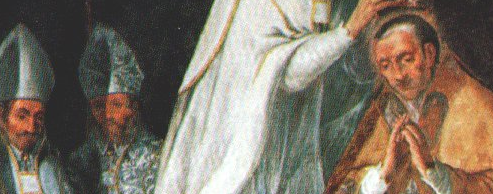
Benedict
XVI resigns 2013
|
|
|
|
Election
2013- take 2
|

|
|
|
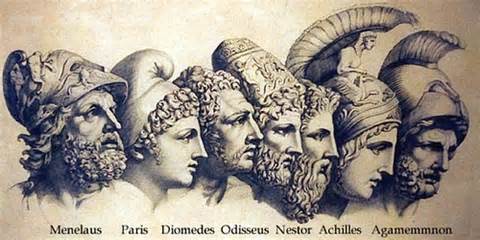
Turkey
Unrest 2013
|
|
|
|
Election
2013
|

|
|
|
World
News 2013
|

|
|
|
Serialised
story of the greates ship of her time and
|

|
|
|
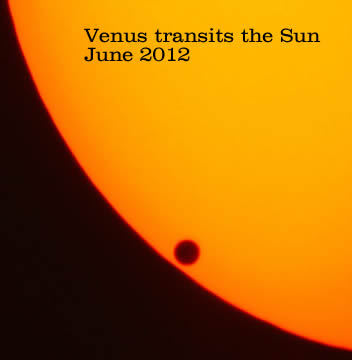
Venus
transits the Sun
|

|
For all your horoscopes, we recommend Ed Tamplin's excellent astrology site.

|
Astrology Oz is best viewed using firefox, screen resolution 1280x1024, macromedia flash enabled.
Firefox - the only browser that gives total control over web browsing, see what you want to see - download firefox

© AstrologyOz 2014
All articles and images on this site are subject to copyright and may not be copied, stored or modified in any way.
AstrologyOz - designed and maintained by Sherrynne Dalby