
Welcome to AstrologyOz
Apologies to all those who rely on this resource.. I have had major server issues which are now hopefully fully resolved.... after 4 months... I will be updating everything over the next week .... so thanks for your patience :)
|
|
|
World
News 2014
|

|
All your planetary data for 2014 is here now Planetary stations , Void of Course Moon , Moon phases and Planet Ingresses for 2014 plus Moon Planting Guide |

|
Jan - April 2014 Planting Guide
,
plus 2014 Moon phases,Planet Ingresses and retrogrades,
|
How to calculate your secondary progressionsSecondary progressions are a symbolic forecasting technique in astrology. They move the chart forward by treating each day after birth as one year of life, revealing inner development, changing priorities and periods when certain natal themes become active. The method is especially useful when combined with transits, solar returns and lunar cycles. For Australian readers, accurate birth-time records matter because daylight saving differs between states and can affect the Ascendant, house cusps and progressed angles.
What secondary progressions measureTo calculate secondary progressions, begin with the principle known as “a day for a year.” If someone is 30 years old, their progressed chart is calculated from the planetary positions 30 days after their birth. A person aged 30 years and six months is represented by approximately 30 days and 12 hours after birth. This chart describes internal movement rather than a completely new personality. The progressed Sun can show changes in identity and purpose, while the progressed Moon moves quickly through signs and houses, reflecting emotional focus. Its cycle is approximately 27–28 years, so it often marks changing domestic, professional or relationship priorities. Progressions can also illuminate sleep and dream patterns when the progressed Moon, Neptune or the twelfth house becomes prominent. The discussion of moon sleep patterns offers useful background for considering how lunar symbolism may relate to changing rhythms. Gather accurate birth dataYou need the date, exact time and location of birth, plus the year for which you want to create the progressed chart. A birth certificate is preferable to a family memory such as “around breakfast,” especially when you intend to interpret the Ascendant or house cusps. Australian time zones require care. A birth in Sydney, Melbourne or Hobart may have involved daylight saving, while Brisbane and Perth follow different clock practices. Historical changes to daylight saving also mean that a modern time-zone setting may not automatically be correct for an older birth. Enter the birthplace rather than only the nearest major city when possible. A birth in Geelong, Newcastle or the Adelaide Hills can produce slightly different angles from a chart calculated for the state capital, although the planetary sign positions will usually remain the same. Apply the day-for-year methodThe basic calculation converts the person’s age into a matching interval after birth. For a 25-year-old, count 25 days from the birth date. For 25 years and three months, add approximately one quarter of a day, or six hours. This gives the date and approximate time used for the progressed planetary positions. A more precise approach converts the age into a fraction of a tropical year, then applies that fraction as a number of days. Many astrologers use 365.2422 days in a year, while software may account for leap years and astronomical time conventions. Small differences rarely matter for the progressed Sun, but they can affect the fast-moving Moon and exact aspects. For example, a person born on 10 March 1995 who is examined at age 30 would use planetary positions around 9 April 1995. The progressed chart is then calculated for that later date, using the original birth location and the relevant astronomical settings. Calculate progressed planetsThe progressed Sun moves about one degree per year, making it a slow marker of identity development. A sign change can describe a substantial shift in how a person expresses purpose. A move from Pisces into Aries, for instance, may coincide with a stronger emphasis on independence, initiative and direct action. The progressed Moon travels around 12–14 degrees per year and usually remains in a sign for about two and a half years. Its sign describes emotional style, while its house indicates where attention is concentrated. A fourth-house phase may emphasise home, family or relocation; a tenth-house phase can bring greater concern with work, reputation or public responsibilities. Venus and Mars progress more slowly and may remain in one sign for many years, though retrograde motion in the birth chart can create unusual patterns. Mercury can also change direction in the progressed chart. These stations are often interpreted as shifts in thinking, communication, attraction or decision-making. Set angles and housesProgressed planets can be read in the natal houses, in a progressed house system, or through a blended approach. Keeping the natal houses fixed makes it easier to see which life areas are being activated. Calculating a fully progressed chart allows the Ascendant and Midheaven to move, adding information about changing presentation and public direction. The progressed Ascendant moves roughly one degree per year, though its exact speed varies with latitude and the chosen house system. This makes birth-time accuracy particularly important. A difference of several minutes can change the timing of an angle crossing a natal planet. Many practitioners compare progressed angles with natal planets and then check whether a current transit is reinforcing the same theme. For example, a progressed Midheaven contacting natal Saturn may describe increasing professional responsibility, while a simultaneous Jupiter transit could coincide with growth or recognition. Read aspects and timingBegin with close aspects between progressed planets and natal planets, especially conjunctions, oppositions and squares. The progressed Sun or Moon contacting a natal angle, luminary or personal planet is usually given particular weight. Wider orbs are generally used for the Sun and Moon than for Mercury, Venus and Mars. The progressed Moon is valuable for timing because it moves quickly enough to show developments within a year. It may first approach a natal planet, perfect the aspect, and then separate from it. Track the date of exact contact, but allow several weeks or months for the influence to become noticeable. A progressed aspect does not guarantee a specific event. It describes a period of readiness or emphasis, which may appear differently depending on a person’s choices and circumstances. A progressed Venus–Saturn contact could correspond to commitment, financial restraint, a serious creative project or a clearer understanding of relationship boundaries. Use Australian context and toolsAstrology software and online ephemerides can calculate the chart quickly, but check the settings before accepting the result. Confirm the tropical or sidereal zodiac, house system, time zone, daylight-saving adjustment and location coordinates. For readers comparing charts across Australia, these details help prevent confusion between Australian Eastern Standard Time and Australian Central or Western time. A practical workflow is to calculate the progressed chart, list the sign and house positions, identify exact natal contacts, and then compare them with current transits. An independent astrology reference site may also provide useful material for checking planetary symbolism and calculation practices. Keep a dated journal of progressed Moon changes, major aspects and real-life developments. Notes made during a move in Perth, a new role in Canberra or a family change around the New Year can help distinguish broad symbolism from personally meaningful timing. Reviewing the record after several months usually produces a more balanced interpretation than relying on memory alone. Calculate one chart using reliable birth data, inspect the progressed Sun and Moon first, and then add angles, personal planets and transits. Recording the exact settings and interpretation in a journal will make your secondary progression work more consistent and easier to refine over time. |
|
|
|
Benedict
XVI resigns 2013
|

|
|
|
Election
2013- take 2
|

|
|
|
Turkey
Unrest 2013
|
|
|
|
Election
2013
|

|
|
|
World
News 2013
|

|
|
|
Serialised
story of the greates ship of her time and
|

|
|
|
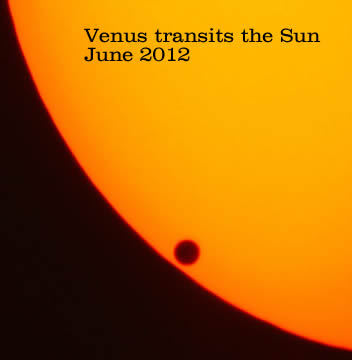
Venus
transits the Sun
|

|
For all your horoscopes, we recommend Ed Tamplin's excellent astrology site.

|
Astrology Oz is best viewed using firefox, screen resolution 1280x1024, macromedia flash enabled.
Firefox - the only browser that gives total control over web browsing, see what you want to see - download firefox

© AstrologyOz 2014
All articles and images on this site are subject to copyright and may not be copied, stored or modified in any way.
AstrologyOz - designed and maintained by Sherrynne Dalby