
Welcome to AstrologyOz
Apologies to all those who rely on this resource.. I have had major server issues which are now hopefully fully resolved.... after 4 months... I will be updating everything over the next week .... so thanks for your patience :)
|
|
|
World
News 2014
|

|
All your planetary data for 2014 is here now Planetary stations , Void of Course Moon , Moon phases and Planet Ingresses for 2014 plus Moon Planting Guide |

|
Jan - April 2014 Planting Guide
,
plus 2014 Moon phases,Planet Ingresses and retrogrades,
|
A Step by Step Guide to Reading Your Personal TransitsTransits are the moving planets against the backdrop of your natal chart, and learning to read them puts you in touch with the rhythm of the year ahead. In Australia, where the night sky over the Blue Mountains or the inland salt pans can feel close enough to touch, paying attention to planetary movement is already part of how many people plan their weeks. Whether you're a backyard grower checking lunar cycles for planting tomatoes, or someone tracking Saturn's return over a flat white on the verandah, the basic process is the same. You don't need formal training to interpret your own transits, just an organised approach and reliable data. Aussies are used to juggling AEST, ACST, and AWST, and that same attention to local timing applies perfectly to planetary work. The steps below move from setting up your chart to weaving a coherent story, with practical notes suited to the southern hemisphere and the way the seasons shift here compared to Europe or North America. Preparing Your Natal Data and the Current SkyBefore anything else, confirm your birth information. The exact time, date, and place of birth determine where every planet and angle falls in your chart. If you were born in Ballarat or Brisbane, make sure the calculator uses the correct historical timezone for that era, not just the current one. Australian charts often shift noticeably when you correct for summer time or the older daylight saving rules that applied in some states. Next, set up a transit calendar for the coming weeks. The positions of the slower planets like Jupiter, Saturn, Uranus, Neptune, and Pluto give you the long-term themes, while the faster personal planets show the daily mood. It's useful to keep current moon phases and timing open in a tab during this work, because lunar aspects set the emotional tone for almost everything else. A cold desk in winter can derail concentration, so if you're deep in study and your fingers go numb, it might be worth sorting out zoned heating to keep your astrology corner warm without heating the whole house. Identifying the Active TransitsWith chart and ephemeris in front of you, look for two things: which transiting planets are currently sitting on a sensitive point in your natal chart, and which ones are forming an exact aspect to a natal planet within the coming days. The sensitive points include your angles (Ascendant, Imum Coeli, Descendant, Midheaven), the lunar nodes, and the house cusps where personal planets travel. A transiting planet conjunct your Descendant, for instance, tends to pull relationships into focus, regardless of your rising sign. Note the difference between inner and outer planet transits. The Sun, Moon, Mercury, Venus, and Mars move quickly and trigger a single event or mood within a day or two. Saturn, Uranus, Neptune, and Pluto linger, sometimes for months, and shape broader life themes. In Australian terms, think of the Moon as the weather report and Pluto as the climate pattern. Reading the Nature of the AspectOnce you've identified the contact, note the type of aspect being formed. This tells you the flavour of the encounter. The major aspects each carry a different tone, and a quick comparison helps when you're scanning a crowded transit list.
Harsh aspects such as squares and oppositions often correspond with friction that demands a response, whereas trines and sextiles offer openings that still require you to act. Conjunctions are powerful regardless, but whether they feel easy or hard depends entirely on the planets involved. Saturn conjunct your Sun, for example, is rarely described as pleasant by anyone in Melbourne or Adelaide, while Jupiter conjunct Sun tends to bring a stretch of good cheer. Mapping Timing and Approximate DurationTiming is where many beginners get stuck. A transit can be felt weeks before and after the exact hit because of the orb of influence, which is the range within which an aspect still carries weight. The faster the planet, the tighter the orb feels; the slower the planet, the longer the build-up. Pay attention to whether the aspect is applying or separating. An applying aspect is still moving toward exactness and tends to feel like a building pressure, whereas a separating aspect has already peaked and is fading. Transiting Uranus applying to your natal Mercury often shows up as a week of restless ideas, while the separating period feels more like an aftershock. To refine the daily rhythm, many Australian astrologers work with planetary hours, dividing the day into segments ruled by each classical planet. If you want to set intentions aligned with this system, there is a clear walkthrough at how to use planetary hours for daily intention setting. Combining the transit calendar with the hour ruler gives you both the broad brushstrokes and the day's finer texture. Weaving the Themes Into Personal MeaningInterpretation comes last, not first. Once you have the planet, the natal point it contacts, the aspect type, and the timing, you can begin to tell a story. Ask what area of life the house represents, what the natal planet symbolises in your chart, and how the transiting planet's nature modifies that symbol. A quick example: if transiting Saturn squares your natal Moon in the fourth house, you might be looking at several months where domestic responsibilities feel heavy or emotional needs get pruned back. Knowing this in advance helps you plan, perhaps scheduling a weekend at a B&B in the hills rather than promising yourself a renovation at home. The point isn't to predict every event, but to recognise the weather and pack accordingly. With practice, reading transits becomes like checking the BoM radar before a summer bushwalk: you still head outside, you just pick a better day for the longer route. Try working with the moon tables and the planetary hours guide here on AstrologyOz for a few cycles, and set aside one quiet morning each week to walk through your upcoming transits. The natal chart won't change, but your skill at reading it will grow steadily, and the sky over your part of Australia is ready to be read. |
|
|
|
Benedict
XVI resigns 2013
|

|
|
|
Election
2013- take 2
|

|
|
|
Turkey
Unrest 2013
|
|
|
|
Election
2013
|

|
|
|
World
News 2013
|

|
|
|
Serialised
story of the greates ship of her time and
|

|
|
|
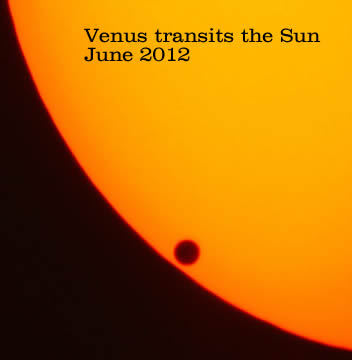
Venus
transits the Sun
|

|
For all your horoscopes, we recommend Ed Tamplin's excellent astrology site.

|
Astrology Oz is best viewed using firefox, screen resolution 1280x1024, macromedia flash enabled.
Firefox - the only browser that gives total control over web browsing, see what you want to see - download firefox

© AstrologyOz 2014
All articles and images on this site are subject to copyright and may not be copied, stored or modified in any way.
AstrologyOz - designed and maintained by Sherrynne Dalby