
Welcome to AstrologyOz
Apologies to all those who rely on this resource.. I have had major server issues which are now hopefully fully resolved.... after 4 months... I will be updating everything over the next week .... so thanks for your patience :)
|
|
|
World
News 2014
|

|
All your planetary data for 2014 is here now Planetary stations , Void of Course Moon , Moon phases and Planet Ingresses for 2014 plus Moon Planting Guide |

|
Jan - April 2014 Planting Guide
,
plus 2014 Moon phases,Planet Ingresses and retrogrades,
|
How To Find Your Astrological House RulersAstrological house rulers connect the signs on your chart’s house cusps with the planets that govern them. They help show where a sign’s themes are expressed and which life areas become linked in a birth chart. The method begins with the Ascendant, the sign rising on the eastern horizon at your exact birth time. From there, the remaining houses are arranged around the chart wheel. Each cusp sign has a planetary ruler, creating a map of personal priorities, relationships, work, money and other experiences. Accurate local time matters. A birth recorded in Sydney during daylight saving may produce a different Ascendant from the same clock time entered for Brisbane, where daylight saving is not observed. Adelaide also requires attention to its half-hour time zone, while Perth follows Western Australian time. House rulership is a practical technique rather than a prediction by itself. It becomes useful when combined with the planets occupying a house, the condition of its ruler, and the aspects connecting that ruler with the rest of the horoscope. Start With The AscendantFind a natal chart calculator that accepts your birth date, exact time and birthplace. Use the city where you were born rather than simply selecting a nearby capital. Sydney, Melbourne, Hobart and Canberra may share seasonal clock changes, while Brisbane, Darwin and Perth require different time-zone settings. If your birth time is uncertain, house cusps can shift considerably. A difference of ten or fifteen minutes may alter a cusp near the end of a sign, especially when the Ascendant is changing signs. Birth certificates, hospital records and family notes can help establish the most reliable time. Once the chart is cast, locate the Ascendant, usually marked ASC. The sign on that point rules the first house. The second house begins at the next cusp shown by your chosen house system, and so on around the wheel. Match Each Cusp With Its PlanetUse the traditional planetary ruler of the sign on each house cusp. Aries is ruled by Mars, Taurus by Venus, Gemini by Mercury, Cancer by the Moon, Leo by the Sun, Virgo by Mercury, Libra by Venus, Scorpio by Mars, Sagittarius by Jupiter, Capricorn by Saturn, Aquarius by Saturn and Pisces by Jupiter. Many contemporary astrologers also use Uranus for Aquarius, Neptune for Pisces and Pluto for Scorpio as modern co-rulers. A consistent approach is important: traditional rulers are especially useful for tracing practical chart connections, while modern rulers can add psychological or generational meaning. For example, if Libra is on the seventh-house cusp, Venus becomes the ruler of partnerships. If Venus is in the tenth house, relationships may connect with career, public reputation or professional networks. The house containing the ruler often shows where the affairs of the ruled house are carried. Trace The Ruler Through The ChartAfter identifying a house ruler, note the sign and house where its planet is placed. This is sometimes called the dispositor pathway or house-ruler chain. A Taurus second house makes Venus its ruler; if Venus is in the ninth house, finances may be connected with education, overseas matters, publishing or belief systems. Assess the planet’s condition as well. A ruler in its own sign has strong authority, while a planet in detriment or fall may describe delays, doubts or a less direct route. Aspects from benefic planets can support the ruler, whereas difficult contacts may show pressure that requires conscious management. The Moon, Sun and planets can also rule several houses if the same planet governs more than one cusp. Mercury, for instance, may rule both a Gemini fourth house and a Virgo seventh house. In that case, home and partnership matters may become closely connected.
Choose A House System CarefullyDifferent house systems calculate the cusps in different ways. Placidus is widely used in modern Western astrology, while Whole Sign houses assign one complete sign to each house from the Ascendant. Equal House places every cusp exactly thirty degrees apart from the Ascendant. For births in far northern or southern latitudes, some quadrant systems can produce unusual or intercepted houses. This is worth considering for Australians born in places such as Darwin or far-northern Queensland, particularly if a chart appears difficult to interpret. Comparing Placidus with Whole Sign can reveal which structure gives the clearest life-story correspondence. Do not switch systems simply to obtain a preferred interpretation. Record the system used, compare several charts and observe which house placements consistently describe lived experience. Astrology software and online calculators may use different default settings, so check the details before comparing results. Use Rulership In Timing And PlanningHouse rulers become especially useful when studying transits, progressions and annual profections. A transit to the ruler of the sixth house may bring attention to work routines or health habits, while a transit to the fourth-house ruler may coincide with moving, renovation or family developments. Planetary hours can provide another layer for selecting a symbolic focus for the day. The guide on planetary hours explains how planetary symbolism can support daily intention setting, which may complement a chart-based approach. Australia’s seasons also shape how people experience timing. A Capricorn transit may coincide with summer holidays and a quieter office period in January, while the same symbolism can feel different during the academic and financial-year rhythms that begin in July. These real-world cycles should be considered alongside planetary timing. Avoid Common Rulership ErrorsA frequent mistake is assigning a planet based on the sign containing a house’s planet rather than the sign on the cusp. The ruler is determined by the cusp sign. A house can contain several planets, yet its ruler may be placed elsewhere and still direct the house’s main storyline. Another error is treating the ruler as a guarantee. A well-placed ruler does not promise effortless outcomes, and a challenged ruler does not cancel an area of life. Read the ruler alongside its aspects, dignity, house placement and the condition of any planet occupying the house. Keep a written list of your twelve cusp signs and rulers. For additional chart-study perspectives, browse astrology learning resources and compare terminology carefully, since astrologers may differ in their treatment of modern rulerships and house systems. To apply the technique, write down your Ascendant, list every house cusp sign, assign its traditional ruler, then record each ruler’s sign, house and major aspects. Use that map when reading transits, planning reflective work or exploring recurring themes in your Australian birth chart. |
|
|
|
Benedict
XVI resigns 2013
|

|
|
|
Election
2013- take 2
|

|
|
|
Turkey
Unrest 2013
|
|
|
|
Election
2013
|

|
|
|
World
News 2013
|

|
|
|
Serialised
story of the greates ship of her time and
|

|
|
|
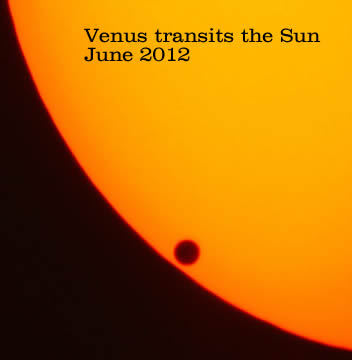
Venus
transits the Sun
|

|
For all your horoscopes, we recommend Ed Tamplin's excellent astrology site.

|
Astrology Oz is best viewed using firefox, screen resolution 1280x1024, macromedia flash enabled.
Firefox - the only browser that gives total control over web browsing, see what you want to see - download firefox

© AstrologyOz 2014
All articles and images on this site are subject to copyright and may not be copied, stored or modified in any way.
AstrologyOz - designed and maintained by Sherrynne Dalby