
Welcome to AstrologyOz
Apologies to all those who rely on this resource.. I have had major server issues which are now hopefully fully resolved.... after 4 months... I will be updating everything over the next week .... so thanks for your patience :)
|
|
|
World
News 2014
|

|
All your planetary data for 2014 is here now Planetary stations , Void of Course Moon , Moon phases and Planet Ingresses for 2014 plus Moon Planting Guide |

|
Jan - April 2014 Planting Guide
,
plus 2014 Moon phases,Planet Ingresses and retrogrades,
|
Working with retrograde cycles for honest self reflectionA retrograde planet is simply one that, from our perspective on Earth, appears to be moving backward through the zodiac. It is an optical illusion, yet the astrological tradition treats these windows as meaningful turning points. In popular culture they get framed as something to fear, blame, or simply survive, which keeps a useful reflective tool hidden behind a thick layer of dread. The slower a planet moves and the longer its retrograde lasts, the deeper the territory it tends to cover. Mercury retrogrades last roughly three weeks and touch the small daily details, while Pluto spends around five months a year in apparent reverse, reshaping longer arcs of identity and belief. Treating each cycle as an invitation rather than an interruption changes the whole experience. For Australians, this matters in a few practical ways. Our seasons run opposite to those in the Northern Hemisphere, so when an Aries ingress arrives in the southern spring we are planting seeds rather than harvesting them. Moon phase tables and planetary stations listed on https://astrologyoz.com/welcome.htm are calculated in Australian Eastern Standard Time, which lets readers across Sydney, Melbourne, and Perth work with the same timing without juggling time zones. Self reflection works best when it has structure. Retrograde cycles are already structured for us by the sky, so the task becomes choosing how to meet them. The sections below walk through how to read the energy of a cycle, when to sit with it, and what to do with the notes you collect. What retrogrades are actually asking of youEach retrograde carries a theme tied to the planet involved. Mercury asks you to revisit conversations, technology, and travel plans. Venus turns its attention to relationships, money, and self-worth. Mars invites a slower look at how you handle conflict, anger, and desire. The outer planets tend to ask generational questions, but they still land personally when they contact sensitive points in your chart. Rather than bracing for what might go wrong, it helps to read each cycle as a focused question. What conversations keep circling back? What choice have you been avoiding? Where is your life asking for a second draft instead of a polished final version? That simple reframe turns the energy from something happening to you into something working through you. Picking the right moment to sit with yourselfAstrology has always offered tools for choosing timing, and retrogrades are a built-in window for reflection. Electional astrology, the art of picking favourable moments, often treats retrograde periods as unsuitable for launching brand new ventures. The beginner's guide to electional astrology walks through how this logic applies to life milestones like buying property or signing contracts. What is left in those pauses is, conveniently, room to think. Many Australian practitioners suggest booking a session, taking a long lunch break, or heading to a quiet stretch of coast for a solo walk in the days leading up to a station. The change of scene helps the conversation in your head slow down enough to hear itself. Journaling prompts that work during retrogradeA loose structure suits these cycles better than a rigid plan. Keep a small notebook, a notes app, or even a voice memo folder that you treat as a private retrograde space. When a planet stations direct, read back over what you wrote when it first stationed retrograde and notice what has quietly shifted in between. Some prompts that travel well during these windows include: where have I been rushing lately, what conversation keeps returning uninvited, what would I do if I stopped trying to control the outcome, where am I being asked to revise an old story. The aim is not to fix yourself on the spot. The aim is to leave a trail of honest breadcrumbs for your future self to look back on. Mercury retrograde in everyday Australian lifeBecause Mercury touches so many small daily things, its cycles get noticed first. Friends in Brisbane might find old clients resurfacing. A Melbourne-based freelancer may notice the same brief needs rewriting from scratch. A Perth tradie dealing with suppliers could see delays that mysteriously turn out to save a costly mistake. The trick is to slow your pace rather than push harder. Back up files, double-check bookings, reread emails, and allow extra travel time between suburbs. Use the slower tempo as permission to revisit projects shelved months ago. Many local astrologers pair Mercury retrograde with moon planting calendars, since both reward a more patient rhythm. Outer planet retrogrades and slower seasons of growthThe longer cycles deserve more room. Saturn retrograde invites a careful review of commitments, boundaries, and the long apprenticeship you have been doing for years. Jupiter asks where you have been playing too small or not at all. Pluto, Uranus, and Neptune work at generational depth, but they still touch personally through transits to your chart. When an outer planet stations, it is worth asking what part of your life is being asked to mature. Some readers journal at the New Moon nearest a major station, then revisit notes at the corresponding Full Moon six months later. The Australian landscape, with its long horizons and slower seasonal shifts, suits this kind of patient inner work especially well. Reading your local sky from an Australian vantage pointAstrology in Australia has its own flavour, drawn partly from the seasons and partly from a community that tends to favour practical, down-to-earth applications. Practitioners and readers often blend traditional techniques with local colour, choosing bushland settings for retreats and connecting planetary timing with the rhythm of a year that runs December through February. Readers who want to keep exploring this territory can find a thoughtful companion perspective on faithfully committed, where reflective writing meets lived experience. Pairing that grounded reading with local planetary data makes the work feel less abstract and more like a yearly ritual you actually carry with you. Preparing for your next retrograde cycle
Pull up the next retrograde window on a Southern Hemisphere ephemeris tonight, set aside an hour with a cup of tea, and let the sky do half of the work for you. The reflective practice you build now will quietly carry you through the rest of the cycle. |
|
|
|
Benedict
XVI resigns 2013
|

|
|
|
Election
2013- take 2
|

|
|
|
Turkey
Unrest 2013
|
|
|
|
Election
2013
|

|
|
|
World
News 2013
|

|
|
|
Serialised
story of the greates ship of her time and
|

|
|
|
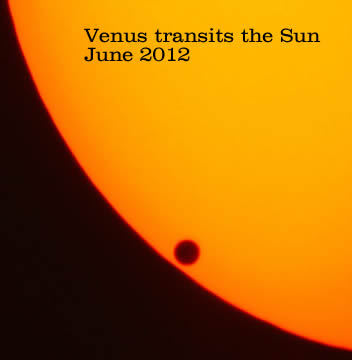
Venus
transits the Sun
|

|
For all your horoscopes, we recommend Ed Tamplin's excellent astrology site.

|
Astrology Oz is best viewed using firefox, screen resolution 1280x1024, macromedia flash enabled.
Firefox - the only browser that gives total control over web browsing, see what you want to see - download firefox

© AstrologyOz 2014
All articles and images on this site are subject to copyright and may not be copied, stored or modified in any way.
AstrologyOz - designed and maintained by Sherrynne Dalby