
Welcome to AstrologyOz
Apologies to all those who rely on this resource.. I have had major server issues which are now hopefully fully resolved.... after 4 months... I will be updating everything over the next week .... so thanks for your patience :)
|
|
|
World
News 2014
|

|
All your planetary data for 2014 is here now Planetary stations , Void of Course Moon , Moon phases and Planet Ingresses for 2014 plus Moon Planting Guide |

|
Jan - April 2014 Planting Guide
,
plus 2014 Moon phases,Planet Ingresses and retrogrades,
|
The Astrological Significance Of Australian Aboriginal ConstellationsThe night sky in Australia carries stories, law, seasonal knowledge and navigation traditions that reach back thousands of years. Aboriginal and Torres Strait Islander peoples have developed many distinct celestial systems, so there is no single Aboriginal zodiac or universal interpretation of the stars. For contemporary astrology readers, these traditions offer a different way to think about the heavens. The emphasis is often less on a personality label based on a birth date and more on relationships between Country, season, animals, ceremony and practical life. That distinction matters when exploring Indigenous astronomy with respect. Sky Country And Cultural KnowledgeIn many Aboriginal cultures, the sky is part of Country rather than a distant backdrop. Stars, dark clouds and celestial movements may reflect ancestral beings, creation stories, social responsibilities or ecological change. Knowledge is held within particular communities and language groups, and some teachings are restricted or shared only in appropriate settings. The Emu in the Sky is one of the best-known examples. It is formed from dark dust lanes in the Milky Way rather than bright stars. From areas with low light pollution, such as the Mallee or inland New South Wales, its shape can be striking. Its seasonal position has been associated with emu behaviour, egg gathering and changes in the natural environment. The Emu In The SkyThe Emu’s appearance demonstrates why Indigenous star knowledge cannot be reduced to a simple horoscope. Its movement across the sky is read alongside land-based signs. When the celestial emu reaches a particular position, communities may connect that timing with emu nesting and the availability of eggs, creating a practical seasonal calendar. This is an astrological idea in a broad symbolic sense: the heavens correspond with earthly rhythms. It does not mean that the Emu in the Sky assigns fixed character traits to people born under it. Instead, it can represent a relationship between observation, responsibility and the right time to act. Seasonal Stars And Local CalendarsDifferent nations identify different stars and groups with seasonal events. In north-east Victoria, the Boorong people’s sky knowledge includes figures linked with birds, animals and weather patterns. Across Arnhem Land, Yolŋu traditions connect stars and constellations with songlines, ceremony, tides and seasonal cycles. Australian readers may notice how different this is from a twelve-sign zodiac printed in a newspaper. A constellation can signal when certain foods become available, when winds shift or when a ceremony should occur. In Kakadu, for example, a sky event may be considered alongside monsoonal weather, wet-season access and the behaviour of local wildlife. Seven Sisters And Ancestral StoriesThe Pleiades, often called the Seven Sisters in English, appear in many Indigenous traditions across Australia, although the stories and names vary between communities. Their visibility, disappearance and return can carry meanings connected with kinship, pursuit, ceremony and seasonal change. The familiar Western constellation of Orion also appears in several Australian cultural narratives, but its interpretation is not automatically the same as the Greek hunter. In some traditions, the stars represent a group of men or hunters pursuing the sisters. These accounts remind us that the same stars can hold radically different meanings depending on language, Country and cultural authority. Reading The Sky Without AppropriationModern astrology can learn from the observational depth of Aboriginal astronomy without claiming ownership of sacred stories. It is appropriate to distinguish publicly available cultural information from teachings that belong to specific communities. Reliable sources should identify the nation, language group and custodians connected with a tradition rather than presenting it as a generic Australian belief. This approach also helps separate astronomy from astrology. Astronomy examines celestial objects and their movements, while astrology interprets symbolic relationships between the sky and human experience. An Australian astrology practice might respectfully use a lunar cycle, a seasonal marker or a local horizon observation as a reflective prompt, while avoiding invented claims about Indigenous meanings. For readers already tracking planetary cycles, a practical guide to Void of Course Moon periods can be useful as a separate Western timing method. It should sit alongside, rather than replace, Indigenous seasonal knowledge. Bringing Australian Skies Into PracticeThe clearest way to engage with these ideas is to observe the sky from your own location. A person in suburban Sydney may see only the brightest stars, while someone near Broome, Alice Springs or regional Western Australia can experience a far richer Milky Way. Even so, urban observers can follow moon phases, note sunrise and sunset positions, and learn which constellations become visible through the year. Keep a journal that records date, place, weather, moon phase and notable sky patterns. Avoid turning every Indigenous constellation into a personal prediction system. Instead, ask what the sky may reveal about seasonality, ecological awareness and your relationship with the place where you live. When using Western planets, a resource such as this retrograde tracking guide can help maintain a clear distinction between modern astrology and cultural astronomy.
The night sky above Australia is both scientifically observable and culturally alive. Read local sources, name the specific Aboriginal nation where information is available, and support Indigenous-led publications, cultural centres and astronomy projects. Then take your own notes under the southern stars, allowing observation, respect and place to guide the way you interpret the heavens. |
|
|
|
Benedict
XVI resigns 2013
|

|
|
|
Election
2013- take 2
|

|
|
|
Turkey
Unrest 2013
|
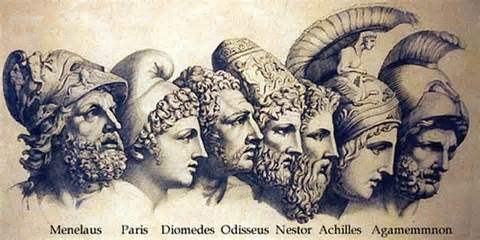
|
|
|
Election
2013
|

|
|
|
World
News 2013
|

|
|
|
Serialised
story of the greates ship of her time and
|

|
|
|
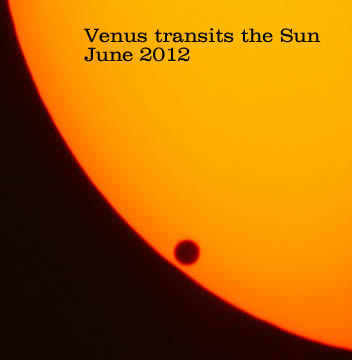
Venus
transits the Sun
|

|
For all your horoscopes, we recommend Ed Tamplin's excellent astrology site.

|
Astrology Oz is best viewed using firefox, screen resolution 1280x1024, macromedia flash enabled.
Firefox - the only browser that gives total control over web browsing, see what you want to see - download firefox

© AstrologyOz 2014
All articles and images on this site are subject to copyright and may not be copied, stored or modified in any way.
AstrologyOz - designed and maintained by Sherrynne Dalby