
Welcome to AstrologyOz
Apologies to all those who rely on this resource.. I have had major server issues which are now hopefully fully resolved.... after 4 months... I will be updating everything over the next week .... so thanks for your patience :)
|
|
|
World
News 2014
|

|
All your planetary data for 2014 is here now Planetary stations , Void of Course Moon , Moon phases and Planet Ingresses for 2014 plus Moon Planting Guide |

|
Jan - April 2014 Planting Guide
,
plus 2014 Moon phases,Planet Ingresses and retrogrades,
|
Reading Jupiter And Saturn Through An Australian Investment LensAstrology can offer a symbolic framework for thinking about timing, patience and risk, but it cannot predict market returns. For Australian investors, planetary cycles are best used as a reflective planning tool alongside company research, economic data and licensed financial advice. The phrase “2025 Jupiter Saturn sextile” needs careful handling. In tropical astrology, Jupiter and Saturn do not form a major exact sextile during 2025. Their changing positions create a more complicated pattern, and some online interpretations may be using a different zodiac, an approximate aspect or a broader orb. That distinction matters when considering long-term investments. Jupiter is associated with growth, confidence and opportunity, while Saturn represents limits, systems and accountability. Even without a precise sextile, the two planets can describe a useful tension between expansion and disciplined construction. For an Australian audience, this symbolism can be applied to superannuation, the ASX, property decisions and diversified portfolios. The aim is not to trade every transit, but to ask whether optimism is supported by cash flow, valuation and a realistic time horizon. What The 2025 Pattern Actually ShowsJupiter begins 2025 in Gemini and moves into Cancer in June. Saturn starts the year in Pisces, briefly enters Aries in May, and later returns to Pisces during its retrograde phase. From a tropical perspective, the relationship is closer to a mutable or cardinal square than a clean sextile. A sextile traditionally describes a cooperative 60-degree relationship. It is often interpreted as an opportunity that becomes productive when someone takes action. That interpretation may still be useful symbolically, but it should not be presented as a precise 2025 astronomical fact. Investors can therefore treat 2025 as a year for testing assumptions. Jupiter may encourage bigger expectations, while Saturn asks whether the investment thesis can withstand higher costs, weaker demand or delayed results. Growth Needs A StructureJupiter themes suit research into emerging industries, education, communications, technology and international markets. Its influence can correspond with enthusiasm for new ideas, although enthusiasm can quickly become overconfidence when prices have already risen. Saturn brings a different question: what supports the valuation? A mature business with recurring revenue, manageable debt and reliable governance may fit Saturn’s preference for durability. A speculative asset may require tighter position sizing and a clear exit rule. For someone reviewing an Australian portfolio, this could mean comparing ASX shares with global index exposure, cash reserves and fixed interest. The symbolic balance is simple: allow room for growth, but build a structure that does not depend on perfect conditions. Applying The Cycle To Australian MarketsThe ASX is influenced by local banks, miners, energy companies and property trusts, so global astrology cannot be separated from Australian economic realities. Interest-rate decisions by the Reserve Bank of Australia, Chinese demand for commodities and movements in the Australian dollar may matter far more to returns than any planetary arrangement. Sydney and Melbourne investors may also be weighing mortgage costs and housing affordability against shares and superannuation contributions. A Jupiter-style impulse might favour expansion, while Saturn’s lesson is to check loan repayments, emergency savings and concentration risk first. Australia’s financial year begins on 1 July, making mid-year a practical point for reviewing contributions, capital gains and asset allocation. This calendar checkpoint can work alongside an astrological journal without confusing symbolism with evidence. A Practical Comparison For Long-Term DecisionsThe following framework translates the Jupiter-Saturn symbolism into investment behaviours. It is not a forecast and does not replace a statement of objectives, risk capacity or professional advice.
A long-term investor might use this approach when reviewing an ASX 200 fund, a global equities fund or a diversified superannuation option. The question is not whether Jupiter makes an asset rise, but whether the investment can continue working through several economic seasons. Reading News, Elections And Public MoodJupiter often corresponds symbolically with public optimism, political narratives and broad promises of improvement. Saturn draws attention to implementation, regulation, budgets and institutional limits. During an Australian federal election year, these themes can influence sentiment even when they do not determine market outcomes. Astrology readers interested in the national chart can explore the 2025 election astrology alongside ordinary election coverage. This can provide a symbolic lens for public mood, while economic policy, polling and corporate earnings remain separate analytical inputs. Investors should be wary of turning a political or planetary interpretation into a trading signal. Election promises can change, and markets frequently price expectations before an official result. Saturn’s practical message is to distinguish headlines from legislation and announcements from measurable outcomes. Building A Disciplined Review RoutineA useful routine records the date, the investment decision, the evidence available and the emotion present at the time. If an investor feels unusually confident during a Jupiter period, writing down the reasons can reveal whether the decision is based on research or excitement. Useful checks before adding to an investment include:
A second set of checks can help prevent Saturn from becoming excessive caution:
For broader perspectives on religion, belief and intellectual debate, readers may also consult Shenvi’s commentary, while keeping philosophical discussion distinct from financial analysis. A reflective practice is most useful when it clarifies personal values rather than claiming certainty. Turning Symbolism Into A Portfolio HabitThe most constructive interpretation of the 2025 Jupiter-Saturn relationship is a partnership between ambition and accountability. Jupiter can represent the reason to keep learning and investing for the future; Saturn can represent the rules that protect an investor from one enthusiastic decision. This may suit a quarterly review rather than daily speculation. Review contributions, diversification, fees, tax considerations and the performance of each holding against its original purpose. Australian investors should also consider franking credits, currency exposure and whether their superannuation settings match their age and risk tolerance. Use planetary stations, ingresses and retrograde periods as reminders to pause and review your plan. Keep a written record, verify claims with reliable financial sources and seek licensed advice before making consequential changes. A steady process gives symbolic timing a sensible place without allowing it to control the portfolio. |
|
|
|
Benedict
XVI resigns 2013
|

|
|
|
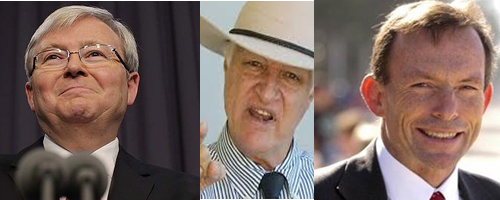
Election
2013- take 2
|
|
|
|
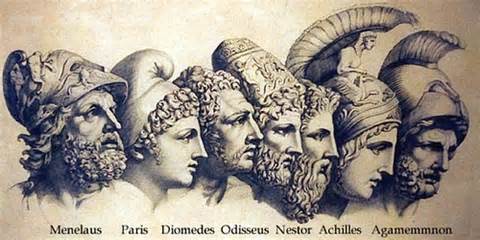
Turkey
Unrest 2013
|
|
|
|
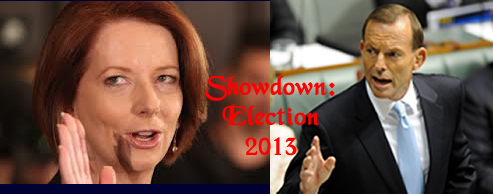
Election
2013
|
|
|
|
World
News 2013
|

|
|
|
Serialised
story of the greates ship of her time and
|

|
|
|
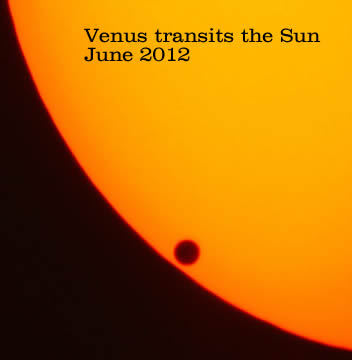
Venus
transits the Sun
|

|
For all your horoscopes, we recommend Ed Tamplin's excellent astrology site.

|
Astrology Oz is best viewed using firefox, screen resolution 1280x1024, macromedia flash enabled.
Firefox - the only browser that gives total control over web browsing, see what you want to see - download firefox

© AstrologyOz 2014
All articles and images on this site are subject to copyright and may not be copied, stored or modified in any way.
AstrologyOz - designed and maintained by Sherrynne Dalby