
Welcome to AstrologyOz
Apologies to all those who rely on this resource.. I have had major server issues which are now hopefully fully resolved.... after 4 months... I will be updating everything over the next week .... so thanks for your patience :)
|
|
|
World
News 2014
|

|
All your planetary data for 2014 is here now Planetary stations , Void of Course Moon , Moon phases and Planet Ingresses for 2014 plus Moon Planting Guide |

|
Jan - April 2014 Planting Guide
,
plus 2014 Moon phases,Planet Ingresses and retrogrades,
|
Direct And Stationary Planets In AstrologyPlanetary motion is one of the most useful timing tools in astrology. When an ephemeris describes a planet as direct, it is moving forward through the zodiac from Earth’s viewpoint. When it is stationary, its apparent movement is slowing to a turning point, usually before it becomes retrograde or direct again. These labels matter in birth charts, transit work and everyday planning. For Australian readers, accurate timing also means checking the relevant time zone, especially when a station occurs near midnight in Sydney, Melbourne or Brisbane, or during daylight saving in the southeastern states. What Direct Motion ShowsA direct planet appears to travel from one zodiac degree to the next in the usual forward order. Astrologers often associate this phase with outward movement, visible development and a greater willingness to act. A direct Mercury may support clearer exchanges after a period of review, while a direct Mars can describe renewed momentum around effort, competition or physical activity. The word “direct” does not automatically mean easy or fortunate. A planet can be direct while travelling through a difficult house, forming tense aspects or activating sensitive points in a natal chart. Its condition, sign, house and relationships with other planets still determine how the symbolism may unfold. In a personal chart, a direct planet may describe functions that feel more immediately accessible. Someone with direct Venus, for example, might express affection or preferences openly, although the sign and aspects reveal whether that expression is diplomatic, cautious, intense or changeable. Resources such as astrology perspectives can offer further reflection, but a chart should be read as a complete pattern. Why Stationary Motion Feels IntenseA stationary planet is approaching a change in apparent direction or has just reached that turning point. Astronomically, it has not stopped in space. The effect comes from the changing relationship between Earth and the planet as both orbit the Sun. For a short period, the planet seems to hold the same zodiacal position when viewed from Earth. Astrologers often give a station extra weight because the planet’s symbolism can feel concentrated. A stationary Mercury may draw attention to a decision, conversation, document or piece of information. A stationary Saturn may make responsibilities, boundaries and long-term commitments harder to ignore. The experience can be reflective, pressurised or unusually memorable rather than simply “good” or “bad.” The exact station is only part of the story. The days or weeks around it may carry significance, particularly when the planet crosses a natal degree, changes houses or makes a close aspect. Slow-moving planets can remain within a narrow range for a considerable time, so the wider period deserves attention. Comparing The Main Motion TermsThe distinction becomes clearer when the terms are placed beside one another. Stationary direct refers to the pause-like phase before a planet resumes forward movement, while stationary retrograde describes the phase before it begins apparent backward motion. The planet is moving at its own orbital speed throughout; these are observational and astrological descriptions.
An ephemeris may list the station in Universal Time, often abbreviated as UT or UTC. Australia spans several time zones, including Australian Western Standard Time, Australian Central Standard Time and Australian Eastern Standard Time. Perth, Adelaide and Sydney can therefore record the same station on different local dates, particularly when daylight saving affects New South Wales, Victoria, Tasmania and the Australian Capital Territory. Reading Stations In A Natal ChartA planet that was stationary near someone’s birth can be prominent in the natal chart. Its themes may occupy unusual psychological space, as if the person is learning to manage a concentrated version of that planetary function. A stationary Jupiter could enlarge questions of belief, opportunity or judgement, while a stationary Pluto may intensify experiences of control, transformation and emotional power. The house position shows where the symbolism is likely to operate, and the sign describes its style. Aspects reveal the relationships that shape it. A stationary planet in the tenth house may be expressed through career, public reputation or leadership, whereas the same planet in the fourth house may focus attention on family, property and private foundations. Birth-time accuracy matters. A difference of several minutes will not usually change whether a distant planet is stationary, but it can alter house cusps and angles. This is particularly relevant when comparing charts for people born in different Australian cities, since local time rules and daylight-saving histories must be entered correctly. Using Planetary Motion In Everyday TimingDirect and stationary phases can be used alongside lunar phases, ingresses and retrograde calendars. A stationary planet may describe a moment to pause and observe rather than force a result. Once direct motion becomes established, a plan can be developed with greater confidence, provided practical conditions support it. Astrology works best as a timing language, not as a substitute for evidence or responsible judgement. For Australian households and small businesses, planetary timing might be considered alongside ordinary schedules: school terms, public holidays, market opening hours, harvest conditions and commuting patterns. A Melbourne business launching a campaign should still account for local consumer behaviour, while a farmer near Toowoomba will naturally give greater weight to rainfall, soil and seasonal conditions than to a planetary station. Social planning can also benefit from distinguishing broad lunar rhythms from planetary turning points. A guide to lunar content planning can complement station tracking when preparing posts, newsletters or announcements. The station indicates a concentrated planetary moment; the Moon helps describe the shorter emotional and public rhythm around it. Use a reliable ephemeris, convert times to your Australian location and record the degree of each station. Then compare that degree with natal planets, angles and house cusps. Following these details over several cycles will make the difference between direct and stationary planets easier to recognise in real charts and everyday timing. Explore the planetary data and astrology resources on AstrologyOz to build a practical local reference for your own observations. |
|
|
|
Benedict
XVI resigns 2013
|

|
|
|
Election
2013- take 2
|

|
|
|
Turkey
Unrest 2013
|

|
|
|
Election
2013
|

|
|
|
World
News 2013
|

|
|
|
Serialised
story of the greates ship of her time and
|

|
|
|
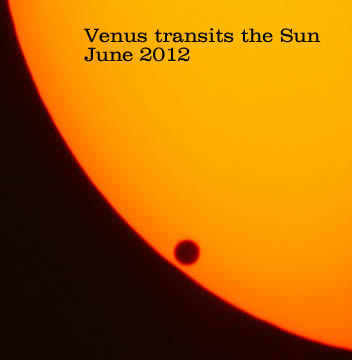
Venus
transits the Sun
|

|
For all your horoscopes, we recommend Ed Tamplin's excellent astrology site.

|
Astrology Oz is best viewed using firefox, screen resolution 1280x1024, macromedia flash enabled.
Firefox - the only browser that gives total control over web browsing, see what you want to see - download firefox

© AstrologyOz 2014
All articles and images on this site are subject to copyright and may not be copied, stored or modified in any way.
AstrologyOz - designed and maintained by Sherrynne Dalby