
Welcome to AstrologyOz
Apologies to all those who rely on this resource.. I have had major server issues which are now hopefully fully resolved.... after 4 months... I will be updating everything over the next week .... so thanks for your patience :)
|
|
|
World
News 2014
|

|
All your planetary data for 2014 is here now Planetary stations , Void of Course Moon , Moon phases and Planet Ingresses for 2014 plus Moon Planting Guide |

|
Jan - April 2014 Planting Guide
,
plus 2014 Moon phases,Planet Ingresses and retrogrades,
|
Jupiter’s 2025 Gemini retrograde and the push for better schoolsThe 2025 Jupiter retrograde in Gemini offers a timely lens for thinking about educational reform. Jupiter stationed retrograde at roughly 22° Gemini on 9 June, moved briefly direct, then turned forward again on 14 November. In astrological symbolism, Jupiter expands ideas, while Gemini turns expansion into questions, comparisons and practical learning. Used responsibly, this is a reflective language rather than a forecast of government decisions. A transit cannot tell a classroom what works, but it can encourage a useful habit: examine inherited assumptions before building the next policy. For Australian families and educators, that habit has practical force as schools balance curriculum expectations, technology, teacher workloads and unequal access to learning. A season of educational reviewRetrograde motion is traditionally associated with review rather than uninterrupted progress. Applied to education, the symbolism favours revisiting how children learn to read, how teachers are trained and how assessment shapes instruction. Gemini’s connection to communication suggests listening to students as well as spreadsheets, classroom observation as well as test results, and plain explanations as well as specialist jargon. Review should not mean endless consultation or a wholesale reset. It means testing whether existing arrangements still achieve their stated aims. The AstrologyOz guide to heliocentric and geocentric astrology helps clarify the interpretive framework, while educational research supplies the evidence about instructional design. Keeping those layers distinct prevents an appealing metaphor from outrunning the evidence. Where Australian reform actually happensAustralian reform happens across several levels. The Commonwealth Parliament in Canberra negotiates national school funding and reform agreements, yet state and territory governments control many curriculum, staffing and accountability details. That division matters because a promising idea developed in Canberra still has to survive implementation in a Queensland classroom, a Victorian regional town or a Northern Territory community. The Australian school market also mixes government, Catholic and independent sectors. Families weigh fees, catchments, distance, supports for additional learning needs and the prospect of moving house for a place. The national promise of a “fair go” sits beside these practical inequalities. A reform can be nationally funded yet unevenly available, making local distribution as important as its announcement. Literacy, numeracy and digital learningLiteracy and numeracy are a natural place to begin a review with lasting consequences. Australian students learn under a national curriculum, but implementation differs across jurisdictions, and national NAPLAN results still carry weight with parents and governments. Reformers can ask whether assessment supports diagnosis and better teaching or whether its pressure narrows what schools feel able to teach. Technology needs a similarly grounded approach. Devices, online homework and automated practice can widen access, yet they cannot replace skilled teaching, reliable connectivity or enough time for practice. Melbourne’s public debate about a “kinder” school system offers a useful local test: a gentler promise becomes credible only if crowded schedules, behaviour demands and staff shortages are addressed too. Learning beyond the suburbsDistance makes that test sharper in remote and regional Australia. Across the Northern Territory, schools may serve communities spread over enormous areas, with some students travelling long distances or boarding away from home. Connectivity can drop, teacher turnover is costly, and curriculum materials designed for a well-resourced classroom can lose their practical value when a satellite link fails after rain. Local realities also shape reform in regional Queensland, the wheat belt of Western Australia and rural Victoria. Communities know which services disappear when budgets tighten and which teachers stay because they are given support. Effective change therefore includes teacher retention, reliable offline access, boarding wellbeing and locally relevant learning, not only another platform, competition or test target. A review that ignores those conditions is only a paper exercise. Turning review into accountable practiceTransparency gives a retrograde review a clear purpose. Parents should be able to see attendance patterns, retention, learning support and how new programmes are evaluated. Public dashboards can help, but raw scores need context: a small school, a high refugee population and a remote community do not produce identical conditions. Reporting trust and student wellbeing alongside achievement makes accountability more useful than league tables alone. Reform also needs a pace people can follow. Pilots in selected schools can test revised reading instruction or attendance support, with independent evaluation before wider rollout. For a wider range of perspectives beyond specialist astrology, readers can explore Abby McDonald. The essential measure is straightforward: children learn more, schools become more equitable, and the evidence survives scrutiny. Use the Jupiter cycle as a prompt for action rather than a substitute for it. Invite a school team to choose one unresolved question, gather evidence from students, families and teachers, and agree on a small change to test this term. Share the results openly, including what failed. The AstrologyOz home page offers a starting point for following planetary developments while keeping that practical work at the centre. Back the people doing the slow work: protect teacher planning time, fund targeted tutoring, improve connectivity and treat attendance and wellbeing as educational priorities. Support a fair go for every Australian learner, and insist that educational reform be judged by evidence in classrooms rather than by the confidence of its sponsors. |
|
|
|
Benedict
XVI resigns 2013
|

|
|
|
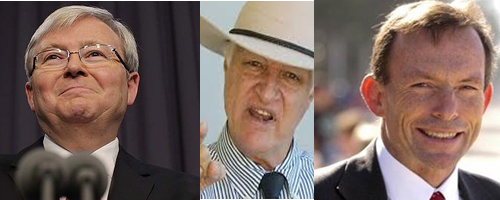
Election
2013- take 2
|
|
|
|
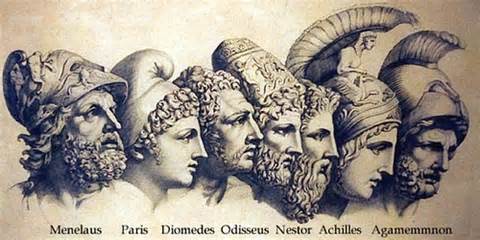
Turkey
Unrest 2013
|
|
|
|
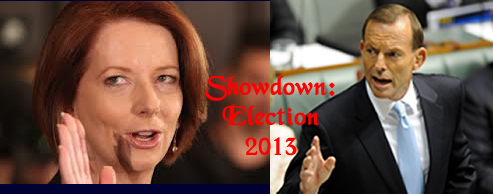
Election
2013
|
|
|
|
World
News 2013
|

|
|
|
Serialised
story of the greates ship of her time and
|

|
|
|
Venus
transits the Sun
|


|
For all your horoscopes, we recommend Ed Tamplin's excellent astrology site.

|
Astrology Oz is best viewed using firefox, screen resolution 1280x1024, macromedia flash enabled.
Firefox - the only browser that gives total control over web browsing, see what you want to see - download firefox

© AstrologyOz 2014
All articles and images on this site are subject to copyright and may not be copied, stored or modified in any way.
AstrologyOz - designed and maintained by Sherrynne Dalby