
Welcome to AstrologyOz
Apologies to all those who rely on this resource.. I have had major server issues which are now hopefully fully resolved.... after 4 months... I will be updating everything over the next week .... so thanks for your patience :)
|
|
|
World
News 2014
|

|
All your planetary data for 2014 is here now Planetary stations , Void of Course Moon , Moon phases and Planet Ingresses for 2014 plus Moon Planting Guide |

|
Jan - April 2014 Planting Guide
,
plus 2014 Moon phases,Planet Ingresses and retrogrades,
|
Using 2025 Mercury direct in Aquarius for Australian tech startupsMercury was direct in Aquarius through most of January and February 2025, before its late-February station in Pisces. For a tech founder, this air-sign transit offers a planning lens centred on invention, clear communication, networks and future-facing ideas. Treat that symbolism as a prompt rather than a guarantee. It can help a startup clarify a complex product, connect its offer to a wider ecosystem and make decisions without spinning. Evidence, customer demand, execution and financial discipline still decide commercial outcomes. Australian conditions make the exercise practical. A Sydney founder may be courting investors, a Brisbane team may be adapting farm software, and a Perth business may serve mining clients where connectivity can be uneven. One national launch message cannot assume identical needs, budgets or buying cycles. Use the direct period as a focused sprint: test the proposition, meet likely partners, simplify the story and assign an owner to each next step. Pair the Aquarius themes with customer interviews, analytics and a cash forecast, so openness is matched by operational rigour. Read the transit as a systems signalAquarius links ideas, technology and collective systems. For a startup, direct Mercury favours asking how a service fits an ecosystem: which integrations, communities or standards make it more useful and scalable? Map onboarding, support handoffs, data flows, payment steps and accessibility. This matters when a small team has discussed features more than the customer’s end-to-end journey. Keep interpretation subordinate to evidence. Interviews, retention figures, delivery data and unit economics can confirm or challenge the pattern. Astrology can supply a fresh question, not replace judgement or due diligence. Turn the idea into a product decisionChoose one reversible decision that benefits from wider thinking: trial an onboarding flow, prototype an API partnership or redesign the pricing page. The direct Aquarius window rewards experiments and shared feedback while changes remain inexpensive. Explain the product in plain English, the way many Australian founders prefer to talk. A fair dinkum pitch states the problem, user and result without inflated claims. For enterprise or government buyers, also map data storage, subcontractor access and how the Australian Privacy Principles shape consent, retention and breach handling. Build partnerships across Australian marketsAustralian startup networks have distinct centres of gravity: Sydney for capital and fintech, Melbourne for design and deep tech, Brisbane for agritech and logistics, and Perth for resources and remote operations. Local mentors expose assumptions that do not travel. Geography changes delivery as well as networking. A Melbourne investor meeting and a Pilbara deployment are not the same logistical problem; satellite links, edge computing and field support may matter more than a polished launch. For businesses serving farms, food production or regional supply chains, the 2025 winter solstice perspective offers a seasonal prompt. Farmers can test tools before a growing cycle, while agritech suppliers gain a reason to co-design around weather, labour and local conditions. Pitch the story investors can followDirect Mercury in Aquarius favours an intelligible vision, useful when narratives become crowded with technical detail. Structure the pitch around the problem, customer, evidence of demand and route to repeatable revenue. Attach ambition to milestones investors can test. Build the Australian model in Australian dollars. Include GST treatment, superannuation, payroll, insurance and the lag between invoices and receipts. For buyers outside capital markets, public tenders, security reviews and local support requirements can stretch a sales cycle beyond the runway shown on a slide. Before sending the deck, compare it with the perspective offered by Kif Limally, then test the language with customers and mentors. The aim is a credible collective future, not a futuristic pitch that fades under technical questioning. Choose a launch window that reflects the riskThe timing comparison keeps symbolism attached to a decision rule rather than a prediction.
Use the direct phase for outward-facing experiments: customer conversations, design reviews, partner discovery and pitch rehearsals. Treat the later retrograde period symbolically as a prompt for consolidation, especially where a rushed contract, unclear scope or technical claim could create costly rework. Build the schedule around Australian conditions. A meeting set from Sydney can miss Perth or Darwin, so agree customer cut-offs and support coverage across Australian time zones. During heat, bushfire smoke, floods or cyclone seasons, maintain remote-work and failover plans. Use a focused launch checklistA short checklist turns the transit’s broad themes into accountable work. Use separate passes so a promising idea does not crowd out financial or operational basics. Product and partnership pass
Then check whether the commercial plan survives contact with local payment terms, tax and delivery realities. Money and operations pass
Tick an item only when there is an owner, a due date and supporting evidence. Leave unresolved points visible in the launch brief, with a decision scheduled rather than an optimistic note disguised as progress. Activate the opportunity with a clear next stepTake one focused action now. Put the product promise, target customer and three priority partner types on one page; schedule a short prototype test; assign owners; and record what evidence would change the decision. This captures the practical value of the 2025 Mercury direct in Aquarius pattern. If the February 2025 window has passed, run the same audit before your next launch or direct phase. Start with the customer problem, build the network around it, communicate in plain English and keep a rollback plan. Make the next decision visible, testable and owned. |
|
|
|
Benedict
XVI resigns 2013
|

|
|
|
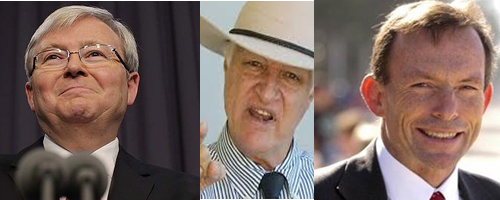
Election
2013- take 2
|
|
|
|
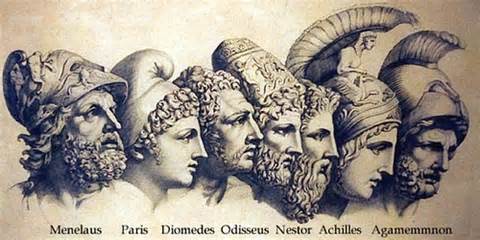
Turkey
Unrest 2013
|
|
|
|
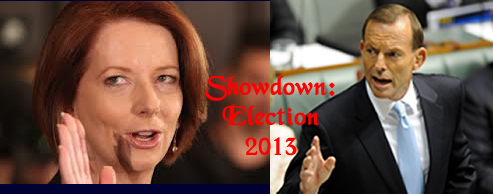
Election
2013
|
|
|
|
World
News 2013
|

|
|
|
Serialised
story of the greates ship of her time and
|

|
|
|
Venus
transits the Sun
|


|
For all your horoscopes, we recommend Ed Tamplin's excellent astrology site.

|
Astrology Oz is best viewed using firefox, screen resolution 1280x1024, macromedia flash enabled.
Firefox - the only browser that gives total control over web browsing, see what you want to see - download firefox

© AstrologyOz 2014
All articles and images on this site are subject to copyright and may not be copied, stored or modified in any way.
AstrologyOz - designed and maintained by Sherrynne Dalby