
Welcome to AstrologyOz
Apologies to all those who rely on this resource.. I have had major server issues which are now hopefully fully resolved.... after 4 months... I will be updating everything over the next week .... so thanks for your patience :)
|
|
|
World
News 2014
|

|
All your planetary data for 2014 is here now Planetary stations , Void of Course Moon , Moon phases and Planet Ingresses for 2014 plus Moon Planting Guide |

|
Jan - April 2014 Planting Guide
,
plus 2014 Moon phases,Planet Ingresses and retrogrades,
|
Aquarius Moon group brainstorming for 2025Group brainstorming works when ideas move freely. Using the 2025 Moon in Aquarius for group brainstorming sessions offers a symbolic lens for collective creativity, unconventional thinking and community problem-solving. It supports discussion; it does not replace evidence, facilitation or clear decisions. The Moon’s zodiac sign and lunar phase are distinct. Aquarius passages last a little over two days, though a full or new Moon can occur within that sign. Choose an exact date, local time and activity rather than relying on a vague “Aquarius Moon” label. Australian timing needs care. Sydney, Melbourne, Adelaide and Hobart observe daylight saving in 2025; Brisbane and Perth do not, while Darwin uses Australian Central Standard Time. One advertised time could exclude participants elsewhere. A useful session might tackle a neighbourhood initiative, workplace workshop or community campaign involving traders, carers, artists, volunteers and residents. The group should leave with several ideas and one testable next step. Read the lunar pattern before bookingDuring 2025, the Moon enters Aquarius in recurring windows from late January through December. Check ingresses, lunar phases and nearby planetary stations through Australian astrology resources, then choose a window without vague date lists. Convert the moment to each city and confirm the event length. A 90-minute meeting beginning after an ingress offers symbolic consistency, but discussion quality remains the aim. Specialists can note retrogrades; everyone else needs the agenda and clock time. If a window falls near midnight, offer two Australian start times or record the session. This helps Sydney and Melbourne participants attend in the evening while Brisbane and Perth colleagues avoid an unnecessarily late meeting. Build a brief that welcomes every voiceUse a one-page brief covering the challenge, people affected, constraints and the decision due after the session. Limit the main question to three prompts, giving collective intelligence a clear edge without diluting the group’s focus. Build the participant list around lived knowledge, not job titles. An Australian project might include council staff, market traders, café owners, sports-club volunteers and residents of regional areas. If Aboriginal or Torres Strait Islander communities are affected, involve the relevant community-controlled organisations from the outset. Set rules for equal airtime, respectful disagreement and sensitive stories. Clarify whether the group is generating, testing or prioritising ideas. Aquarian symbolism favours peer contribution and wider networks; in practice, that means shared ownership, not the loudest voice deciding. Use airy prompts to widen collective thinkingThe Moon in Aquarius is associated with airy insight, innovation, friendship and the collective. Use those qualities as optional prompts, not a performance of astrology, to widen the solution space and invite original contributions. Use these idea-generating prompts:
Then apply these practical safeguards:
Cluster responses and look for unexpected connections. Ask which idea creates social value, fits a local budget and benefits from collaboration. Keep dissenting notes; they expose assumptions that quick consensus can hide. Design around Australian group habitsAustralian habits offer several formats. A 60-minute after-work session can sit beside pub trivia or a library community-room booking; a 90-minute workshop suits a café, makerspace or council venue. Independent traders may prefer a focused local challenge. Let weather shape attendance. Brisbane’s warmth favours late-afternoon or air-conditioned rooms, Melbourne’s forecast needs an indoor backup, and Darwin’s wet-season humidity affects comfort. Regional participants may join online, so provide a microphone, visible chat and private idea channel. Send short pre-reading so live time is used for exchange. Optional background can include Shenvi’s wider resources, while the facilitator keeps the lunar theme brief. Participants should know the challenge, contribution, duration and format before accepting. Protect trust and useful boundariesCollect only necessary participant information. For names, contact details or accessibility needs, follow the Privacy Act 1988 and relevant Australian Privacy Principles, including consent and retention. Do not publish photographs or quotations without permission. If an idea becomes a public campaign, product claim or election message, check current rules. The Australian Consumer Law may apply to misleading commercial claims, while electoral donations and disclosures have separate requirements. Brainstorming is not approval. School, charity and workplace requirements vary across Australia. Child-protection checks, working-with-children rules, conflict-of-interest declarations and insurance may apply. Astrological labels should not stereotype people, and boundaries give promising ideas a safe route into action. Compare formats by energy and decision needsThree formats reveal the trade-offs:
For most neighbourhood and workplace groups, the 90-minute workshop balances divergent thinking with action planning. Spend 15 minutes on the brief, 35 generating ideas, 20 clustering and selecting, and 10 assigning actions. Participation is not consensus. Record the preferred direction, reservations and who will verify missing evidence. That protects group dynamics and keeps the session useful when no single idea wins. Make the next session a shared experimentWithin 24 hours, send a one-page outcome: challenge, three ideas, selected experiment, owner and deadline. Ask for feedback and review the test next month. A lively meeting should not end in a cloud of sticky notes. Personal reflection may help participants examine their reactions during the selected transit. The guide to interpreting your own transits offers a structured approach. Use it to check assumptions, never to explain another person’s motives or turn zodiac signs into character judgements. Choose one 2025 Aquarius Moon window, invite a small varied group and book a 90-minute session around a local challenge. Publish the brief beforehand, capture the outcome afterwards and share the next test through your team channel, library network or community newsletter. |
|
|
|
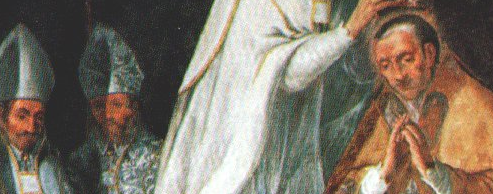
Benedict
XVI resigns 2013
|
|
|
|
Election
2013- take 2
|

|
|
|
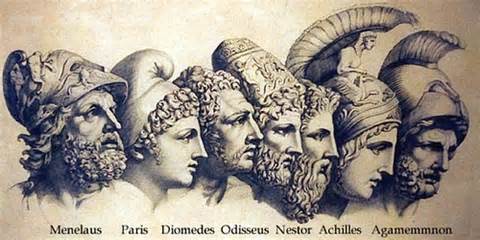
Turkey
Unrest 2013
|
|
|
|
Election
2013
|

|
|
|
World
News 2013
|

|
|
|
Serialised
story of the greates ship of her time and
|

|
|
|
Venus
transits the Sun
|


|
For all your horoscopes, we recommend Ed Tamplin's excellent astrology site.

|
Astrology Oz is best viewed using firefox, screen resolution 1280x1024, macromedia flash enabled.
Firefox - the only browser that gives total control over web browsing, see what you want to see - download firefox

© AstrologyOz 2014
All articles and images on this site are subject to copyright and may not be copied, stored or modified in any way.
AstrologyOz - designed and maintained by Sherrynne Dalby