
Welcome to AstrologyOz
Apologies to all those who rely on this resource.. I have had major server issues which are now hopefully fully resolved.... after 4 months... I will be updating everything over the next week .... so thanks for your patience :)
|
|
|
World
News 2014
|

|
All your planetary data for 2014 is here now Planetary stations , Void of Course Moon , Moon phases and Planet Ingresses for 2014 plus Moon Planting Guide |

|
Jan - April 2014 Planting Guide
,
plus 2014 Moon phases,Planet Ingresses and retrogrades,
|
Why the Ascendant Matters in Australian AstrologyThe Ascendant, or rising sign, is the zodiac sign appearing on the eastern horizon at the precise moment of birth. In an Australian birth chart, it describes the way a person enters the world, meets unfamiliar situations and presents themselves before deeper qualities become visible. It is the doorway into the natal chart, while the Sun often reflects purpose and the Moon points towards emotional habits. Its importance becomes clearer when astrology is applied to real Australian lives. A birth in Darwin is calculated under very different seasonal and geographical conditions from one in Hobart, while local time changes can affect the degree rising. The Ascendant therefore connects symbolism with place, timing and the practical details behind a horoscope. What The Ascendant RepresentsThe rising sign is traditionally associated with appearance, mannerisms, first reactions and the style used to approach life. Someone with Aries rising may seem direct and quick to act, whereas Libra rising can give a more diplomatic or socially aware first impression. These descriptions are tendencies for interpretation, rather than fixed judgments about character. The Ascendant also begins the first house, making it a framework for the entire house system. Its ruling planet, known as the chart ruler, deserves particular attention. For example, a Virgo Ascendant places Mercury in charge of the chart, so Mercury’s sign, house and aspects can show how the person navigates work, relationships and decision-making. Why Australian Birth Data MattersAccurate birth data is essential because the Ascendant changes roughly every two hours, with the degree shifting much faster. A small error may alter the rising degree, house cusps or the position of planets near an angle. Australian charts require attention to the birth location, local clock time, daylight-saving rules and historical time-zone changes. This matters across the continent. A chart cast for Sydney or Melbourne may involve daylight saving, while Queensland generally follows standard time and Western Australia uses a different base zone. A birth near a border, or during a period when time rules changed, should be checked carefully rather than copied from an overseas calculator without review. Reading The Rising Sign In ContextThe Ascendant should never be interpreted in isolation. The Sun sign, Moon sign, chart ruler and planets close to the eastern horizon add essential detail. A reserved Capricorn Sun with an energetic Sagittarius Ascendant may behave more openly than a simple Sun-sign description suggests, while a strong Saturn influence can make an apparently lively rising sign more cautious. The exact degree can also show how strongly a planet affects the first house or Ascendant. Astrologers may compare the Ascendant with the Midheaven, Descendant and Imum Coeli to understand how private identity, public direction, relationships and family foundations interact. This makes the rising sign useful for a rounded natal reading rather than a replacement for the rest of the chart.
Zodiac Settings And Australian PracticeAustralian astrologers may encounter both tropical and sidereal approaches. Tropical astrology measures the zodiac from the seasonal equinoxes, while sidereal astrology relates signs more closely to stellar reference points. Readers comparing systems should understand the difference between tropical and sidereal zodiac, especially when an Ascendant appears in a different sign under each method. The choice of zodiac is separate from the importance of the Ascendant itself. In either system, the rising sign remains a key reference point, but its meaning is interpreted within that system’s assumptions. It is also wise to distinguish astronomical measurement from astrological symbolism; a broader discussion of astronomy and astrology can help readers consider how different forms of knowledge define evidence and interpretation. Practical Uses For The Rising SignThe Ascendant can be useful for more than personality descriptions. It helps astrologers examine presentation, health routines in traditional astrology, personal style and the way someone begins projects. In mundane or event astrology, the rising sign can represent the people or body at the centre of a chart, depending on the chart’s purpose. For Australians, local context can make an interpretation more recognisable. A Cancer Ascendant might express through attachment to family, coastal life or a familiar community, while a Capricorn Ascendant may resonate with long commutes, professional responsibility or the practical demands of life in a regional town. These associations should support the chart, not override individual experience. Reliable Chart ChecksBefore interpreting the Ascendant, confirm:
When applying the symbolism, consider:
Bringing The Chart TogetherThe Ascendant is important because it gives the birth chart a point of orientation. It describes the lens through which other placements are expressed, helping explain why two people with the same Sun sign may look, speak and respond very differently. Its value increases when accurate Australian time and location data are used. Readers comparing different chart styles can also explore the distinction between heliocentric and geocentric astrology. Use the Ascendant alongside planetary stations, lunar cycles and other chart factors available through Australian astrology resources, then record the observations that genuinely match lived experience. Start with the rising sign, check the chart ruler and let the complete chart provide the wider story. |
|
|
|
Benedict
XVI resigns 2013
|

|
|
|
Election
2013- take 2
|

|
|
|
Turkey
Unrest 2013
|
|
|
|
Election
2013
|

|
|
|
World
News 2013
|

|
|
|
Serialised
story of the greates ship of her time and
|

|
|
|
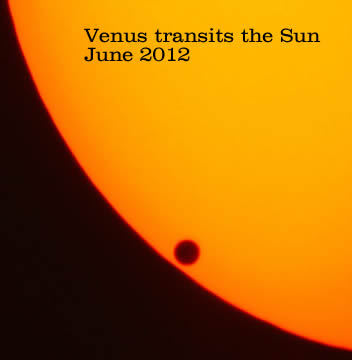
Venus
transits the Sun
|

|
For all your horoscopes, we recommend Ed Tamplin's excellent astrology site.

|
Astrology Oz is best viewed using firefox, screen resolution 1280x1024, macromedia flash enabled.
Firefox - the only browser that gives total control over web browsing, see what you want to see - download firefox

© AstrologyOz 2014
All articles and images on this site are subject to copyright and may not be copied, stored or modified in any way.
AstrologyOz - designed and maintained by Sherrynne Dalby